
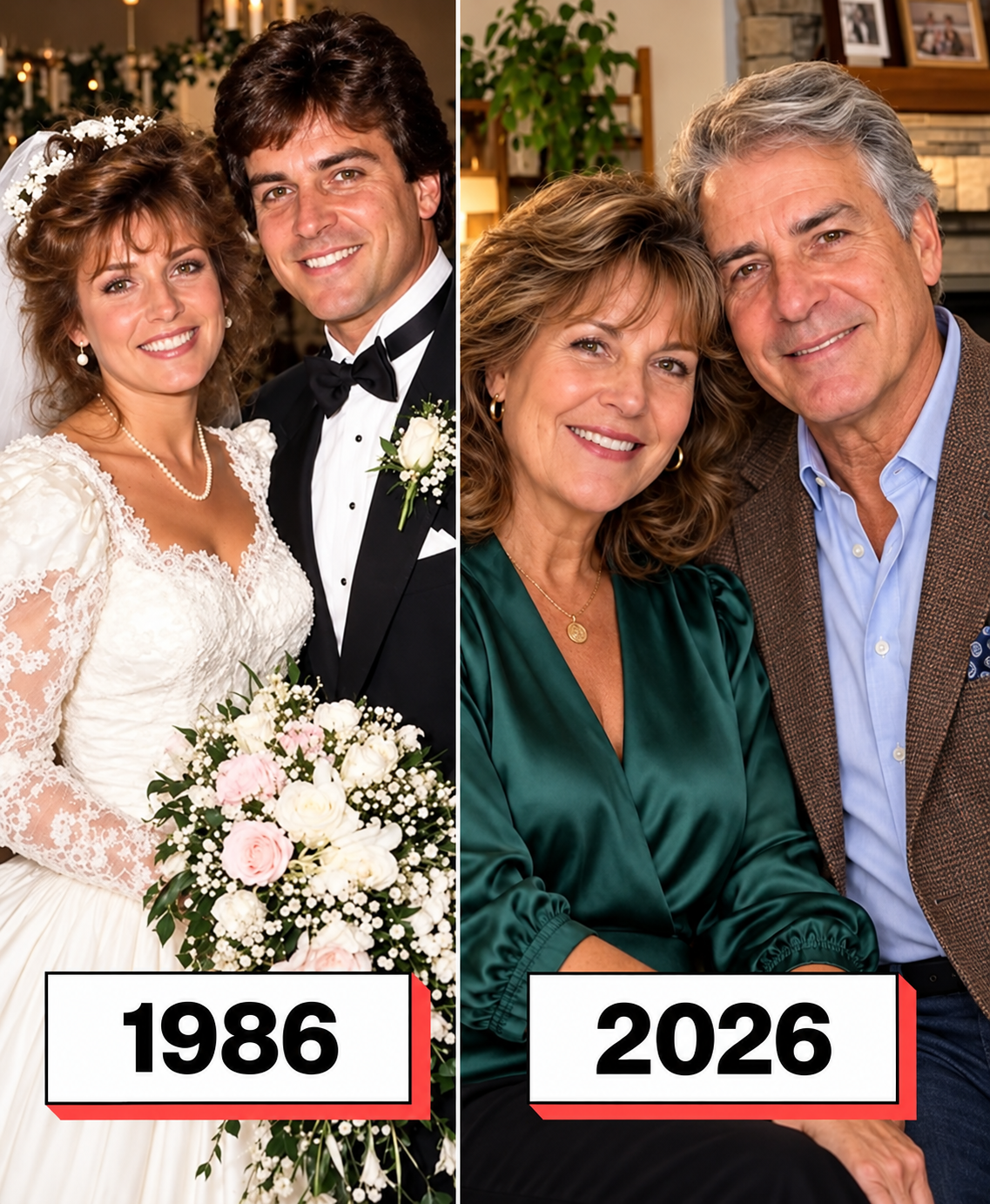
PART 1 TITLE: I Asked My Husband for a Divorce After Forty Years, but His Unexpected Death Left Me Questioning Everything We Had Never Said
The divorce papers lay between us on the kitchen table, beside Henry’s unfinished coffee and a folded newspaper he had been reading for nearly an hour. After forty years of marriage, I had imagined this conversation hundreds of times, yet I had never imagined how ordinary the room would look when I finally found the courage to begin it. The refrigerator hummed. Rain tapped against the window above the sink. Henry adjusted his glasses, studied the first page, and looked at me with an expression I couldn’t understand. “Ruth,” he said quietly, “are you certain this is what you want?” I had rehearsed several answers. In the end, I gave him the simplest one. “I can’t spend the rest of my life feeling like a stranger in my own marriage.”
He lowered his eyes to the documents again. I watched his fingers move along the edge of the paper, smoothing a crease that wasn’t there. Henry had always done that when he was troubled. He straightened things. He repaired things. He found something small and manageable to occupy his hands while the larger problem sat between us, waiting to be acknowledged. For once, I refused to rescue him from the discomfort. I wanted him to ask why. I wanted him to demand an explanation, to argue that I was mistaken, perhaps even to admit that something between us had been missing for years. Instead, he sat very still. That silence hurt more than I expected.
“Forty years,” he said at last. He spoke the number as though he were checking a calculation. “That’s a long time, Ruth.” I nodded. “I know exactly how long it is.” He glanced toward the wedding photograph hanging near the doorway. We were so young in that picture that I sometimes found it difficult to recognize us. His dark hair had refused to stay neatly combed. My veil had slipped halfway through the ceremony. We had laughed through our vows because neither of us could stop smiling. Looking at those two people now, I wondered what they would have thought of the older couple sitting at this table, unable to find a single useful sentence to say to each other.
Henry asked whether there was someone else. I almost smiled at the absurdity, but his expression stopped me. He was genuinely afraid of the answer. “No,” I told him. “There isn’t another man. I don’t need another man to know that I’m unhappy.” He nodded, apparently relieved, and I felt an unexpected flash of irritation. Even now, he seemed to be searching for a problem with a recognizable solution. Another man could be confronted. A betrayal could be investigated. But how did you repair years of conversations that never happened, decisions that were made without consultation, and the growing certainty that the person beside you had stopped wondering who you were?
I had loved Henry Bennett for most of my life. That was the part I could never explain satisfactorily to anyone, including myself. There had been no scandalous discovery, no affair, no single terrible evening that changed everything. He was reliable, hardworking, and considerate in ways other people admired. He remembered to service the furnace before winter. He checked the tires before I drove anywhere. When my mother was ill, he repaired the loose step outside her house without being asked. He attended our children’s performances, worked long hours to pay for their education, and never forgot our anniversary. From the outside, we looked like two people who had discovered the secret to a lasting marriage. From the inside, I sometimes felt as though I had spent decades speaking to a closed door.
I could remember when that feeling began, although I had spent years convincing myself it was temporary. Our oldest daughter, Emily, was a baby then. Henry was building his business, often leaving before sunrise and returning after dark. I was exhausted, surrounded by laundry, feeding bottles, unpaid bills, and the persistent fear that I wasn’t doing anything particularly well. Once, after an argument about something embarrassingly small, I drove to my mother’s house and cried at her kitchen table. I could no longer remember everything she had said to me that afternoon. What remained was the smell of tea, the rough texture of a dishcloth beneath my fingers, and her patient expression as I tried to describe a loneliness I couldn’t quite name.
We survived those early years, as people often do. Emily grew, and Daniel arrived, followed by our youngest, Claire. We moved to a larger house. Henry’s company became more successful. I learned the schedules of three children, volunteered at school, helped with homework, and became the person everyone called when something needed arranging. Henry handled the finances, the major repairs, and the business. Gradually, without ever discussing it, we divided our life into separate territories. His decisions were practical. Mine were personal. I knew when the children needed new shoes. He knew when the mortgage interest rate changed. We trusted each other, certainly, but there was a difference between trusting someone and letting them into the private room where you kept your fears.
When Emily was accepted into college, I discovered that Henry had already arranged the financing. He told me over breakfast, pleased that he had saved me the trouble. Years later, when our retirement savings seemed smaller than I expected, he explained that business difficulties had forced him to make certain sacrifices. He assured me the worst had passed. I remember asking whether we should sit down together and review everything. Henry kissed my forehead and said he had it under control. It was his favorite reassurance, and for a long time I accepted it because he offered it so gently. Eventually, I understood how often those reassuring words had also served to end a conversation.
Other disappointments were less dramatic. I wanted to travel while we were still healthy enough to enjoy it, but Henry was always waiting for a better time. I wanted to take an evening art class, and he wondered whether the drive would be inconvenient in winter. I sometimes spoke about Florence, about seeing Michelangelo’s David, about wandering through old streets without a schedule. Henry listened, smiled, and returned to his newspaper. Perhaps he thought listening was enough. I wanted him to become curious. I wanted him to ask what else I dreamed about, what frightened me as I approached sixty, and whether I was content with the woman I had become. Instead, we talked about groceries and appointments and whether the gutters needed cleaning.
The strangest part was that we rarely argued. Our children were proud of that. At family dinners, they sometimes joked that their parents had found a secret formula for peaceful living. Henry would smile modestly, and I would change the subject. They never saw the evenings when I sat beside their father feeling so far away from him that I could barely remember the last meaningful conversation we had shared. Nor did they see how carefully I avoided disturbing the comfortable routine we had built. I told myself there was no point starting an argument when Henry was tired. He told himself, perhaps, that my silence meant I was satisfied. Year after year, our restraint became another brick in the wall between us.
The decision to divorce had not arrived suddenly. It came through a series of quiet realizations, each too small to justify leaving but too persistent to ignore. One morning, I found myself imagining an apartment with bookshelves, a narrow balcony, and a dining table just large enough for two. I pictured choosing the color of the walls without discussing whether the paint was practical. Then I realized that, in the imaginary apartment, I was living alone. The thought did not frighten me. That was when I understood how serious my unhappiness had become. I wasn’t fantasizing about excitement or romance. I was imagining a place where I could hear myself think.
I consulted a lawyer before speaking to Henry. Walking into that office felt disloyal, even though I had not yet signed anything. The attorney explained the process, asked about our assets, and told me to gather financial records. I answered her questions with the strange calm that sometimes comes when a difficult decision has been delayed for too long. She did not ask whether Henry was a good man. She asked whether I understood what I was requesting. I did. By the time the petition was prepared, I had accepted that he might hate me. I had not prepared myself for the possibility that he would simply look sad.
Back at the kitchen table, Henry asked if we could think about it for a few days. “I’ve been thinking about it for years,” I replied. He looked as though I had struck him. I regretted the sharpness immediately, but I couldn’t withdraw the truth. “Why didn’t you tell me?” he asked. I stared at him. “I did, Henry. Maybe not in those words, but I tried. Every time I said we never talked anymore. Every time I suggested we do something together. Every time I asked what was bothering you, and you told me everything was fine.” He began to speak, then stopped. I waited. The words did not come.
At last he said, “I thought you knew how much I cared about you.” There it was, the sentence that explained so much and answered so little. “I knew you cared,” I said. “I never doubted that you would come if I needed help. But I needed more than someone who could fix the car and pay the bills.” Henry pushed his glasses higher on his nose. His eyes were wet. “I don’t know how to give you what you’re asking for.” My anger weakened. For a moment, I saw not an indifferent husband but a frightened man who had spent his adult life believing that devotion could be demonstrated through work. Still, sympathy could not make another forty years appear.
He took the papers with him when he left the kitchen. Before going upstairs, he turned back and asked whether I had told the children. I said I wanted us to explain it together when we had decided how to proceed. Henry nodded. “They’ll have questions.” I almost answered that questions were something our family had learned to avoid, but I was tired of saying things designed to wound him. Instead, I said we would find a way. He remained in the doorway for another moment. Then he went upstairs, leaving his coffee untouched. I sat at the table until the rain stopped, listening to the unfamiliar sound of our house without his footsteps moving through it.
Over the following days, Henry became unexpectedly attentive, although not in the way I had once hoped. He made sure I had eaten. He asked whether I needed the car on Thursday. He brought in the mail before I could go outside. When I entered a room, I sometimes caught him watching me with an intensity that made me uncomfortable. Once, I found him standing at the dining room window holding an old photograph of the children. He slipped it into a folder before I could see what else was inside. I assumed he was gathering documents for the divorce. There were many things to divide after forty years. I did not ask.
We slept in separate rooms, an arrangement that felt both unfamiliar and strangely peaceful. I began sorting through my belongings, discovering old clothes and letters I had forgotten. Henry spent more time in his study. The door was often partly open, and I could hear drawers sliding and papers being moved. One evening, he came to the sitting room carrying a notebook. “Do you remember what you said about Italy?” he asked. I looked up from my book. “What about it?” He hesitated, then said, “Nothing. I was just wondering.” I wanted to tell him that wondering was a beginning, but his timing made me wary. I did not want a holiday offered as a substitute for understanding.
I wish now that I had asked him what he was writing. I wish I had remained patient for another minute and let him struggle through the conversation. At the time, however, every delayed question seemed like evidence that nothing fundamental had changed. Henry had spent decades trying to spare us unpleasant conversations. I had spent decades waiting for him to begin them. Neither of us understood how little time remained. The last ordinary evening we shared ended with him turning off the kitchen light and reminding me to lock the back door. I remember answering impatiently that I had locked it myself for forty years. He gave a faint smile and said he knew.
Then Henry died. Even afterward, I struggled with how to describe the speed of it. There had been no final argument, no carefully arranged farewell, no opportunity to reconsider the words we had exchanged. One day he was moving through the house, leaving his reading glasses in ridiculous places and worrying about the weather. Then his chair was empty. The events surrounding his death passed through me in fragments: urgent voices, the terrible formality of telephone calls, the sight of our children gathering around the kitchen table, the practical questions that demanded answers when I could barely understand what anyone was saying.
Emily arrived first. She embraced me so tightly that I could feel her trembling. Daniel came soon afterward, trying to remain composed while his hands shook around his car keys. Claire, our youngest, cried without embarrassment. They had all known their father as a steady presence, someone who could be counted on to appear when something went wrong. Seeing them discover that even Henry could not prevent everything was almost harder than confronting my own loss. I wanted to comfort them, but I had no language for a grief made complicated by the fact that I had been preparing to leave the man they were mourning.
During the first days, I moved through the necessary arrangements as though I were following instructions written for another woman. People brought food, flowers, and memories. They told me how fortunate I had been to share such a long marriage. They spoke of Henry’s kindness, reliability, and generosity. I listened because most of what they said was true. It was the parts they could not know that exhausted me. Nobody mentioned divorce papers. Nobody knew how recently I had told him that our life together could not continue. When someone called our marriage an example to others, I lowered my eyes and studied the pattern of the carpet.
At the funeral, I watched Emily stand beside her brother and sister, trying to keep herself together while friends approached with condolences. I wanted to tell her that she did not have to be brave. Instead, I placed my hand on her shoulder, and she covered it with her own. Henry had taught our children to approach trouble by finding something useful to do. Emily organized visitors. Daniel checked arrangements. Claire collected photographs for a memorial display. I recognized pieces of their father in each of them. What unsettled me was how little any of us spoke about what we actually felt.
After everyone left, the house seemed larger than it had ever been. Henry’s shoes remained near the hallway bench. His jacket hung on its usual hook. His favorite chair was angled toward the reading lamp, with the cushion worn thin where his elbow had rested. I stood beside it one evening and tried to remember the last time we had sat there talking simply because we enjoyed each other’s company. I could recall countless conversations about obligations. I could recall arguments about small household matters and the details of family celebrations. The important conversations were harder to find.
I also found myself replaying our last exchange. Had I been cruel? Had he finally understood what I was asking? If he had lived another month, would anything have changed? These questions offered no comfort because each contained a future that no longer existed. I had wanted the freedom to choose what came next. His death had ended the marriage without granting either of us the chance to discover whether leaving was truly the only answer. Sometimes I was furious with him for being gone. Sometimes I was furious with myself for feeling that way. More often, I was simply tired.
Several days after the funeral, I went into Henry’s study to sort through the documents his lawyer would eventually need. The room smelled faintly of furniture polish and the mint candies he kept in the bottom drawer. His desk was orderly, as always, but several papers had been moved recently. An open notebook lay beside a stack of folders. Inside the notebook were lists: household repairs, telephone numbers, names of people to contact, and small reminders written in Henry’s compact handwriting. Near the back, I found a sentence that made me stop. He had written that he needed to learn how to listen without immediately trying to solve the problem.
I read it again. It was the first time I had ever seen Henry acknowledge that his way of helping might also have hurt someone. The sentence was not followed by an explanation. A few lines lower, he had written my name and then crossed it out. I ran a finger over the indentation left by his pen. For forty years, I had believed his silence meant he was not thinking about the things that troubled me. Now I was looking at evidence that he had been thinking about them, perhaps intensely, while remaining almost incapable of bringing them into the room where I could answer.
Inside the upper desk drawer, beneath some banking correspondence, I found a letter addressed to me. Henry had written it by hand. It was not sealed. For several moments, I could only look at the familiar shape of the letters in my name. I had received birthday cards from him, affectionate notes left on the refrigerator, and practical reminders tucked into my handbag. But a long letter was something different. I carried it to his chair and began to read, already frightened of what I might discover. His handwriting had become uneven in places, as though he had stopped repeatedly to consider what he wanted to say.
He wrote about our early marriage and the responsibilities that had arrived before either of us understood what adulthood required. He admitted that he had confused protecting our family with making decisions alone. He acknowledged mistakes connected to his business, including a disastrous period involving his former partner, Thomas Reed. I remembered Thomas’s name immediately. Years earlier, his disappearance after financial trouble had nearly ruined Henry’s company, or so I had always believed. Henry’s letter referred to retirement savings that had vanished during that period and to choices he had made in an effort to protect us. The details remained frustratingly incomplete.
I was angry that even this final explanation contained omissions. Henry had spent so much of our marriage insisting that difficult matters were under control, and now, when I could no longer question him, he was offering pieces of a history I had helped finance but had never been permitted to understand. Yet there were passages that brought tears to my eyes. He remembered the first house we rented, the night Emily developed a fever that frightened us both, the summers when the children ran through the sprinkler, and the way I used to sing while washing dishes. He had noticed more than I understood. Why had he told me so little?
I remained in his chair until the afternoon light faded. At some point, I realized that reading his letter had not erased my reasons for wanting a divorce. It had made those reasons more painful. Henry had loved me, but love and understanding had not always traveled together in our house. He had built a life around caring for me while leaving me outside decisions that affected us both. I had answered his reserve with my own, withholding questions because I expected him to recognize what I needed without being told. We had both become skilled at maintaining a marriage whose most important problems were never fully discussed.
Before putting the letter away, I looked again through the desk. Behind the financial records was a thick folder marked with a single word: Travel. I almost left it there. It seemed cruel to examine plans he could no longer enjoy, and I had no wish to discover another list of sensible arrangements made without asking my opinion. But the folder had been placed beside the letter deliberately. Inside were brochures, handwritten notes, and several envelopes of different sizes. The first brochure showed a street in Florence. Another contained photographs of Quebec in autumn. I felt something tighten beneath my ribs.
At the back of the folder, tucked between two pages of Henry’s handwriting, was a cream-colored envelope that looked much older than the rest. The paper had yellowed slightly, and the corners were soft from years of handling. My name appeared on the front in a rounded script I recognized before I consciously understood why. It belonged to my mother. She had been gone for years, yet the sight of those letters carried me straight back to her kitchen, to the chipped teapot she refused to replace and the lavender soap she kept beside the sink. I turned the envelope over. It had never been opened. Across the back, in Henry’s writing, was a date from thirty-seven years earlier.
I sat down again. My mother had written to me when I was twenty-three years old, barely three years into my marriage, and somehow Henry had kept the message hidden all this time. I wondered whether she had asked him to give it to me, whether he had forgotten, or whether he had deliberately withheld it because he feared what she might say. The envelope felt almost weightless in my hands. It was impossible to imagine that something so small could have waited through the birth of two more children, decades of family life, and the death of both the woman who wrote it and the man who kept it. I slipped a finger beneath the flap. For the first time in thirty-seven years, I was about to discover what my mother had wanted me to know about my marriage.
END PART 1
PART 2 TITLE: The Letter My Mother Wrote Thirty-Seven Years Earlier Revealed What Henry Had Known About Our Marriage Before I Understood It Myself
The envelope opened with a faint tearing sound that made me wince. Inside were four sheets of writing paper, folded carefully and covered with my mother’s unmistakable handwriting. Even before I began reading, I could almost smell the rose soap she had used throughout her life. She kept it beside a small tin of face powder on her dressing table, and whenever I visited, the scent seemed to follow her from room to room. I had not expected an ordinary piece of paper to bring her back so vividly.
She began by warning that I would probably be angry, whether Henry gave me the letter immediately or kept it until later. I recognized her dry humor and nearly smiled. My mother had always possessed a remarkable ability to anticipate an argument without making much effort to prevent it. The next lines wiped the smile away. She had written that I was twenty-three, married three years, and had arrived at her house the previous afternoon in tears, asking whether I had made a terrible mistake by marrying Henry.
I remembered that afternoon only in fragments. Emily had been an infant. Henry was working exhausting hours, and I had been struggling to manage a home that seemed to require more patience than I possessed. We had argued because he had forgotten to buy diapers, leaving me to manage another inconvenience after a difficult day. It sounded ridiculous now, but I remembered the humiliation of having to ask for such a small thing twice. I had gone to my mother because the argument was not really about diapers. It was about feeling responsible for everything Henry did not notice.
My mother’s letter explained what she had wanted to tell me. She had learned that marriage rarely resembled the sweeping romance young people imagined, yet she was afraid that saying so would persuade me to accept unhappiness as an unavoidable part of being someone’s wife. Instead, she had asked a question. When I imagined leaving Henry, did the prospect bring relief, or was I wishing he would finally recognize how lonely I felt? According to her letter, I had answered that I didn’t want him gone. I wanted him to notice me.
I set the paper in my lap. Almost four decades had passed, and I had given Henry essentially the same explanation when I presented the divorce petition. I had changed the words, but not the feeling beneath them. That realization disturbed me. Had I truly spent thirty-seven years waiting for the same thing? Or had my marriage contained enough happiness that I had repeatedly postponed confronting a problem neither of us knew how to solve? I could not answer without remembering both the kindness and the disappointment.
The next passage surprised me more. Henry had visited my mother the day after I came to her in tears. He had gone without being invited. She described him standing awkwardly in her doorway, frightened that I regretted marrying him and uncertain what he should do. He had admitted that he knew I was unhappy. When she explained that I felt unnoticed, he had insisted that he paid attention to me constantly. His problem, he said, was that he couldn’t make me understand how much he saw.
For several minutes, I stared at those lines. Henry had recognized the problem when we were barely adults. He had even sought advice. My mother had challenged him, explaining that privately noticing someone was not the same as making that person feel understood. When he asked how to begin, she told him to ask me questions, even if he did it awkwardly. He had worried about saying the wrong thing. She had answered that an imperfect question was better than leaving his wife to guess what he felt.
I laughed once, without amusement. That was Henry. He could negotiate a difficult contract, repair an appliance with instructions written in another language, and manage emergencies without losing his composure. But the possibility of asking his wife an emotionally clumsy question frightened him. I wanted to shake the young man my mother described. I wanted to ask why he had been willing to seek help from her but not from me. Most of all, I wanted to know why the older Henry had preserved this letter without ever discussing it.
My mother’s final pages contained an admission I had never heard from her. She believed I had inherited her tendency to expect loved ones to understand feelings she had not explained. She wrote about years of polite distance between herself and my father, about disagreements they avoided because neither wanted to disturb the household. Their marriage had appeared peaceful to outsiders, just as mine eventually would. But she had learned that avoiding conflict could create a different kind of harm, one that accumulated without noise.
She urged me not to judge an entire marriage by its least affectionate season. Yet she warned equally against remaining simply because leaving would mean admitting that many years had already passed. Her advice was to continue making the choice deliberately rather than allowing habit to make it for me. I read that passage several times. My mother had not instructed me to stay with Henry. She had not told me to leave. She had wanted me to understand that the decision belonged to me.
At the end, she explained that she had entrusted the letter to Henry because she feared I wouldn’t listen to her while I was so upset. She hoped he would recognize the right moment to give it to me. I lowered the pages slowly. My mother could not have imagined that the right moment, in Henry’s mind, would arrive thirty-seven years later, after his death. Perhaps he had intended to show it to me during one of our final conversations. Perhaps he had simply been too afraid. I would never know.
I remained in the sitting room until darkness settled against the windows. The letter had answered one question and opened several more. Henry had not been oblivious to my unhappiness. He had struggled with it for almost our entire marriage. That knowledge did not remove the loneliness I had experienced. In some ways, it made it more difficult to bear. I wondered how different our life might have been if he had shown me those pages when we were young enough to change our habits before they became the structure of our marriage.
During the following days, our children visited frequently. Emily brought meals I barely touched. Daniel replaced the furnace filter and examined the smoke detectors, approaching grief as though it were another household problem requiring attention. Claire sorted sympathy cards into carefully labeled piles. I watched them move through the rooms their father had maintained for decades, and I saw how thoroughly his habits had shaped all three. None of them mentioned the divorce. I assumed Henry had respected my wish that we explain it together.
On Sunday afternoon, Emily stood at the sink drying a plate that was already dry. Without looking at me, she said her father had telephoned her shortly after I gave him the papers. My hand tightened around my coffee cup. She explained that Henry had sounded frightened and had asked whether she believed I hated him. He had told her I wanted a divorce. I asked what she had said. Emily admitted she had not known how to answer because her father sounded more bewildered than angry.
Daniel stopped beside the refrigerator. Claire looked up from the sympathy cards. Their expressions told me immediately that Emily was the only one who had known. For a moment, nobody spoke. Then Daniel pulled out a chair and asked whether his parents had really been separating. I said yes. Claire began to cry, not loudly, but with the startled confusion of someone discovering that a familiar house had concealed a damaged foundation.
I explained that I had been unhappy for years and had not known how to change that unhappiness while remaining married. Daniel struggled with the explanation. He said Henry and I had always seemed comfortable together. I told him comfort and closeness were not necessarily the same thing. Claire asked whether her father had been unhappy too. I hesitated before admitting that I now believed he had been. Emily looked down at the plate in her hands. Of all three children, she seemed least surprised.
Then Emily told me that Henry had asked another question during their telephone call. He wanted to know whether she remembered where I had once said I hoped to travel for my sixtieth birthday. I was puzzled. My birthday was not until March, several months away. Emily reminded me that I had spoken repeatedly about visiting Florence. Years earlier, I had joked about wanting to admire Michelangelo’s David before age made me too respectable to appreciate the figure properly. Henry had laughed so hard that he nearly spilled his coffee.
Apparently, he had remembered. Emily said he had asked whether I might accept an invitation from him. She had told her father that he needed to ask me directly. I thought of my mother’s letter, written so many years earlier, and the advice she had offered the frightened young husband standing in her doorway. He was still turning to other people for answers about a woman who had spent most of her life waiting for him to speak to her.
That evening, after the children left, I opened Henry’s travel folder again. I examined every page rather than merely glancing at the brochures. He had researched hotels near Florence’s river, museums that offered quieter visiting hours, and restaurants away from crowded tourist streets. He had written that I disliked being rushed and preferred a window seat when traveling. Beside a list of cafés, he had marked pistachio gelato, my favorite flavor, which I had always assumed he failed to remember.
I found another set of notes concerning Quebec in October. Henry had considered a room with a fireplace because he knew I loved cold weather when I could return afterward to somewhere warm. He had listed possible train journeys, modest walking routes, and restaurants with tables overlooking the water. Then, beneath the arrangements, he had written a reminder to ask me what I actually wanted before booking anything. The sentence had been underlined twice. I traced it with my finger, trying to reconcile the man who had planned these details with the husband who had left so many of my questions unanswered.
The notes were not proof that our marriage would have survived. A trip to Florence could not repair decades of silence. But they showed me that Henry had been trying, in the final days of his life, to find a language we might both understand. He knew the small facts of my existence: my favorite flavor, how quickly museums tired me, how much I disliked crowded schedules. What he had struggled to grasp was that knowing those things privately could not replace sharing his thoughts with me.
Near the bottom of the folder, I found a business card bearing the name Marianne Cole, a marriage and family therapist. On the reverse, Henry had written an appointment for Thursday at three o’clock. I checked the calendar. The appointment had been scheduled for two days after his death. I stared at the card until the numbers lost their meaning. Henry had sought professional help. He had taken a practical step toward the conversation I had wanted for years, yet he had died before telling me.
I called the number before I could change my mind. A woman answered with a calm, professional voice. When I introduced myself as Ruth Bennett, she paused long enough for me to realize that she recognized the name. I explained that my husband had died and that I had discovered her card among his papers. Marianne expressed her condolences. Then I asked whether Henry had arranged an appointment. She confirmed that he had contacted her and that they had spoken briefly by telephone.
I expected her to refuse to discuss their conversation. Instead, she explained that Henry had anticipated the possibility of my contacting her and had specifically authorized her to share certain information if he could not attend. That disturbed me. Had he been worried about his health? Had he somehow sensed that time was running out? I asked whether he had wanted individual counseling. Marianne corrected me gently. The appointment was intended for both of us. Henry had planned to ask whether I would consider joining him.
I closed my eyes. For years, I had imagined Henry refusing marriage counseling because he believed nothing was wrong. Now I discovered that he had arranged it without telling me. Marianne said he had not approached her to persuade me to withdraw the divorce petition. He wanted to understand why I had reached the point of leaving, and he had admitted that his efforts to protect me might have prevented him from truly hearing what I said.
I held the telephone against my ear and stared at the empty chair across the room. There was something terribly painful about learning that a person had finally begun to change when there was no longer time to experience that change together. I asked Marianne whether Henry had spoken about our financial difficulties or the problems with his former business partner. She said he had mentioned regrets connected to his past, but that money had not been the reason he sought counseling.
Then her voice changed. She told me Henry had referred to an important decision made many years earlier. He had concealed it because he believed he was protecting me. Marianne did not know what the decision involved. Henry had been unwilling to explain it during their brief consultation, but he had said the truth might alter my understanding of our marriage. He had also told her that he could not continue withholding it.
I asked why he had waited so long. Marianne answered that she could not explain another person’s motives with certainty. She did tell me that Henry seemed deeply troubled by the possibility that he had mistaken responsibility for trust. He wanted me to have the facts necessary to make my own decisions, even if those facts made me angrier. After thanking her, I ended the call and sat motionless for several minutes, trying to understand what I had just learned.
My first suspicion concerned the business. Henry had written about Thomas Reed and financial sacrifices, and I knew he had never given me a complete account of what happened. But Marianne’s description suggested something more personal. A decision that might change how I viewed forty years of marriage could involve any number of painful possibilities. I refused to invent accusations without evidence. Instead, I returned to the study and began examining the papers I had previously set aside.
I searched the desk more carefully. The drawers contained receipts, photographs, old tax records, warranties, and years of ordinary correspondence. I found no explanation for the secret Marianne had described. As I closed the center drawer, however, I noticed a narrow strip of tape beneath it. I bent down and discovered a small brass key fastened to the underside of the wood. Henry had attached a paper label to it. In his neat handwriting, he had written a single word: Attic.
Our attic was accessible through a folding staircase in the upstairs hallway. As far as I knew, it had never required a key. Henry stored Christmas decorations, old suitcases, and boxes of the children’s schoolwork there. He occasionally disappeared upstairs to find something and returned covered in dust, complaining about the things we had accumulated. I stood in the hallway holding the key, suddenly remembering how protective he had been of certain boxes belonging to his father.
I pulled down the staircase and climbed into the cool, dim space. The air smelled of cardboard and dry wood. At the far end, partly concealed behind cartons of ornaments, stood an old trunk I recognized from Henry’s childhood home. It had belonged to his father, and I had assumed it contained tools or family papers. A brass lock secured the front. My pulse quickened as I approached. The small key fitted perfectly.
I knelt beside the trunk with my hand resting on the lid. Somewhere downstairs, the grandfather clock struck the hour. I thought about my mother’s letter, the secret my husband had carried for decades, and the appointment he had made too late. Whatever lay inside this trunk had been important enough for Henry to lock away while leaving the key where I could eventually find it. I turned the lock, heard the mechanism release, and lifted the heavy wooden lid.
END PART 2
PART 3 TITLE: A Locked Trunk Revealed Henry’s Missing Business Partner Was Still Alive, and the Truth About Our Lost Savings Took an Unexpected Turn
Inside the trunk lay several stacks of photographs, each secured with a faded paper band. The pictures covered decades of our family life. Emily and Daniel stood beside a Christmas tree with Claire still small enough to be held in Henry’s arms. Another photograph showed all three children on a beach, their hair blown across their faces. I found myself asleep on the living room sofa, a book open against my chest, and laughing beside the rosebushes in our garden. Henry had preserved ordinary moments I hadn’t known anyone considered worth photographing.
There was a picture of me wearing a green dress at Daniel’s wedding. I remembered buying it after weeks of indecision and feeling too self-conscious to ask whether Henry liked it. Yet there I was, smiling into the sunlight while someone behind the camera had been watching me. Beneath that photograph were several pictures of Henry at different ages. He looked serious in some, almost mischievous in others. I realized how rarely I had examined pictures of him alone. Most of our family albums showed him standing slightly to one side, holding the camera or arranging everyone else.
Near the bottom of a stack, I discovered an unfamiliar photograph. Henry appeared to be in his mid-thirties, standing outside a hardware store beside a man whose arm rested across his shoulders. Both men were smiling confidently. On the back, Henry had written Thomas Reed’s name, the summer of 1988, and a brief reference to the time before everything changed. I turned the photograph over again. Thomas looked younger than I remembered, although I had not seen him for so many years that I could barely trust my memory.
Thomas had been Henry’s business partner during the early years of the company. He was energetic, ambitious, and charming in a way Henry never tried to be. I remembered dinners when Thomas spoke excitedly about expansion, future contracts, and the opportunities waiting beyond our small city. Henry usually listened, making occasional corrections when his partner’s plans became overly optimistic. For a while, their differences seemed to strengthen the business. Later, I had been told those same ambitions had contributed to a financial disaster.
Beneath the photograph was an old newspaper clipping. The headline concerned a local businessman who had disappeared following a financial collapse. The article identified Thomas Reed and described questions surrounding missing company funds. I remembered the atmosphere of those months: creditors calling, Henry working late, unfamiliar men arriving at the office, and the feeling that our financial security had become unexpectedly fragile. Henry told me Thomas had made reckless decisions and fled when the consequences became serious. I accepted that account because it was all he would say.
I had resented Thomas for years. Whenever I thought about the retirement savings we had lost, I pictured him escaping responsibility while Henry struggled to rebuild. Now I found his photograph preserved among our children’s birthdays and family celebrations. Henry had not destroyed it. He had kept it beneath a lock, together with memories that appeared precious to him. I wondered whether the photograph represented an old friendship he could not entirely abandon or a mistake he could not forgive himself for making.
At the very bottom of the trunk, beneath another envelope of photographs, lay a letter that looked unusually new. The paper was clean, and the envelope carried a postmark from only three months earlier. It had been addressed to Henry without a return address. The contrast with the yellowed family papers was striking. Someone had contacted my husband recently, and he had chosen to hide the correspondence rather than leave it in his desk.
I unfolded the page. The writer was Thomas Reed. He acknowledged that Henry probably never wanted to hear from him again and said he understood why. But he insisted that something about the events of 2003 had been misunderstood. The money, he explained, was not the most important part of what had happened. He believed I deserved the truth before it became impossible to tell me. Beneath his signature was a telephone number. I sat back on my heels, trying to absorb what I had discovered.
Thomas was alive. For years, I had thought of him as a vanished figure from our past, someone whose disappearance had effectively ended his role in our lives. Yet he had written to Henry recently, evidently expecting a reply. I looked at the date again. Henry had received the letter before I asked for a divorce. Had they spoken? Was this what Henry had mentioned to Marianne Cole? Had he been planning to tell me about the financial disaster, or did Thomas know something more disturbing?
I searched the remaining contents of the trunk but found no reply from Henry. There were no additional letters from Thomas, only financial documents whose significance I could not immediately understand. I considered calling the number at once. The house was quiet, and there was nothing to prevent me from dialing. But I had spent the previous days discovering how much of my life I had misunderstood. I did not trust myself to hear another revelation in the middle of the night.
I carried Thomas’s letter downstairs and placed it beside Henry’s notebook. For several hours, I tried to read through old business records. The figures blurred together. I knew Henry had made significant withdrawals from our savings during the company’s crisis, but he had always explained that the money was necessary to prevent financial ruin. His handwritten letter had not contradicted that account directly. It had merely admitted that he had made decisions without consulting me. Thomas’s message suggested there was another explanation, and that possibility frightened me more than I wanted to admit.
That night, sleep came in short, uneasy intervals. I dreamed of Henry standing on a railway platform while I searched for the right train. Whenever I approached him, the station filled with strangers and he disappeared into the crowd. I woke before dawn with an ache behind my eyes. For nearly an hour, I remained in bed listening to the heating system start and stop. Then I made coffee, washed the breakfast dishes, and placed Thomas’s letter on the kitchen table.
At half past eight, I called. A man answered after several rings. His voice was rougher and older than I expected. I asked whether I had reached Thomas Reed. There was a brief silence before he confirmed his identity. When I introduced myself, the silence lengthened. Finally, he said he had heard about Henry’s death and was sorry. I gripped the telephone harder. I had no patience for condolences from the man whose name had haunted our finances for more than two decades.
I told him I had found his letter. He asked whether Henry had shown it to me, and I explained that my husband had died before revealing its contents. Thomas sounded troubled. He said he had hoped Henry would decide to tell me himself. I asked what had happened in 2003. He refused to explain over the telephone. I demanded to know why. He answered that he had spent years regretting his part in the affair and did not want an abbreviated explanation to sound like another attempt to excuse his behavior.
I asked whether he was trying to avoid responsibility. Thomas answered immediately that he was not. The certainty surprised me. After a pause, he told me he lived approximately two hours north of my town. He offered to meet wherever I preferred. We eventually agreed on a small café overlooking a lake, roughly halfway between our homes. I wrote down the address and ended the call. My hand was shaking, although I had done little more than arrange a meeting.
Before leaving the following afternoon, I telephoned Emily. Since Henry’s death, my children had developed a habit of asking where I was going and when I expected to return. I understood their concern, but I had no intention of allowing grief to turn me into someone who required permission to leave her own house. When I told Emily I was meeting Thomas Reed, she became alarmed. She remembered the financial difficulties and asked whether speaking to him was sensible. I admitted that I didn’t know. But I needed answers, and Thomas appeared willing to give them.
The drive north took me past fields already stripped by autumn and small towns where storefront windows reflected a pale October sky. I had not traveled alone for any meaningful purpose in years. Usually Henry drove while I navigated, offering directions he seldom needed. Without him, the car felt strangely quiet. I wondered what he would have said about my meeting. He might have discouraged it. He might have offered to accompany me. Most likely, he would have tried to handle the matter himself, assuring me afterward that everything was settled.
The café stood beside a lake bordered by maples whose leaves had begun turning deep red and gold. Thomas was waiting at a table near the window. I recognized him immediately despite his white hair and rounded shoulders. The confidence of the younger man in the photograph had disappeared. He stood when I approached, started to offer his hand, and then lowered it. I sat opposite him without removing my coat. A waitress came to take our order. We requested coffee, and I waited until she had walked away before speaking.
I told Thomas I wanted the complete truth, not a version designed to protect his reputation. He accepted that condition. He began by explaining how he and Henry had built the company together, starting with modest contracts and gradually taking on larger projects. They had become successful enough to consider expansion. Thomas had identified an opportunity involving a new housing development. The potential profits were substantial, and he believed they could transform the business. Henry had initially been cautious but eventually agreed to participate.
The development failed. Its organizers had concealed serious debts, and the contracts exposed the company to losses far beyond what either partner had anticipated. Thomas admitted that he had pushed Henry toward the investment. He had wanted success badly enough to overlook warning signs. I asked whether that was why he disappeared. He nodded. His wife had been pregnant, and he had become terrified of losing their home and everything they owned. Instead of remaining to face the consequences, he had fled.
I asked whether he had taken company money when he left. Thomas shook his head. The newspaper had reported missing funds, he explained, but the assumption that he had stolen them was incorrect. Money had indeed been moved. Henry had arranged the transfer. I stared at him, certain I had misunderstood. Thomas said the company had guaranteed part of the investment, creating a risk that creditors might pursue assets connected to the partners. Henry had transferred funds temporarily into an account protected under a legal strategy developed with their attorney.
I asked whether such a transfer was lawful. Thomas admitted that it had been complicated and difficult to explain, particularly while the business was under scrutiny. Their lawyer had believed the arrangement could be defended, although it looked suspicious before the contractual disputes were resolved. Thomas’s disappearance made everything worse. People assumed the missing money proved he had stolen from the company. Henry, furious at his partner’s abandonment, did little to correct that impression publicly.
I pushed my coffee aside. For more than twenty years, I had believed Henry was the innocent victim of Thomas’s recklessness. The actual history was more complicated. Thomas had made a disastrous business decision and then abandoned his responsibilities. Henry had responded by making financial arrangements that he believed would protect our home. Neither man had told me the complete story. I asked why Thomas had remained silent for so long. He admitted that shame had made returning difficult and that Henry had ignored his attempts to apologize years later.
“Then tell me what this has to do with our retirement savings,” I said. Thomas looked down at his hands. He explained that the business losses and the withdrawals from our personal accounts were not identical matters. Henry had used some savings during the crisis, certainly, but the money I had always believed was spent rescuing the company had served another purpose. My stomach tightened. I had imagined hidden debts, undisclosed investments, perhaps even another family. I was unprepared for the answer Thomas gave.
He said the money had been used because of our daughter Emily. I stared at him. Emily had been sixteen in 2003, still living at home and attending school. She had never been involved in Henry’s business. I asked whether he was suggesting she had somehow caused the financial collapse. Thomas shook his head. He said the problem was entirely separate from the investment. There had been a road accident, and Henry had paid money to resolve consequences I had never been told about.
I remembered the accident immediately. Emily and her closest friend, Laura, had been traveling along a country road on a rainy evening when their car collided with another vehicle. Laura had been driving, or so everyone told me. Both girls had been frightened and shaken, but neither suffered a serious injury. I remembered reaching the hospital after Henry and finding Emily in tears. He had handled the necessary arrangements while I took our daughter home. Over time, the accident became an unpleasant family memory, something we were grateful had not ended more tragically.
Thomas told me the other driver had been a contractor connected to their company. He had sustained a severe leg injury that required surgery and kept him away from work for months. Henry had contributed money toward his medical expenses and lost income after insurance covered only part of the cost. I asked why none of this had been discussed with me. Thomas looked uncomfortable. He said there had been circumstances surrounding the accident that Henry believed I was better off not knowing.
I could feel my patience disappearing. “My daughter was in that car,” I told him. “Whatever happened concerned me as much as it concerned Henry.” Thomas acknowledged that I was right. He took a drink of coffee, although it had gone cold, and then explained that Laura had borrowed her mother’s car without permission. She had been drinking before the accident. Emily had not. According to Thomas, the girls had changed places because Emily believed she was the safer person to drive.
I stared at him. For twenty-three years, I had believed Laura was behind the wheel. Thomas said the accident report identified her as the driver because that was the account given immediately afterward. Laura’s family had feared the consequences of her taking the vehicle without permission, and the girls were frightened. Henry arrived at the hospital before I did, heard what had happened, and became involved in managing the aftermath. Thomas had learned the details through the contractor and the financial arrangements connected to his injuries.
I asked whether Henry had altered official records. Thomas said he did not believe so. Laura had identified herself as the driver before Henry arrived, and he had chosen not to challenge her account once he learned the truth. He privately paid the injured contractor, using a portion of our savings. Thomas could not tell me every financial detail, but he was certain the payment had been substantial enough to affect our retirement plans. I remembered all the years Henry had told me we needed to be cautious with money, and anger rose so sharply that I had to grip the edge of the table.
“Why would he keep that from me?” I asked. Thomas hesitated. Then he said Emily had begged her father not to tell me. She feared I would be devastated, and Henry believed I was already overwhelmed by my mother’s medical needs and other problems at home. He promised to handle the consequences himself. I shook my head. I could almost hear Henry saying those words. It was the same promise he had made about bills, repairs, business debts, and countless smaller difficulties throughout our marriage.
I thought of sixteen-year-old Emily crying in a hospital bed. I remembered Henry standing beside her with his hand on her shoulder and telling me she needed rest more than questions. I had trusted him. I had taken our daughter home, made her tea, and sat beside her until she slept. What I had not known was that the two people I loved most had already agreed to conceal an important part of the accident from me. The realization made the café feel suddenly airless.
Thomas said he had contacted Henry because he could no longer accept the silence surrounding those years. Their business difficulties had become confused with the accident, allowing Henry to present one broad explanation for money that had been used for different purposes. Thomas believed the truth belonged to me, particularly now that Henry and I were confronting serious difficulties in our marriage. He had hoped Henry would finally explain his decisions himself. I asked whether Thomas knew about the divorce. He admitted that Henry had mentioned our separation during their recent contact.
That admission stopped me. Henry had apparently been willing to discuss our marriage with the man he once blamed for our financial troubles. I wondered whether fear had finally made him seek out people from every period of his life, looking for answers he could not bring himself to ask me for directly. The thought did not soften my anger. Henry had chosen to hide a serious event involving our daughter, and that decision had deprived me of the opportunity to help her, correct the misinformation, or decide how our savings should be used.
I stood, leaving my coffee almost untouched. Thomas rose as well. He said he was sorry for the part he had played in our family’s history. I believed he meant it, but forgiveness was more than I could offer that afternoon. I thanked him for finally telling me and walked out to my car. I sat behind the wheel without starting the engine. Through the windshield, I watched autumn leaves drift across the parking lot. I had arrived expecting to uncover a business secret. Instead, I was leaving with a question about my own daughter that only she could answer.
I drove home slowly. The roads were damp, and every sharp bend reminded me of the accident Thomas had described. When I reached the house, I went directly to the kitchen, placed Henry’s old financial records on the table, and looked at the telephone. I wanted to call Emily immediately. I also dreaded hearing her confirm what Thomas had said. Before I could decide what to do, a car pulled into the driveway. Moments later, the doorbell rang. Through the glass beside the front door, I saw Emily standing on the porch. Her eyes were red, and she was still wearing her coat. I had not called her, but she had come to tell me something.
END PART 3
PART 4 TITLE: My Daughter’s Confession Exposed the Cost of Henry’s Protection, but His Final Recording Revealed What He Had Decided About Our Divorce
Emily stood on the porch with her handbag clutched against her coat. She had clearly been crying, and her eyes moved past me toward the hallway as though she expected to see her father emerge from another room. For one irrational instant, I wished that could happen. I wanted Henry to stand between us, explain everything, and bear responsibility for the choices he had made. But the house remained quiet. I opened the door wider and stepped aside. Emily entered without speaking. Neither of us removed our coats.
We went into the kitchen, where Henry’s financial records still covered the table. Emily looked at the papers and closed her eyes. “Thomas called me,” she said. I nodded. “I thought he might.” She pulled out a chair but did not sit. I asked whether what Thomas had told me was true. Emily looked directly at me for the first time since arriving. “Yes, Mom.” Her voice was barely audible. I waited for more, but she seemed unable to continue. Finally, I asked the question I had been carrying all the way home. “Were you driving the car that night?”
She nodded again. I pulled out the chair opposite her and sat down because I no longer trusted my legs. For twenty-three years, I had believed I knew what happened on that road. I had remembered the accident as an ordeal my daughter survived through circumstances beyond her control. Now I was learning that the version I had accepted was incomplete. I asked Emily to tell me everything from the beginning, without trying to protect herself or Henry. She covered her face with both hands, took a long breath, and finally sat down.
She explained that she and Laura had attended a party that evening. Laura had been drinking, although she insisted she was capable of driving. Emily had refused to let her take the wheel. They argued, and eventually Laura surrendered the keys. Emily believed she was doing the responsible thing. She had not been drinking, and she thought she could get them both home safely. But the road was wet, visibility was poor, and when another vehicle appeared around a bend, she panicked. She turned the wheel too sharply, lost control, and collided with the other vehicle.
I remembered that night with an unpleasant clarity. I had been visiting my mother, who was recovering from surgery, when the telephone rang. Henry reached the hospital before me. By the time I arrived, he had spoken to the girls, the attending staff, and Laura’s parents. Emily was sitting on a hospital bed, pale and shaking. I wanted to ask what had happened, but Henry told me she had already been through enough. He said I should take her home and let her rest while he dealt with the necessary paperwork.
Emily told me that Laura had claimed to be the driver before Henry arrived. Laura feared punishment for taking her mother’s car without permission. Both girls were frightened, confused, and desperate to make the problem disappear. When Emily told her father the truth, he realized that correcting the account would create additional complications. She insisted that Henry had not fabricated the original police report. He had simply accepted what the girls had already told the authorities, despite knowing that their description of who was driving was wrong.
I asked whether anyone had been hurt in the other vehicle. Emily lowered her eyes. The driver had broken his leg and required surgery. He was unable to work for months. I remembered being told that the other motorist was recovering and that insurance was dealing with the consequences. I had never been informed how serious his injuries were. Emily said Henry had met with the man’s representatives and arranged additional financial assistance beyond what insurance paid. He wanted the injured driver to receive proper compensation and hoped the matter could be resolved without further harm to either family.
“Did he use our savings?” I asked. Emily nodded. She said she had not known the full amount at the time. She was sixteen, frightened, and mostly concerned about what would happen if everyone discovered she had been driving. Years later, she learned that her father had taken money from our retirement accounts to cover part of the expenses. I looked at the financial records spread across the table. Henry had repeatedly assured me those withdrawals were connected to the business crisis. Now I understood why the explanations had never quite satisfied me.
I asked Emily why she had never told me. She began to cry again. She said she had wanted to confess at the hospital but had been afraid of disappointing me. Henry told her I was already overwhelmed by my mother’s recovery, Daniel’s difficulties at school, and the constant demands of our household. He promised to take care of everything. Emily believed him because he had always been the person who made frightening situations manageable. She agreed to remain silent, intending to tell me once the immediate crisis had passed.
“But it never passed, did it?” I asked. Emily shook her head. She said the longer the secret remained hidden, the more difficult it became to explain. At first, she was afraid of punishment. Later, she was ashamed of the deception itself. She worried that telling me would expose how much money Henry had spent and how many people had accepted the false account. Eventually, the accident became something nobody discussed. She built an adult life around a memory she had never fully confronted.
I felt anger toward Emily, but it was different from what I felt toward Henry. She had been sixteen, frightened by a serious accident and dependent on adults to guide her. Henry had been a grown man, capable of understanding the consequences of withholding information from his wife. He had made a decision that belonged to both of us and then persuaded our daughter that silence was necessary for my protection. Even after Emily became an adult, neither of them had found the courage to tell me.
I asked whether she understood what it meant to be excluded from a decision involving my own child. She nodded, wiping her face with a tissue. I told her I would have been frightened, certainly, and probably angry. But I would not have abandoned her. I would have wanted to know whether the injured driver was receiving the treatment he needed. I would have helped determine how we could pay the expenses without destroying our financial security. Most importantly, I would have wanted Emily to learn that responsibility sometimes meant facing consequences rather than concealing them.
Emily reached for my hand, but I withdrew it for a moment. I needed her to hear me without confusing affection with immediate forgiveness. I told her that Henry had spent his life protecting me from problems he believed I could not handle. He had treated my worry as something dangerous, rather than recognizing that worry was part of loving other people. I had shared his marriage, raised his children, and contributed to the life his business supported. Yet he had repeatedly decided which truths I was permitted to know.
“Dad loved you,” Emily whispered. I looked at her. “I know he did.” She seemed surprised by how quickly I answered. I explained that Henry’s love had never been the central question. I had known he cared for me when he remembered my medicine, repaired my mother’s steps, and stayed awake waiting for me to return from a late journey. His devotion was real. So was the loneliness created by his refusal to share difficult parts of himself. Those two realities did not cancel each other.
Emily stared at the table for a long time. Then she told me something I had not expected. Two years earlier, her marriage to Mark had nearly ended. I knew they had experienced a difficult period, but I had assumed the problems were ordinary disagreements that eventually resolved themselves. Emily admitted that she had been keeping financial worries and personal fears from her husband because she did not want to burden him. Mark discovered how much she had concealed and began questioning whether they could trust each other.
They eventually sought marriage counseling. Emily said the experience forced her to recognize a habit she had learned from Henry: hide whatever might upset someone, solve the problem alone, and explain only when absolutely necessary. She had mistaken silence for consideration. During counseling, she discovered that Mark did not need her to prevent every difficulty. He needed to know she trusted him enough to let him help. Hearing her describe that realization, I felt an unexpected sadness. My daughter had learned the lesson her father was only beginning to understand when he died.
I asked whether Henry knew about the counseling. Emily said he did. She had spoken to him about it after he telephoned her on the night I gave him the divorce papers. She remembered how lost he sounded. He asked whether I hated him and whether she believed there was any possibility of repairing our marriage. Emily told him that forty years of habits could not be undone through a few gestures. If he genuinely wanted to change, he would have to begin by listening rather than planning ways to make me stay.
I asked what Henry had said. Emily hesitated. She told me he had acknowledged that she was right. She urged him to stop deciding what I could endure and start allowing me to make choices with complete information. He asked whether she believed I would consider going to Florence with him. Emily said she didn’t know and reminded him that he needed to ask me. I thought again of his travel folder, the careful hotel research, and the note reminding him not to make arrangements without consulting me.
For a moment, I pictured Henry sitting alone in his study after speaking to Emily. Perhaps he had opened the old letter from my mother. Perhaps he had looked through photographs of our family, wondering when the distance between us became so familiar that we stopped noticing it. I imagined him reaching for the telephone to contact Marianne Cole, struggling to explain why a man who had been married for four decades needed help learning to speak honestly to his wife. Those possibilities could never become certainties, but they made the evidence he left behind painfully human.
Emily told me she had been angry with her father for years after learning how much the accident had cost. At first, she was grateful that he had protected her. As she grew older, she began to recognize that his protection had also encouraged her to avoid responsibility. She never stopped loving him, but she wished he had allowed her to face the consequences more openly. She had wanted to speak to me many times. Each time, fear and shame persuaded her to postpone the conversation.
I looked at the woman sitting opposite me. She was no longer the frightened teenager from the hospital. She was an adult with a family, a marriage that had survived its own difficulties, and the courage to admit a painful mistake. I still felt betrayed, and I knew that one evening could not resolve everything. But I also understood that keeping my anger hidden would repeat the very pattern we were discussing. I told Emily I was hurt and would need time to understand what had happened. Then I reached across the table and took her hand.
We talked for hours. Emily answered questions about the accident, Laura’s role, and the injured contractor, who had eventually recovered and moved west. She admitted when she did not know certain details. I told her about Thomas’s account of the business collapse and the money Henry had moved to protect our home. She listened with growing astonishment. Even she had not understood how many different secrets had become entangled during those years. I explained that her father’s effort to spare everyone distress had created a burden that continued long after the original dangers had passed.
At one point, Emily asked whether I regretted filing for divorce. I considered the question carefully. Henry’s death had changed my emotions, but it had not rewritten the forty years preceding it. I had been unhappy, and I had needed that unhappiness to be acknowledged. I told her I wished Henry had lived long enough for us to discover what counseling might accomplish. I wished we had talked honestly sooner. But wishing for more time was not the same as regretting that I finally spoke the truth.
Emily squeezed my fingers. She said she had loved her father and believed he had loved me, but she understood why I had wanted to leave. I was grateful she did not ask me to choose between those feelings. For much of my life, I had believed that admitting disappointment in someone meant betraying the affection I felt for them. Now I was learning that grief could contain anger without becoming hatred, and that love did not require me to erase the ways I had been hurt.
Near midnight, Emily glanced at her handbag with an expression I couldn’t interpret. She said her father had given her something two days before his death. I looked up sharply. He had visited her house and asked her to keep it until after I read his letter. She had not mentioned it earlier because she was uncertain whether I had reached that point. I asked what he had entrusted to her. Emily opened her handbag and removed a small digital voice recorder.
I stared at the device resting in her palm. Henry had never been comfortable speaking about his feelings, and the idea that he had recorded a message seemed almost unbelievable. Emily said there was a single audio file, approximately thirty-eight minutes long. She had not listened to it. Her father had told her the recording was intended for me, and she wanted to respect that wish. I took the recorder carefully. It was a little warmer than I expected from being held in her hand.
I asked whether Henry had said anything when he gave it to her. Emily thought for a moment. He had seemed tired and unusually serious. He told her that he had spent too many years assuming he would always have another opportunity to explain himself. He wanted me to hear what he could not yet say properly face-to-face. Emily said he had asked her not to use the recording to persuade me to stay. He wanted me to make my decision without pressure.
That detail brought tears to my eyes. I thought of the appointment with Marianne Cole, the travel plans, and the old letter my mother had entrusted to Henry so many years earlier. Each discovery suggested he had been preparing for a difficult conversation, gathering courage in the practical, awkward way that had defined much of his life. He had not suddenly become a different man. He was still relying on lists, appointments, letters, and now a recording to express thoughts he struggled to say aloud.
Emily stood to leave. At the doorway, she turned and told me she was sorry for allowing the secret about the accident to remain between us for so long. I believed her. I embraced her, holding her a little longer than usual. She was almost forty, yet part of me still remembered the girl who came home from the hospital frightened and unable to sleep. I wished I had known what she was carrying then. Before leaving, she asked whether I wanted her to stay while I listened to the recording. I told her I needed to hear it alone.
After she drove away, I carried the recorder into the den. Henry’s chair stood beside the lamp, exactly where he had left it. I sat down and placed the device in my lap. Outside, the wind moved through the trees, brushing branches against the window. For several minutes, I studied the small display without touching anything. I had spent days reading words Henry could no longer explain. This would be different. His voice might contain hesitations, regret, or emotions his careful handwriting concealed. I wasn’t certain I could bear hearing him again.
At last, I pressed play. There was a faint burst of static, followed by the sound of papers shifting. Henry cleared his throat. Then his voice filled the room, familiar enough to make my chest ache. He began awkwardly, saying that if I was listening, either he had finally found the courage to give me the recording himself or circumstances had prevented him from doing so. He paused. I could almost picture him leaning over his desk, checking whether the machine was working.
He admitted that speaking to an empty room had always been easier for him than speaking directly to the people he loved. There was a trace of embarrassed humor in his voice, the kind I remembered from our early marriage. I laughed through my tears. For a moment, I felt as though he were only upstairs, recording something he intended to show me later. Then I looked toward the empty doorway and remembered that no conversation could follow.
Henry continued in a more serious tone. He said he had been thinking about the divorce papers and what I told him that afternoon in the kitchen. He understood that my decision had not been made suddenly, even though he had reacted as though it came without warning. He acknowledged that he had missed opportunities to listen because he was always preparing an answer, fixing a problem, or reassuring me that things were fine. He said he had begun to understand that reassurance sometimes prevented him from hearing the question beneath my words.
I pressed the recorder closer. Henry explained that he had not known how to respond when I said I felt like a stranger in our marriage. He had thought about all the years we spent together, the children we raised, and the ordinary ways we cared for each other. Those memories mattered to him, but he was beginning to recognize that they did not prove I was happy. He had been so certain that his devotion was obvious that he rarely asked whether I experienced it the way he intended.
His voice faltered briefly before he spoke about the legal documents. He said he had signed the papers I gave him. I remembered seeing them on his desk during those final days, but I had not known what he intended to do next. He admitted that he had not yet submitted his formal response. My hands tightened around the recorder. I had assumed he was delaying because he hoped I would change my mind. Now, listening to his voice, I realized he wanted me to understand something else about those final days.
Henry said he had considered contesting the divorce, asking for more time, and presenting every argument he could think of to preserve our marriage. He knew our history would give him reasons to try. But the longer he considered it, the more clearly he saw that he had spent years making decisions about what was best for me without allowing me to participate. Fighting to keep me against my wishes would repeat the same mistake on the largest possible scale.
I sat motionless. Henry had spent forty years measuring his love through the responsibilities he accepted and the sacrifices he made. Now, in the recording, he was questioning whether love also required the willingness to release someone. I thought of the younger man who visited my mother’s house, terrified that his wife was unhappy but unable to ask her how to help. I thought of the older man at our kitchen table, smoothing the edge of the divorce petition because he could not find the words.
Then Henry explained what he had finally decided. He would complete the divorce if that remained my wish. He would not try to make me feel guilty, invoke the children, or use our shared past as an argument for staying. If the freedom I had asked for was truly what I needed, he believed his final responsibility as my husband was to respect that choice, even though it would break his heart. I bowed my head over the recorder. For the first time, Henry was speaking to me without trying to decide my answer.
END PART 4
PART 5 TITLE: The Letter My Mother Entrusted to Henry Thirty-Seven Years Ago Explained a Silence I Had Mistaken for Peace
The first line of my mother’s letter made me stop reading. She had addressed me as though she were sitting across the kitchen table, already anticipating my displeasure. Whatever Henry had done with these pages, she wrote, I would probably find reasons to be angry with both of them. The handwriting was unmistakable. Her letters leaned slightly forward, and she still made the capital R in my name with the same elaborate curve she had used on birthday cards throughout my childhood.
I held the paper closer to the lamp. Thirty-seven years had changed its color, leaving the edges faintly yellow and the folds soft from age. My mother had been dead for more than a decade, yet here she was, speaking about a conversation I could barely remember. In the house around me, everything belonged to Henry’s absence: his reading glasses beside the newspaper, the cardigan hanging behind his chair, and the empty place where he would have stood if I had called his name.
She had written the letter when I was twenty-three, three years into my marriage. Emily was very young, Henry worked exhausting hours, and I had apparently arrived at my mother’s door in tears after an argument about something embarrassingly ordinary. Henry had failed to collect diapers on his way home. I had spent the day caring for our daughter, and that forgotten errand had convinced me that my husband neither noticed my exhaustion nor understood what our life demanded of me.
As I read, a memory returned with surprising clarity. Emily had been crying in her crib, the kitchen sink was full, and I had stood beside the telephone trying to decide whether calling Henry at work would accomplish anything. I remembered being furious before he even came home. When he finally walked through the door, carrying his briefcase and looking almost as tired as I felt, I had mistaken his silence for indifference. We had spoken sharply, then barely spoken at all.
My mother remembered the following afternoon differently from the way I remembered that period of my life. She wrote that I had questioned whether marrying so young had been a mistake. I had imagined love as something expansive and thrilling, something that would make even difficult days feel meaningful. Instead, I found myself measuring laundry detergent, scraping dried cereal from bowls, and waiting for a husband who seemed increasingly incapable of seeing the woman beneath the responsibilities.
She had not offered the reassurance I apparently wanted. Instead, she had asked whether I truly wanted to leave Henry or simply wanted him to recognize how lonely I had become. According to her letter, I had answered without hesitation. I did not want another husband or another life. I wanted the man I had married to look at me and understand that I was struggling. Reading those words so many years later, I felt an unpleasant recognition settle in my chest.
I had said almost the same thing when I handed Henry the divorce papers. I had been older, angrier, and less willing to excuse him, but the complaint had hardly changed. I wanted to be understood. I wanted someone to notice what I had stopped saying aloud. For years I had believed the disappointment belonged to the later decades of our marriage. Now I was staring at proof that its roots reached back to the beginning.
The letter then turned toward Henry. My mother explained that he had visited her the day after my confession. He had arrived without warning, looking so worried that she initially feared something had happened to Emily. Instead, he admitted that he believed I was unhappy and did not know how to make things better. My mother told him, carefully, that I felt overlooked. He answered that he noticed far more than I realized but could never find the right way to show it.
That was when I put the letter down. The room felt suddenly close, although the October air coming through the window was cold. If Henry had known the problem thirty-seven years ago, why had he allowed it to follow us through the birth of two more children, through mortgage payments, illnesses, graduations, and the retirement we had once planned together? Had he truly been trying all those years, or had he accepted the convenience of believing effort was enough even when the person receiving it felt nothing?
I walked into the kitchen and filled a glass with water. The overhead light seemed too bright. On the refrigerator hung a photograph taken the previous Christmas. Henry stood behind me, one hand resting against my shoulder. Emily, Daniel, and Claire crowded around us, laughing because someone had insisted on setting the camera timer without understanding it. I remembered thinking that we looked like an ordinary, contented family. I had also spent much of that holiday feeling painfully alone.
When I returned to the sofa, I read the next section slowly. My mother had warned Henry that private concern could not substitute for an honest conversation. He had wanted instructions, a reliable method that would guarantee he would not make matters worse. She refused to provide one. He needed to speak to me himself, she insisted, even if he stumbled over his words and embarrassed himself. Marriage was not a machine that could be repaired without involving the other person.
I could almost hear her delivering that advice. She had never been patient with people who preferred avoiding discomfort to telling the truth. Yet on the following page, she admitted something I had never expected. She believed I had inherited her own tendency to conceal distress while resenting the people who failed to discover it. She described years spent beside my father, both of them keeping their complaints politely concealed until their home became quiet in ways that had nothing to do with happiness.
I had always considered my parents’ marriage a success. They ate dinner together, rarely raised their voices, and remained married until my father’s death. In childhood, I had taken their composure as evidence that they knew how to love each other. My mother’s letter suggested otherwise. She had spent years hoping he would ask questions she was too proud to raise herself. He had spent those same years trying not to disturb her. Neither had understood how much distance that created.
A clock chimed from the hallway. I realized I had been sitting without moving for nearly an hour. Henry and I had been praised for our peaceful marriage in much the same way. Our children often remarked that they had never heard us fight. I used to receive those compliments with quiet satisfaction, although some part of me knew they described our behavior rather than our happiness. We had learned to avoid arguments so efficiently that eventually we avoided almost everything worth discussing.
Near the end, my mother explained why she had given the pages to Henry rather than mailing them directly to me. She suspected that, at twenty-three, I would reject advice I believed was asking me to settle for an unhappy life. Perhaps Henry would recognize a better moment to share it. Perhaps he would forget the letter entirely. She knew his shortcomings well enough to joke about his habit of misplacing his possessions while confidently insisting someone else had moved them.
Despite everything, I smiled. Henry had never stopped doing that. Only six months earlier, he had accused me of putting his wallet in the pantry. We eventually found it inside a gardening glove he had carried indoors. He had looked genuinely astonished, then thanked me as though I had solved a difficult investigation. I had laughed then. It hurt to discover how effortlessly an ordinary memory could still produce tenderness, even while I remained furious about the extraordinary things he had kept from me.
The final paragraphs were the most difficult. My mother did not tell me to remain married regardless of how unhappy I became. Nor did she urge me to leave simply because I felt disappointed. She wanted me to make decisions according to the life actually in front of me, not the life I imagined at twenty or the years I feared wasting. A lasting marriage, she believed, depended on people continuing to choose each other with open eyes rather than merely obeying an old promise.
I read her signature several times. The letter contained no miraculous answer, no instruction that could undo the divorce petition or bring Henry back. It was simply a mother’s attempt to help two inexperienced young people avoid the mistakes she had made. Yet Henry had carried those pages through almost four decades. He had survived business troubles, watched our children become adults, and sat beside me through countless uneventful evenings without once mentioning the advice entrusted to him.
I searched the envelope for an explanation. There was nothing on the back, no date added by Henry, no note saying why he had decided to include it with the papers I found after his death. He had not merely misplaced it. The folds were carefully preserved, and the envelope had been placed with documents he clearly expected me to examine. Whatever his reasons for withholding it, he had eventually chosen to make certain I received it.
For the next three days, I moved through the house with the letter close at hand. Sometimes I left it on the bedside table. Sometimes I slipped it into the pocket of my cardigan and touched the envelope while standing in the grocery store. I continued accepting condolences from neighbors who had no idea that Henry and I had been preparing to separate. Their kindness was genuine, but their assumptions about our marriage made even harmless conversations unexpectedly difficult.
Emily visited on Thursday carrying two covered dishes and a bag of groceries I had not requested. She inspected the refrigerator, discarded a carton of spoiled cream, and asked whether I had slept. Daniel arrived later to replace a furnace filter and examine a strange noise in the utility room. Claire brought sympathy cards into the kitchen and arranged them according to which required an answer. They were all behaving like their father, dealing with practical tasks because the alternatives were harder.
Watching them, I felt a sudden urge to ask whether any of them had known about the divorce. I had assumed Henry had kept my decision private. He had been stunned when I gave him the papers, and for several days afterward we had scarcely spoken about anything beyond arrangements and legal details. Now I wondered whether he had gone to one of our children for advice. The thought embarrassed me more than I expected. There were things I wanted them to know and others I was not ready to explain.
On Sunday afternoon, Emily finally raised the subject herself. She was standing at the sink drying a plate when she mentioned that Henry had telephoned her on the night I gave him the petition. I looked up so quickly that Claire stopped sorting the mail. Emily immediately recognized her mistake. Daniel, who had been opening a packet of biscuits, lowered it to the table. For a moment, no one spoke. Then I asked Emily what her father had said.
She kept turning the plate between her hands. Henry had wanted to know whether I hated him. Emily had assured him that I did not believe so, although she admitted she had no idea what had happened between us. He sounded frightened, she told me, but not angry. He had asked whether she thought I had made my decision long before telling him. She had said she couldn’t answer for me. Hearing that, I lowered my eyes to the table.
Daniel looked from his sister to me. Claire’s hand stopped above a stack of envelopes. Neither had known about the divorce. I could see the effort they were making to understand how such a decision could have existed inside the familiar house without leaving any outward sign. I explained as carefully as I could that I had been unhappy for a long time. I was not trying to punish their father, and his death had not erased the reasons I wanted to leave.
Daniel leaned back in his chair and rubbed his forehead. He had always preferred a concrete explanation, something he could examine and repair. He asked whether there had been another person or some particular betrayal. I told him no. There had been no affair, no public humiliation, no sudden scandal. Our difficulties were quieter and, in some ways, harder to describe. Henry and I had spent years responding to the practical demands of a marriage without understanding what the other person needed emotionally.
Claire began crying. She asked whether her father had known how unhappy I was. I hesitated before answering. Until recently, I would have said he never recognized the problem at all. Now I knew that he had sought advice from my mother decades earlier. I knew he had understood at least some of the loneliness I carried. Whether he had tried to change, or simply believed his quiet devotion should have been sufficient, was a question I could no longer ask him.
Emily finally sat beside me. She said Henry had asked her another question during their telephone conversation, something that had seemed strange at the time. He wanted to know whether she remembered the trip I had always wanted to take for my sixtieth birthday. I stared at her. My birthday was still several months away. Years earlier, I had joked that I intended to see Michelangelo’s David in Florence before old age made me too respectable to appreciate the sculpture properly.
Emily remembered the joke. More astonishingly, Henry remembered it too. He had asked whether she thought I might agree to travel with him if he offered. Emily told him that guessing would accomplish nothing and that he needed to speak directly to me. I looked toward the window while she explained this. For forty years, Henry had been capable of asking our children, my mother, and almost anyone else how to make me happy. Somehow, he had remained afraid to ask me.
After they left, I sat alone at the kitchen table. The light outside was fading, and the dishes from our afternoon coffee remained untouched. I thought about the birthday trip, the old letter, and the expression Emily had used to describe her father’s voice. Frightened. The word unsettled me. I had spent so long thinking of Henry as a man who could face any difficulty without hesitation that I had never considered how deeply he might fear an emotional conversation.
That evening, I returned to the folder of travel papers I had discovered after his death. I spread the brochures across the table, placing the old envelope beside them. There were several destinations, some I remembered mentioning and others I had forgotten entirely. Florence occupied the largest section. Henry had gathered hotel information, museum opening hours, flight possibilities, and handwritten reminders about the things he believed I would enjoy. The amount of attention he had given those plans was difficult to reconcile with the man I believed had stopped noticing me.
Near the bottom of the Florence papers, I found a page covered with small instructions written in his precise hand. He wanted me to have a window seat on the flight. He had marked a quiet hotel within walking distance of the river. He knew I disliked large tour groups and preferred exploring museums slowly. Beside a note about finding somewhere for dessert, he had written my favorite ice-cream flavor. Then, underlined twice, came a reminder that made me set the page down.
Henry had instructed himself to ask me what I wanted before making the arrangements. He had finally identified the mistake that had shaped so much of our marriage. I stared at the handwriting until the letters blurred, wondering whether I had discovered proof of a change that began too late or merely another thoughtful plan he would never have carried out. Beneath the papers lay a cream-colored appointment card, its reverse covered with a date and time. When I turned it over, I saw the name of a marriage counselor.
END PART 5
PART 6 TITLE: A Counselor Henry Never Managed to Visit Led Me Toward a Locked Trunk and a Name Buried in Our Past
The appointment card remained between my fingers long after I had read it. Marianne Cole, Marriage and Family Therapist. Her office address was printed beneath her name, and Henry had written Thursday at three o’clock across the back. I checked the calendar hanging beside the kitchen telephone. The appointment had been scheduled for two days after his death. I stood there doing the calculation again, although there was no possibility that I had misunderstood.
Henry had arranged to see a marriage counselor after receiving the divorce papers. The realization was difficult enough. What unsettled me more was the timing. In the days following our confrontation, he had told me he needed time to think. He had walked through the house looking exhausted and distracted, but I had interpreted his silence as another refusal to engage with me. Meanwhile, it appeared he had been trying to find someone who could help us communicate.
I sat down with the card and considered how many assumptions I had made during the final week of his life. Some were supported by forty years of experience. Others had come from anger. I remembered the last proper conversation we had before his death, when he asked whether there was anything he could do to change my mind. I had told him the question was too late. Perhaps it was. But now I wanted to know what he had intended to do after I answered.
The travel folder offered no immediate explanation. I examined the papers again, paying closer attention to the handwritten details. Florence had not been the only destination Henry considered. He had collected information about Quebec in autumn, including small hotels with fireplaces and places where we could walk without crowds. Years earlier, I had told him I liked cold weather provided I had somewhere warm to return afterward. Apparently he had remembered that casual remark as carefully as he remembered my preference for pistachio ice cream.
What troubled me was that he had remembered the small things while allowing larger difficulties to remain untouched. A man could know how his wife took her tea and still fail to ask why she had stopped laughing at the dinner table. He could plan the perfect journey while never noticing that she dreaded another evening of polite conversation. I could no longer deny Henry’s affection. Neither could I pretend that affection alone had made our marriage satisfying.
The following morning, I dialed the telephone number on Marianne Cole’s card. I had prepared an introduction, but when a woman answered, my voice came out unevenly. I gave my name and explained that my husband had scheduled an appointment shortly before his death. There was a brief pause. Marianne repeated my surname quietly, as though confirming something she already knew. Then she offered her condolences, and I understood that Henry had told her more than his name.
I asked whether he had attended a session. She explained that they had spoken only once, during a preliminary telephone consultation. She was cautious about discussing the conversation, and I respected that. I had no wish to force a stranger to violate her professional obligations. But before I could end the call, Marianne said Henry had specifically discussed the possibility that something might happen to him before the appointment. In that event, he had authorized her to explain why he had contacted her.
I stared at the date written on the card. Henry had not been seriously ill, at least not as far as anyone knew. His death had been sudden, the kind of event that forced doctors to explain how a seemingly healthy person could disappear between one ordinary day and the next. I wondered whether his mention of something happening had been no more than nervous caution. Marianne did not suggest otherwise. She simply waited while I gathered myself.
When she told me the appointment had been intended for both of us, I felt my face grow warm. Henry had not expected to attend therapy alone and return with a collection of instructions for fixing me. He had hoped to invite me into the room. Marianne said he knew I might refuse. He had asked whether it was appropriate to propose counseling when one spouse had already decided to divorce. She told him he could offer, provided he respected my answer.
I asked what he hoped to accomplish. Marianne answered with considerable care. He did not appear to be seeking a way to persuade me that my complaints were unreasonable. During their conversation, he had admitted that I might understand our marriage more accurately than he did. He wanted to learn why the life he believed we had built together had become so difficult for me to inhabit. She remembered his embarrassment at discovering how little he could explain about my unhappiness.
For several moments, I could not speak. Those were the questions I had spent years wanting Henry to ask. I had imagined him sitting across from me without reaching for the newspaper or proposing another practical solution. I had wanted him to admit that he might not know everything about the woman he married. Now a stranger was describing the beginnings of that conversation, and I was left with the unbearable knowledge that it would never take place.
Marianne then mentioned another matter. Henry had alluded to a decision from many years earlier, one he had kept from me because he believed silence was kinder than the truth. He had not explained the details. She remembered only that he considered the decision important enough to change how I understood our marriage. I asked whether it concerned his former business. She could not say. Henry had apparently intended to discuss it with me rather than use the counselor as a messenger.
I felt anger returning, sharper because it was no longer simple. Henry had been preparing to tell me something significant, but even in the act of seeking help, he had continued to control when and how I would learn the truth. Marianne did not defend him. She said he sounded deeply uncertain and aware that whatever he revealed might make reconciliation impossible. I thanked her for speaking with me. Before ending the call, she offered to meet with me alone if I ever wanted to talk.
Afterward, I remained by the telephone until the dial tone became unbearable. I placed the receiver down and walked into Henry’s den. The familiar order of the room suddenly irritated me. Every drawer contained labeled folders. His pencils were sharpened. The bills were filed by month, and instructions for the heating system occupied their own plastic sleeve. Henry had spent his life preventing practical confusion, yet he had left behind questions that no amount of filing could answer.
I began with the top drawer of his desk. There were bank statements, receipts, warranty documents, and notes about property maintenance. I found an old photograph from Daniel’s school years and a Christmas card Claire had made when she was little. Nothing explained Marianne’s warning. I opened the lower drawers and looked through folders I had not touched since Henry retired. His business records were orderly, although many were old enough to have faded along their folds.
The last drawer resisted when I tried to close it. I pulled it out again and checked whether a document had slipped behind the frame. As I bent down, my fingers brushed against something attached beneath the wooden surface. A narrow strip of tape held a small brass key. Henry had secured it where someone searching carelessly would never notice. A paper label wrapped around the handle carried a single handwritten word: Attic.
Our attic did not require a key. For forty years, I had entered it whenever we needed Christmas decorations, winter blankets, or the old suitcases Henry refused to throw away. I stood holding the key, trying to decide whether it belonged to some forgotten piece of furniture. Then I remembered the large wooden trunk that had once belonged to Henry’s father. It stood near the far wall, partially concealed behind boxes of artificial greenery.
The staircase creaked beneath my weight. Dust hung in the narrow shaft of light from the attic window. I moved aside a carton of ornaments and a broken folding chair before reaching the trunk. It was heavier than I remembered, with brass fittings darkened by age. A small padlock secured the front. I knelt, fitted the key into it, and turned. The mechanism opened with a dry click that sounded strangely loud in the quiet house.
Inside, Henry had preserved photographs, letters, and family objects that might otherwise have disappeared. I found pictures of Emily’s early birthdays, Daniel in a school uniform, and Claire laughing beside the garden hose. There were photographs of me too, many taken when I had not known anyone was watching. In one, I sat on the sofa with a sleeping child across my lap. In another, I stood in the garden wearing an apron, laughing at something outside the frame.
I examined those photographs more carefully than I expected. Henry had collected evidence of ordinary moments I barely remembered. He had kept pictures from holidays, weddings, and afternoons when nothing remarkable occurred. I found the green dress I wore to Daniel’s wedding, captured in a photograph where I appeared to be explaining something with both hands. Henry’s attention had been real. Yet he had preserved so much of our life privately that I could not help wondering what else was hidden among these memories.
Near the bottom lay a photograph of Henry standing beside another man outside a hardware store. Both were younger, broad-shouldered, and smiling with the easy confidence of people who believed their future was secure. I recognized my husband immediately. The second man took longer. His dark hair, strong jaw, and familiar expression eventually reminded me of someone I had not thought about in years. I turned the photograph over and found a name and date: Thomas Reed, summer of 1988.
Thomas had once been Henry’s business partner. I remembered him as talkative, charming, and inclined to make promises larger than the circumstances justified. During the early years of the company, he frequently visited our house. He would arrive carrying drawings, financial projections, or stories about opportunities that were certain to make them successful. Henry admired his energy, although I sometimes thought Thomas mistook enthusiasm for competence. Then, after the business collapsed, he vanished from our lives.
Beneath the photograph was a newspaper clipping about Thomas’s disappearance following serious financial difficulties. I recognized the article. In 2003, I had read it in a state of fear and bewilderment while Henry tried to explain why our savings were suddenly in danger. He told me his trust in a business associate had almost ruined us. Thomas had apparently left town while creditors and lawyers untangled the company’s obligations. I never heard his name mentioned again without resentment.
I studied the date. The newspaper had been folded so carefully that the headline remained legible. Henry must have returned to it more than once. For years, I had believed he avoided speaking about Thomas because the memory embarrassed him. Now I wondered whether there had been another reason. The photograph had been placed directly above the clipping, as though Henry wanted anyone opening the trunk to connect the two. I searched beneath them for further documents.
At the very bottom, I found a white envelope that did not belong with the old family papers. Its paper was clean, the adhesive still firm, and the postal mark dated only three months earlier. There was no sender’s address. Henry’s name appeared on the front in handwriting I did not recognize. Unlike the letter from my mother, this envelope had been opened and carefully returned to its original shape. I lifted out a single sheet.
The message was brief. Thomas Reed had written to Henry after more than twenty years of silence. He acknowledged that Henry might have no desire to hear from him, but insisted that Ruth deserved an explanation before any more time passed. He referred to the events of 2003 and claimed that Henry had misunderstood something important. The missing money, Thomas wrote, had never been the central secret. A telephone number followed, along with a request that Henry contact him.
I read the note several times. If Thomas was still alive and close enough to send a letter, why had Henry told me so little about him? Why had he hidden the message in his father’s trunk instead of discussing it with me? The financial troubles had affected us both. We had postponed plans, reduced expenses, and worried about whether we could afford our children’s education. I had been angry about those sacrifices for years, yet I still did not know precisely what had happened.
The reference to 2003 returned me to the period when our family had seemed most fragile. Emily was sixteen, Daniel was struggling at school, and Claire was young enough to require constant attention. My mother had been recovering from surgery. Henry was consumed by the business crisis, often leaving home early and returning after the children were asleep. I had told myself we were fortunate to survive those years together. Perhaps, I now thought, surviving had required decisions I had never been allowed to examine.
I took the letter downstairs and placed it beside my mother’s pages. Two people from our past had tried to tell me something, and Henry had kept both messages out of my hands. One had advised us to speak honestly. The other claimed an old explanation was incomplete. There was no reason to assume the secrets were connected, but their presence in the same house disturbed me. I had spent forty years believing I understood the important events of my own life.
That night, I barely slept. I imagined confronting Henry across the dining table and demanding an explanation. In one version, he admitted everything without resistance. In another, he gave me the familiar reassurance that I need not concern myself because he had taken care of it. I woke shortly before dawn furious with a man who could no longer answer. By morning, I understood that the only person left who might explain the letter was Thomas Reed himself.
I called him at eight-thirty. A man with a low, tired voice answered after several rings. When I asked whether I was speaking to Thomas Reed, he hesitated before confirming it. I gave him my name. The silence that followed was long enough for me to check that the call had not disconnected. Then he offered condolences about Henry. I told him I had found his letter and wanted to know what he had meant about the events of 2003.
Thomas did not appear surprised that I had contacted him. He asked whether Henry had explained anything before he died. I said he had not. His breathing changed, and for a moment I thought he might refuse to continue. Instead, he told me that the story was complicated and that he did not want to explain it over the telephone. He had spent many years regretting his conduct, he said, and feared that a hurried conversation would sound like an attempt to excuse himself.
I asked where he lived. He told me he was approximately two hours north of our town. We agreed to meet the following afternoon at a small café near a lake, roughly halfway between us. I wrote down the address and repeated it to confirm. Before we ended the call, Thomas said there were things Henry had done for our family that I still did not understand. I wanted to ask what he meant, but he had already told me he would explain in person.
I telephoned Emily afterward and told her where I intended to go. She was startled to hear Thomas’s name. Like me, she remembered the financial disaster and her father’s bitterness whenever the subject arose. She questioned whether meeting him was wise, particularly so soon after Henry’s death. I admitted that I did not know. But I had lived too long with decisions being made around me, and I was no longer willing to let another person decide which truths I should hear.
After hanging up, I returned the photographs and old newspaper to the trunk but kept Thomas’s recent letter. I slipped it into my handbag beside my mother’s envelope. The two pieces of paper felt unexpectedly important. One belonged to the beginning of my marriage, the other to a crisis that had reshaped our family. Somewhere between them lay the years when Henry and I had learned to keep our fears separate. I would drive to the lake and listen to Thomas, whatever he had to say.
END PART 6
PART 7 TITLE: The Man Henry Blamed for Our Financial Ruin Told Me Who Had Really Been Driving on That Rain-Soaked Road
Thomas Reed was waiting when I reached the lakeside café. I recognized him before he stood, although the man approaching seventy bore little resemblance to the confident businessman in Henry’s photograph. His hair had turned white, his shoulders were rounded, and he moved with the deliberate caution of someone whose joints objected to sudden decisions. He rose as I approached the table and started to extend his hand. Then he lowered it, apparently uncertain whether I would accept the gesture.
I sat opposite him without removing my coat. The café overlooked a broad stretch of water bordered by maple trees beginning to lose their leaves. A waitress came to take our order, and Thomas asked for coffee. I requested the same, although I had already drunk too much that morning. We waited until she left. He looked at his hands, then toward the lake. I had driven nearly an hour to hear him speak, and I had no intention of allowing politeness to delay us.
I asked him to explain the letter. Thomas nodded, but instead of beginning with the money, he spoke about the company he had founded with Henry. In the beginning, they had worked well together. Henry handled contracts, accounts, and the details Thomas rarely had patience for. Thomas found customers and pursued new opportunities. Their different temperaments made them successful, at least until success encouraged them to believe they could manage risks they had never encountered before.
He described a development project that promised major contracts and a substantial expansion of the business. There would be new houses, suppliers, and years of steady work if everything proceeded according to plan. Thomas had championed the investment. Henry resisted initially, warning that too much depended on assumptions they could not verify. Eventually, he agreed. The developer later turned out to have concealed debts, and the entire project collapsed before the partners could recover their money.
I remembered those months with painful clarity. Henry spent his evenings surrounded by figures that never seemed to improve. We stopped discussing holidays. Repairs to the house were postponed. I had once found him standing in the garage staring at nothing, a wrench still in his hand. When I asked what was wrong, he told me he was working out a solution. I had believed that reassurance because the alternative was admitting how frightened I was.
Thomas listened while I described the strain on our family. He did not interrupt or attempt to minimize it. When I finished, he acknowledged that his enthusiasm had contributed to the disaster. The business had guaranteed part of the investment, and creditors were beginning to examine whether personal assets could be reached under the agreements. Henry had been desperate to protect the family home while lawyers contested the demands. Thomas said my husband had reacted quickly and, in his opinion, more intelligently than anyone else involved.
According to Thomas, money had been transferred into an account intended to protect it temporarily while their lawyer challenged the creditors’ claims. The transaction was legally defensible, he insisted, although it looked deeply suspicious to anyone without access to the full documentation. Newspapers later reported that funds had disappeared from the struggling company. I remembered that coverage. At the time, I believed Thomas had taken the money and abandoned his partner to face the consequences.
I asked whether he had stolen anything. He met my eyes and said he had not. He had fled because he was frightened. His wife was pregnant, creditors were calling, and he could not face the possibility of losing everything. Leaving town had been cowardly, he admitted. By disappearing when Henry needed him, he made the situation worse and allowed suspicion to settle over them both. Henry had every reason to despise him.
The explanation did not inspire sympathy. I told Thomas that Henry had spent years carrying the consequences of the business failure while his partner lived elsewhere. Thomas accepted the accusation. He had attempted to apologize after the legal disputes were resolved, but Henry refused contact. He said he understood why. I studied him across the table. Whatever else he might be withholding, he no longer appeared interested in presenting himself as an innocent victim of circumstances.
When I asked where the supposedly missing money had gone, Thomas answered that Henry had moved it. I immediately felt my shoulders stiffen. He clarified that the transfer had been temporary and that the company funds were accounted for during the legal proceedings. Henry had not stolen from his business. The creditors’ claims were eventually settled, although the losses remained serious. What Thomas wanted me to understand was that the financial collapse and the depletion of our retirement savings were not the same event.
I had always believed they were inseparable. Henry told me the failed investment had forced us to sacrifice money intended for our later years. He explained the situation in broad terms, and I accepted his account because I trusted him to manage the details. Thomas said the retirement funds had been used for another purpose. He had learned about it only after the immediate business crisis passed. Henry had confided enough for Thomas to understand the sacrifice, but had insisted the matter remain private.
I asked what he meant by another purpose. Thomas rubbed his thumb along the handle of his coffee cup. For the first time since I arrived, he seemed reluctant to meet my eyes. I told him that if he had brought me there simply to make accusations against a dead man, he was wasting his time. Thomas looked up sharply. He said Henry had tried to protect someone he loved. Then he told me the money had been spent because of Emily.
My first reaction was confusion. Emily had been sixteen in 2003, an ordinary teenager whose greatest problems, as far as I knew, involved schoolwork, friendships, and an occasional argument about curfew. Henry had worried about her education, certainly, but there had been no medical emergency or expense large enough to account for what we lost. I asked whether he was suggesting she had been ill. Thomas shook his head and asked whether I remembered the car accident.
The memory arrived before I could answer. It had been a rainy evening on a country road. Emily had gone out with her friend Laura, and sometime after midnight the hospital telephoned. Laura’s mother’s car had been damaged in a collision involving another vehicle. Both girls were shaken, and Emily suffered bruises and cuts, but we were told that no one had been seriously hurt. Henry reached the hospital before me because I was visiting my mother after her surgery.
I remembered arriving to find Emily sitting on a narrow examination bed, her face swollen from crying. Laura’s parents stood nearby looking miserable. Henry was speaking quietly with a police officer. He came toward me as soon as I entered and explained that Laura had been driving. The road was slick, visibility poor, and the collision had occurred on a difficult bend. He assured me the girls were safe and that he would take care of everything else.
Thomas asked whether I remembered Emily being unusually distressed in the weeks afterward. I told him she had nightmares and avoided riding in cars for a while. We assumed that was a natural response to an accident. He nodded, then told me that Laura had not been behind the wheel when the vehicles collided. I stared at him. I could still picture the police report Henry had shown me. I remembered Laura’s father apologizing for his daughter’s carelessness.
Thomas repeated his claim. Emily had been driving. Laura had taken the car without her parents’ permission and had consumed alcohol at a party. Emily, who had not been drinking, offered to drive them home because she believed it was safer. They were arguing about what to do when another vehicle appeared around the bend. Emily reacted too sharply, lost control on the wet road, and collided with the other driver.
I pushed my chair back slightly. I wanted to reject the account immediately, but details began rearranging themselves in my memory. Emily had refused to discuss the accident after leaving the hospital. Laura’s parents avoided us for several months. Henry insisted that questions from neighbors were unhelpful and that we should concentrate on getting our daughter back to normal. At the time, his determination seemed protective. Now I wondered what he had been protecting us from.
I asked how the report could identify Laura as the driver if Emily had been responsible. Thomas said Laura had told the officer she was driving before Henry even arrived. The girls were terrified. Laura had taken the vehicle without permission and apparently believed she would already be in serious trouble. Once she made the statement, neither girl immediately corrected it. By the time Henry understood what had happened, the account had become difficult to unravel without exposing both teenagers to greater consequences.
I looked toward the window. Across the lake, a flock of birds rose from the reeds and scattered above the water. I could hardly connect the adult Emily, who managed her own household and worried about my eating habits, with the frightened child Thomas described. Yet I remembered how closely she had clung to Henry after the accident. For months she went to him whenever she was upset, even about matters she had once discussed with me.
I asked whether someone had been seriously injured. Thomas told me the other driver was a contractor who worked on projects connected to their company. His leg had been broken badly enough to require surgery, and he could not work for several months. Insurance covered some of his expenses, but significant costs remained. Henry had arranged additional private payments to help with medical bills and lost income. That money, Thomas said, accounted for a substantial portion of the retirement savings we believed had disappeared in the business disaster.
The coffee in front of me had gone cold. I asked whether Henry had paid the man to remain silent. Thomas shook his head. He said he had never understood the payments as a purchase of secrecy. The injured contractor needed financial help, and Henry believed the family had a responsibility to provide it. The original account of who was driving had been given before those arrangements. What followed was a series of decisions made by adults who believed protecting the teenagers justified keeping the truth contained.
I asked whether a lawyer had handled the arrangements. Thomas said Henry consulted one, but that he had never reviewed every document and could not speak for the legal consequences of the inaccurate account. I appreciated that admission more than I expected. For once, someone connected to the events was willing to distinguish what he knew from what he assumed. I made a note to examine the records myself rather than accept another secondhand explanation.
Then I asked the question that mattered most to me. Why had Henry never told his wife? Thomas said Emily had begged him not to. She was terrified of losing my trust. At that time, I was caring for my mother, worrying about Daniel, and managing Claire’s needs while the company’s finances deteriorated. Henry decided that one more frightening responsibility might overwhelm me. So he agreed to handle the matter without involving me.
I felt heat rise through my chest. Thomas spoke as though the decision had been understandable, perhaps even kind. I told him there had been days during that period when I wondered whether I could endure another week. I remembered lying awake calculating bills, wondering whether the children sensed our difficulties. Henry had watched me worry about money he knew had been spent for reasons I might have understood, and he had allowed me to believe his business judgment was solely responsible.
Thomas looked down. He admitted Henry’s choice had been unfair. For years, he had considered speaking to me but felt he had no right to interfere in another family’s decisions. Later, when he learned that our marriage remained intact, he persuaded himself that the secret had been absorbed into the past. Three months earlier, however, he contacted Henry again. He was growing older and increasingly troubled by what he had helped conceal. He wanted the truth told while there was still time.
I asked whether Henry had answered the recent letter. Thomas said they had spoken briefly afterward. My husband had sounded shaken. He did not deny that I deserved to know what happened, but he wanted to decide how to tell me. Thomas believed Henry intended to explain it before the divorce was settled. The two men had not reconciled their friendship. Whatever conversation they managed was difficult, and Thomas had no reason to think Henry forgave him for disappearing when the business collapsed.
I thought about the counseling appointment. Henry had been preparing to admit that he had hidden the truth from me for twenty-three years. He must have understood that his explanation could confirm everything I had said when I asked for a divorce. He had treated me as someone whose happiness could be preserved by keeping painful matters out of sight. He had mistaken my silence for consent. And our daughter had grown into adulthood carrying a secret that shaped her relationship with both parents.
Thomas apologized once more. I told him I had not come there seeking an apology from him. I wanted the truth, and now I had enough of it to know there were further questions. He gave me his telephone number again and offered to help locate the old business records if necessary. I accepted the offer without promising that I would ever contact him. There had been enough arrangements made without my participation. From now on, I intended to decide for myself.
I left the café before the waitress returned with the bill. Thomas called after me that he would pay for the coffee. I did not turn around. Outside, the air smelled of damp leaves and lake water. I stood beside my car, unable to find my keys although they were in my hand. The trees reflected faintly on the wind-disturbed surface of the lake. I remembered Emily at sixteen, crying so hard she could barely speak, and Henry telling me there was nothing more I needed to know.
During the drive home, I found myself speaking aloud to Henry. Sometimes I accused him of betraying my trust. Sometimes I asked whether he had really believed I was too fragile to face the truth. Once, at a traffic light, I said that he should have allowed me to help our daughter. I could have comforted Emily, insisted on an honest account, and participated in whatever responsibility the family needed to accept. He had taken that choice away from me.
I reached home shortly before evening. The familiar rooms seemed altered, although nothing inside them had moved. I placed Thomas’s letter on the kitchen table and sat without turning on the lights. I needed to speak with Emily, but I did not know how to begin. I wanted to be her mother, not another person demanding that she defend the frightened girl she had once been. Yet I could not pretend the secret had only injured Henry and me.
The front doorbell rang just after six. I opened it expecting Claire or perhaps a neighbor bringing food. Emily stood on the porch, still wearing her coat, her eyes red from crying. She looked past me toward the kitchen table. I knew immediately that she had already spoken with Thomas. Neither of us moved for several seconds. Then my daughter said she had come because there was something she should have told me years ago.
END PART 7
PART 8 TITLE: My Daughter Finally Confessed What Henry Had Hidden for Twenty-Three Years, Then Gave Me His Last Recorded Message
Emily remained on the porch until I stepped aside. She entered slowly, carrying her handbag close against her body. Her hair was damp from the mist outside, and she looked exhausted. I closed the door behind her, noticing that neither of us had removed our coats. Usually, she would have gone straight to the kitchen and asked whether I had eaten. Tonight she stood near the hallway table, waiting for me to decide whether she was welcome.
I told her to sit down. She followed me into the kitchen, where Thomas’s letter remained beside the old envelope from my mother. Emily noticed both pieces of paper. Her expression changed, and she lowered herself into the chair nearest the window. I stayed standing for a moment. There were so many questions that I could not decide where to begin. Finally, I asked whether Thomas had been telling me the truth about the accident.
She closed her eyes and nodded. The confirmation hurt more than I expected. Until that moment, some part of me had hoped Thomas had misunderstood, exaggerated, or confused the facts after so many years. I asked whether she had been driving Laura’s mother’s car. Emily said yes. Then she began crying, not loudly, but with the exhausted resignation of someone who had spent a very long time anticipating a particular conversation and finally had nowhere left to hide.
I pulled out the chair opposite her. She wiped her cheeks with a tissue and told me what she remembered. Laura had taken the car without permission. They attended a party where Laura drank more than she should have. Emily had been sober and insisted that she drive them home. They were both frightened of being caught, and the argument continued after they left. Rain had made the country road slippery, and neither girl wanted to stop and call for help.
Emily’s voice trembled as she described the headlights appearing around a bend. She had been concentrating on Laura, who was still complaining about the situation, and noticed the approaching vehicle too late. When she tried to correct her course, the car slid. She remembered the noise of the collision, the pressure of the seat belt across her chest, and Laura calling her name. Everything afterward seemed disconnected, as though she had been watching someone else’s life.
I asked why the police believed Laura had been driving. Emily explained that Laura had claimed responsibility while they were still at the scene. Neither girl had discussed what to say beforehand. Laura panicked because she had taken the car without permission, and Emily was too shocked to correct her. By the time they reached the hospital, the account had already been repeated to several people. When Henry arrived, Emily told him privately that she had been behind the wheel.
He promised to help her, she said. At first, she believed that meant he would explain everything to the authorities and protect her from whatever consequences followed. Instead, the adults began discussing what had happened without including her. Laura’s parents were frightened about the unauthorized use of the car. Henry was concerned about the injured driver and the company’s connection to him. Emily remembered being told to rest while the arrangements were sorted out.
I asked whether Henry had deliberately changed the police report. She shook her head. Laura had given the incorrect account before he arrived, and Emily never knew exactly what conversations followed. She had not seen every document and did not want to claim knowledge she lacked. But she knew one thing clearly: her father had decided the original statement would remain unchallenged, and she had accepted that decision because she was sixteen and terrified.
I felt an old memory return. At the hospital, Henry had placed his hand against my back and urged me to take Emily home. He said the girls needed rest and that there was no reason for me to spend the night discussing insurance forms and police paperwork. I remembered feeling relieved that someone else could deal with the practical consequences. I also remembered Emily looking toward him before answering even the simplest question.
I asked why she had not come to me afterward. She said she intended to tell me several times. On the first evening, Henry reminded her that my mother was recovering from surgery and that Daniel was having difficulties at school. He told Emily that I was under enormous pressure and needed time to recover from the fright of the accident. She waited. Then the business troubles worsened, and there was never a moment that seemed safe enough.
I asked whether she truly believed I would have turned against her. Emily looked startled. She said no, not exactly. She feared disappointing me. I had always insisted that honesty mattered, even when telling the truth brought uncomfortable consequences. She knew I would expect her to take responsibility for what happened, and she was frightened of what that might mean. Henry offered protection without asking her to endure that confrontation, and she accepted it.
Her answer left me struggling between anger and compassion. I could imagine being sixteen, injured, and afraid that one terrible mistake might change everything. I could also imagine the kind of reassurance Henry would have offered. He was good at making frightened people feel that he could manage whatever came next. Our children had grown up believing their father could repair almost anything. Perhaps that certainty had been comforting until it became impossible to tell the difference between protection and control.
I asked about the injured driver. Emily said she learned later that his leg had been broken and that he needed surgery. She had been horrified. Henry told her the man was receiving medical care and that additional financial arrangements were being made. Emily understood that her father intended to cover expenses not paid by insurance, including income lost during the recovery. She did not know the total amount. At the time, she was too ashamed to ask.
I looked at her carefully. She was no longer a frightened teenager, and I needed her to understand why the secret mattered. Henry had used money belonging to our shared future without telling me. During those months, I worried that the business would destroy everything we had built. I postponed repairs, took on extra responsibilities, and lay awake wondering what would happen to the children if we lost our financial security. All the while, he had information I needed to make decisions for our family.
Emily admitted that she had learned about the retirement savings years later. She tried to speak with Henry about it, but he discouraged the conversation. He told her the matter had been resolved and that reopening it would only upset me. By then, she said, she had become accustomed to accepting his judgment. The longer the truth remained hidden, the more difficult it became to imagine telling me. Eventually, she stopped thinking about it every day, although she had never forgotten.
I told her that I could understand why she was frightened at sixteen. What I struggled to understand was why she continued hiding the truth as an adult. Emily accepted that distinction. She did not blame her father for everything. She acknowledged that there had been many opportunities to tell me, including years when our family was financially stable and my mother’s health no longer demanded my attention. She had chosen silence because admitting the truth would require facing what that silence had cost.
We sat without speaking for a while. The refrigerator motor started, and rain ticked against the kitchen window. I thought about the letter from my mother, written when Henry and I were young enough to believe our mistakes could be corrected simply by trying harder. I wondered whether my mother would have recognized what happened to us. Henry had tried to protect everyone by managing their fears privately. I had responded by becoming increasingly reluctant to explain my own needs.
Emily reached for the tissue box. She said something I had not expected. For years, she had been angry with her father. At first, she blamed him for allowing her to avoid responsibility. Later, she resented the guilt that followed her into adulthood. She understood that he had acted out of love, but she also believed he had taught her an unfortunate lesson: when something was frightening, conceal it, solve it alone, and tell the people you loved only when there was nothing left to discuss.
I asked whether that lesson had affected her marriage. Emily glanced down at her wedding ring. Two years earlier, she and Mark had gone through what they called a difficult period. They assured us that work and family pressures were responsible. I had believed them because they seemed committed to resolving their problems. Now Emily told me their marriage had nearly ended. She had been keeping worries and resentments from Mark, convinced that handling everything herself was an act of consideration.
Mark had eventually told her he could no longer live with someone who insisted everything was fine while steadily withdrawing from him. The resemblance to my own marriage was painful. Emily said they entered counseling because neither wanted to separate without first attempting to understand what had happened. She learned to describe her needs before anger made them difficult to express. Mark learned to listen without immediately proposing solutions. Their marriage was not perfect, she said, but they no longer treated every difficult conversation as a threat.
I remembered Henry asking Emily about our future during their telephone call. Perhaps her experience had encouraged him to seek counseling. I asked whether she had advised him to contact someone. Emily said she had. On the night I gave him the divorce papers, he called her sounding completely lost. She told him that forty years of misunderstanding would not disappear through one dramatic gesture. If he wanted to approach me honestly, he needed to accept that I might still decide to leave.
I asked what he said. Emily answered that he seemed to understand. He did not ask her to persuade me to withdraw the petition. Instead, he wanted to know whether she thought I would agree to one serious conversation with someone who could help us hear each other properly. She told him the only person capable of answering that question was me. He had laughed nervously and admitted that asking me directly frightened him more than almost anything else.
The admission was so characteristic of Henry that I felt both affection and anger rise together. My husband could negotiate difficult contracts, face financial disaster, and solve emergencies with remarkable composure. But the possibility of disappointing me seemed to make him almost helpless. I had interpreted his reluctance to speak as indifference. Perhaps some of it had been fear. That knowledge did not excuse the decisions he made without me, but it changed the shape of the man I was mourning.
Emily reached across the table. She said she loved her father and believed he loved me deeply. I told her I knew that now. Then I said something I had struggled to admit even to myself: I had loved Henry when I filed for divorce. I was not leaving because every trace of affection had disappeared. I wanted to leave because I could no longer bear the loneliness of a marriage in which two people shared a home but rarely allowed each other into their private emotional lives.
Emily squeezed my hand. She said loving someone and deciding not to remain married were not necessarily contradictions. I looked at her with surprise. For years, I had imagined my children would interpret our separation as proof that their childhood home had been built on a lie. Instead, my eldest daughter seemed capable of holding two difficult truths together. Our marriage had contained real love, and it had also contained failures serious enough to make separation understandable.
We spoke for several hours after that. Emily told me more about the accident, including the weeks when she woke from nightmares and refused invitations from friends. She said Laura eventually moved away, and the two gradually lost contact. The injured driver recovered and later relocated to the western part of the country. Emily had never sought him out, although she occasionally wondered whether he remembered the accident and what he had been told about the girls involved.
I asked whether she would help me locate the relevant records. She agreed immediately. I wanted to know what had actually happened, which payments were made, and whether the inaccurate account had caused harm beyond what we already understood. Emily seemed relieved that I was asking for information rather than promising to conceal the matter again. I told her we could not undo the past, but we could stop building our present decisions around assumptions neither of us had examined.
Close to midnight, Emily stood to leave. I walked with her into the hallway. For the first time since Henry’s funeral, the house no longer felt entirely filled with unfinished conversations. Our discussion had been uncomfortable, occasionally angry, and interrupted by tears. Yet I had learned more about my daughter during those hours than during some entire years of polite family visits. I wished Henry had been alive to witness it, even if I was not certain what I would have said to him afterward.
At the front door, Emily stopped and opened her handbag. She told me Henry had visited her two days before he died. He arrived unexpectedly, stayed only a short while, and seemed unusually serious. Before leaving, he gave her something and asked that she keep it safe. She was not to hand it over immediately. He wanted me to read his letter first, and if he could not explain himself in person, she was to give me what he left behind.
I stared at her. The request was so specific that it made the room seem to contract around us. Emily withdrew a small digital recorder from her handbag. It was an ordinary device, slightly worn around the buttons. She placed it in my palm and explained that her father had recorded a message intended only for me. She had not listened to it. He had asked her not to, and although she now understood the damage secrecy could cause, she believed the message belonged to me.
I examined the recorder. Its screen illuminated when Emily showed me how to turn it on. There was only one audio file, lasting thirty-eight minutes. I asked whether Henry had told her what it contained. She shook her head. He had said merely that certain things were easier for him to explain when he could organize his thoughts without interruption. Emily looked ashamed as she repeated that description. We both recognized how closely it resembled the habits we had spent the evening discussing.
Before leaving, she embraced me. I held her longer than usual. I could feel her shoulders moving as she tried not to cry again. I told her I was still angry about the years of concealment and that understanding her reasons would not make the anger disappear immediately. She nodded against my shoulder. I also told her I loved her and wanted us to continue speaking honestly, even when the conversations became difficult. She promised that we would.
After her car disappeared down the street, I returned to the den. Henry’s chair stood beside the lamp, its cushion slightly worn where he used to sit each evening. I had avoided it since his death. Tonight, I lowered myself into it and placed the recorder on my lap. His books remained neatly arranged on the shelves. A pencil rested beside his unfinished crossword puzzle. Everything around me suggested that he had simply stepped out of the room and would return when I called.
I turned on the recorder but did not press play immediately. I thought of the last week of our marriage, when we had both been frightened and uncertain. I remembered placing the divorce papers on the dining table and watching Henry’s expression change. He had asked whether I was certain. I told him I was. For several moments, he looked as though he wanted to argue, but instead he asked for time to understand what I needed from him. I mistook that hesitation for another refusal to face the problem.
Finally, I pressed the button. There was a faint mechanical noise, followed by Henry clearing his throat. Then his voice filled the room. The sound struck me with such force that I had to pause the recording almost immediately. I had heard his voice every day for forty years, often without paying attention. Now each familiar hesitation seemed unbearably precious. He began by acknowledging that he had always found difficult conversations easier when no one was present to answer him.
I smiled despite the tears gathering in my eyes. His humor was dry and slightly awkward, exactly as I remembered. He admitted that recording a message was probably another example of the behavior I had criticized, but said he hoped I would understand why he had done it. He had been trying to find the right words since the evening I gave him the divorce papers. He did not want to use the message to change my mind or make me feel responsible for his unhappiness.
Henry paused, and I heard the faint scrape of paper. He said he had spent much of our marriage believing that a good husband should prevent difficulties before they reached his wife. He now understood that he had confused responsibility with control. He had made decisions without consulting me, concealed fears I deserved to share, and assumed his intentions mattered more than the consequences of his silence. I pressed my hand against my mouth. He was finally saying the things I had wanted him to understand.
Then his voice changed. He said there was something important about the divorce papers themselves. I straightened in the chair. He had signed them, he explained, but had not yet submitted his formal response. At first, he intended to oppose the divorce and argue that forty years deserved another chance. He had prepared explanations, remembered happy moments, and searched for reasons I should stay. After speaking with Emily, however, he had begun to question whether those arguments were fair to me.
A long silence followed on the recording. I could hear Henry breathing and turning a page. When he spoke again, his voice was unsteady. He said he had finally understood that asking me to remain simply because he was afraid of losing me would repeat the same mistake he had made throughout our marriage. If I wanted to leave, he needed to respect the decision rather than manage it. He hoped I might eventually choose to speak with him, but he could not make freedom conditional on forgiveness.
I sat completely still. For the first time since his death, I understood that the final days of our marriage had not been filled only with the shock of my leaving. Henry had been reconsidering the meaning of his own love, examining the choices he had made, and preparing to accept an answer he feared. The recorder continued playing softly in my hands. Then he said that loving me properly, even at the end, might require him to let me walk away.
END PART 8
PART 9 TITLE: Henry’s Final Recording Revealed the Apology He Had Never Found the Courage to Speak and the Choice He Wanted Me to Make
For several seconds after Henry said he was prepared to let me go, I could hear nothing except the faint hum of the recorder. His words seemed to have changed the temperature of the room. I was sitting in the chair where he had spent hundreds of evenings reading newspapers and working on crossword puzzles, holding a machine that contained his voice but could never give me another conversation. I had spent years waiting for him to recognize that I needed more than the life we had built. Now he was offering me the freedom I had demanded, and I could not tell him how much it mattered.
The recording continued with a rustle of paper. Henry said he had always imagined that the most loving thing he could do was prevent me from experiencing unnecessary pain. He had worked long hours because he wanted our family to feel secure. When something frightened him, he kept it to himself until he believed he had found a solution. Over time, he explained, this became so natural that he stopped recognizing it as a choice. He had convinced himself that protecting me from difficult information was evidence of devotion rather than a refusal to trust me.
I reached toward the lamp and turned it brighter. Henry had rarely explained his feelings while he was alive, and I found myself studying the empty room as though his face might appear somewhere among his books. On the recording, he spoke about the early years of our marriage, when Emily was little and money was scarce. He remembered my exhaustion and admitted that he frequently responded to my complaints by working harder, buying something useful, or taking another practical responsibility off my hands. It never occurred to him that I might have preferred an hour of honest conversation.
He mentioned my mother’s letter. His voice slowed, and I heard the unmistakable sound of him adjusting his glasses. He said my mother had entrusted him with those pages when we were twenty-three, after he arrived at her house desperate to understand why I seemed so unhappy. He had intended to give me the letter immediately. Then he read the part suggesting that remaining married should always be a choice rather than an obligation. He was frightened I would interpret it as permission to leave him.
I stopped the recording. For thirty-seven years, I had wondered whether Henry genuinely failed to understand the distance between us. Now I was hearing him describe the moment when he had understood enough to become afraid. He had hidden my mother’s letter because it contained advice he did not want me to consider. The revelation was not as dramatic as discovering an affair, but it felt painfully intimate. He had wanted my happiness while quietly fearing the decisions that happiness might require me to make.
When I resumed, Henry acknowledged that keeping the letter had been selfish. He said he could describe a dozen occasions when he almost handed it to me. After an argument about money. During the difficult months when his business nearly collapsed. Following my father’s funeral, when I seemed to withdraw into myself. Each time, he persuaded himself the moment was unsuitable. He did not want to add another uncomfortable conversation to a household already burdened by other problems. Eventually, the envelope became another object he preserved instead of a truth he shared.
His voice grew quieter. He wondered whether I had spent the last four decades believing he never really noticed me. He admitted he had noticed many things. The way I lingered at bookshop windows, the pleasure I took in an empty house after noisy family gatherings, the sadness that sometimes crossed my face during holidays when everyone else seemed content. He remembered those details because he loved me. But he had failed to ask what they meant, and without asking, his attention had become another private collection of observations.
I looked at the photographs on his shelves. There was one of us standing beside the sea during our twenty-fifth anniversary trip. I remembered that holiday with mixed feelings. Henry had arranged everything beautifully, from the hotel overlooking the water to a dinner at a restaurant I had once mentioned. But he spent much of the journey checking business messages. I had returned home grateful for the effort and disappointed by the company. He remembered the hotel. I remembered sitting alone on the balcony while he answered calls.
On the recording, Henry mentioned that same journey. He said he knew something had gone wrong because I had become unusually quiet. Rather than asking whether he had disappointed me, he assumed I was tired. He booked another excursion the following morning, hoping to make the holiday better. When that failed, he became defensive. He had done everything he believed a husband should do, yet I remained unhappy. He said he now understood that his attention had been directed toward arranging a pleasant life rather than sharing it with me.
I began crying then, not because his explanation erased the past, but because he remembered that balcony. For years, I had carried the small humiliation of being lonely on an anniversary holiday without realizing Henry had also remembered the silence. He had never asked about it, and I had never explained. We had brought the disappointment home like an extra piece of luggage, then stored it among countless other things neither of us wanted to unpack.
The recording shifted toward the events of 2003. Henry said there was a matter concerning Emily that I deserved to know before I made any further decisions about him. He explained the accident, the confusion over who had been driving, and the injured contractor whose recovery had required expensive treatment. His account agreed substantially with what Thomas and Emily had told me. He did not claim that every decision was correct. Nor did he suggest that paying the man’s expenses justified allowing an inaccurate account to stand.
Henry said that when Emily confessed she had been driving, his first thought was not about the law or the financial consequences. He saw his terrified daughter, bruised and shaking, convinced that she had ruined several lives. She begged him not to tell me. I was caring for my mother, working part-time, and trying to keep our household functioning while the business struggled. Henry remembered looking at me in the hospital corridor and thinking that I could not endure another problem. He decided to carry this one himself.
I gripped the recorder more tightly. He had been wrong, and hearing his reasoning did not make it less wrong. I could have helped Emily understand responsibility without abandoning her. I could have participated in the decisions concerning our savings. I could have demanded a proper explanation of the accident before the story became fixed in the minds of everyone involved. Henry had mistaken my exhaustion for incapacity, and then concealed the evidence that might have allowed me to prove otherwise.
He admitted as much. He said there had been no single day when he consciously chose to deceive me for twenty-three years. There was the first frightened evening, followed by a week of complicated arrangements, then months during which the family seemed too fragile for another confrontation. Eventually, the immediate danger passed, but revealing the truth would have meant admitting he had already lied by omission. Every additional year increased the damage he feared, and so his silence continued.
He described the money with a precision that made me recognize the businessman he had been. He had arranged payments to cover the injured driver’s documented losses beyond the insurance settlement. Some came from business funds properly accounted for, and others came from our personal savings. He had kept records, he said, because he understood that good intentions did not excuse financial carelessness. Yet the documents remained locked away, unavailable to the person who shared the consequences. He admitted that preserving proof privately was not the same as being accountable.
Henry told me where to find the complete file. It was in the old business cabinet, behind a folder labeled Property Records. He had included correspondence from the lawyers, receipts, bank statements, and copies of the settlement documents. He believed the matter had been resolved without any outstanding claims, but urged me to have an independent professional review the records. He said I was entitled to know exactly what had happened and to decide whether anything further required attention.
I paused the recording again and stood. The cabinet was less than six feet away, a dark wooden structure with two doors and a brass handle that had always needed a firm pull. Inside, the folders were arranged alphabetically. I found Property Records near the back and removed it carefully. Behind it was a gray binder secured with an elastic strap. My surname and the year 2003 appeared on the cover. I set it beside Henry’s chair without opening it.
The act of retrieving the binder left me angrier than I expected. He had finally provided directions to the truth, but only through a message I could not question. I wanted to ask why he had never trusted me with the facts when he could still see my expression and hear my answer. I wanted him to understand the hours I had spent worrying about financial losses that were partly connected to our daughter’s accident. Instead, I returned to the chair and pressed play.
Henry continued with an apology. He did not ask me to admire the sacrifice he had made for Emily. He said helping an injured man and protecting a frightened daughter were responsibilities we should have considered together. By making himself the sole person responsible for solving the crisis, he had deprived Emily of the chance to speak honestly and deprived me of the right to participate. He believed he had kept the family safe, but he could now see that he had also taught us to remain separate when we most needed one another.
I listened with my head lowered. The pain in his voice was unmistakable, and I knew him well enough to recognize how difficult those words must have been. Yet regret did not restore the missing years. A sincere apology could acknowledge damage without reversing it. I wished we had discovered that distinction while there was still time for different behavior to follow the admission.
He then spoke about Thomas. The two men had never fully repaired their friendship after the business failure. Henry admitted that he allowed Thomas to carry more public blame than was fair, partly because he was furious that his partner had abandoned him during the crisis. When Thomas contacted him again, Henry initially refused to answer. Eventually, they spoke. Thomas urged him to tell me about the accident and the money. Henry said hearing the same criticism from someone he had spent years resenting forced him to reconsider it.
I thought about Thomas sitting beside the lake, his hands wrapped around a cold coffee cup. He had not sought forgiveness from me so much as an end to the story we had all been telling ourselves. His confession had been incomplete, but it had opened a door Henry’s death might otherwise have closed. I wondered whether I would ever speak to him again. For now, the thought of returning to that café made my stomach tighten.
Near the middle of the recording, Henry began discussing the divorce. He said he had read the petition repeatedly, initially searching for phrases he could challenge. He was hurt by my description of our marriage, especially the suggestion that we had become strangers. For several days, he rehearsed arguments about the children, our home, and the years we had shared. He wanted to prove that forty years contained enough happiness to outweigh my disappointment. Eventually, he realized that arguing over the past could not answer how I wanted to live in the future.
He said he had spoken to a lawyer and understood that signing the documents did not mean the divorce was final. There would be further steps, discussions about property, and decisions neither of us could make alone. He had not submitted a response because he wanted to offer one conversation before the legal process moved forward. If I refused, he intended to respect that decision. He knew the house, the accounts, and our shared possessions would have to be addressed fairly.
Then he said something that made me sit upright. He did not want me to mistake his willingness to release me for proof that our marriage had meant little to him. He wanted to remain married. He still loved waking beside me, hearing me argue with radio presenters, and watching me read with my feet tucked beneath me. He wanted our ordinary mornings and quiet evenings. But he had begun to understand that wanting those things did not entitle him to keep me in a life I no longer wished to share.
I looked toward the window, where rain had begun sliding down the glass. I had expected Henry to fight the divorce with practical arguments. In my imagination, he would remind me of everything we stood to lose, then insist that starting over at nearly sixty was foolish. He had occasionally made remarks like that during our difficult conversations. Now I understood that beneath his resistance had been genuine terror. He had been afraid of losing the person around whom he had built his daily life.
Henry admitted he had not known how to ask me whether reconciliation was possible. He feared offering counseling would sound like another attempt to manage me. He therefore contacted Marianne Cole to learn how to approach the subject without making promises he could not keep. He hoped we might attend one session together, not necessarily to save the marriage, but to understand why it had become painful. If our decision remained separation, he wanted us to reach it honestly.
I remembered Marianne’s measured voice during our telephone conversation. She had described Henry as a man who was beginning to question his own assumptions. Listening now, I recognized that he had not suddenly transformed into someone entirely different. He was still awkward, frightened of conflict, and inclined to prepare too thoroughly. His attempt at honesty had taken the form of an appointment card, a carefully organized file, and a recording made alone in his den. Even his effort to change retained the habits that had contributed to our unhappiness.
As the recording approached its final minutes, Henry spoke about Florence. He remembered the joke I had made about Michelangelo’s David and the birthday I would celebrate in March. He had been collecting information about the journey for months, long before I filed for divorce. Originally, he imagined surprising me with tickets. After our final argument, he understood that arranging a holiday without asking would repeat an old mistake. He hoped instead to invite me and accept whatever answer I gave.
His voice softened as he described the trip. He imagined us standing beside the Arno in the evening, choosing a restaurant without consulting an itinerary, and spending an afternoon in a museum without worrying about anyone else’s schedule. He admitted that much of what he imagined might have been his own wish for another chance. Perhaps I would prefer to travel alone. Perhaps I would not want Florence at all. He said he was learning how difficult it was to love someone without assuming he knew the shape of her happiness.
I covered my eyes. I had spent years wishing Henry would stop arranging my life according to what he believed would make me happy. Now, in the silence of our house, I heard him considering desires that were not his to define. He had reached that understanding just before death made every possibility useless. It seemed cruel that the change I had wanted could be recognized so clearly only when there was no future in which to test it.
The recording ended with a request. Henry asked me not to allow his death to turn him into a better husband than he had been. He knew people would praise our long marriage and remind me of the years we had shared. He did not want their admiration to erase what I had felt. If I remained angry, he understood. If I continued grieving while believing divorce had been necessary, he understood that too. He hoped I would remember his love without feeling required to excuse his mistakes.
After a pause, he said he wished he had asked more questions. He wished he had allowed himself to be frightened in front of me. Most of all, he wished he had trusted me to stand beside him when life became difficult. His voice shook, and I heard him take a breath before offering one final thought: he had spent forty years believing he was protecting our marriage by keeping pain outside it. He now understood that the silence itself had caused some of the deepest pain.
The recorder clicked off. I sat in the darkness that had gathered around the lamp, unable to move. Henry’s final message had given me an apology, an explanation, and a freedom I no longer needed him to grant. What it could not give me was the chance to answer. I wanted to tell him that I still loved him, that I was furious, and that I might have agreed to one counseling session if he had asked. I also wanted him to know that agreeing to talk would not necessarily have meant staying.
I remained in his chair until the hall clock struck midnight. Then I carried the gray binder into the kitchen and placed it beside my mother’s letter. For the first time since Henry died, I understood that listening to his explanation was only the beginning. There were documents to examine, conversations our children deserved, and memories I needed to reconsider without surrendering my own experience. I could not change what Henry had done, but I could decide what we would do with the truth he left behind.
Before going to bed, I telephoned the office of our family lawyer and left a message requesting an appointment. I also wrote to Emily, asking whether she would be willing to join a conversation with Daniel and Claire when she felt ready. I explained that I would not reveal every detail of her past without discussing it with her, but we needed to stop treating our family’s history as a collection of private burdens. She answered within minutes and agreed. I put the telephone down with shaking hands, aware that I had made a decision Henry had spent much of his life avoiding.
END PART 9
PART 10 TITLE: When I Opened Henry’s Hidden Records, I Finally Understood Why Forgiving Him Could Never Mean Pretending Our Marriage Had Been Different
My lawyer called shortly after nine the following morning. Eleanor Price had handled our wills and property matters for nearly fifteen years, but she had never been involved in a disagreement between Henry and me. When I told her I needed to discuss the divorce petition and some financial documents from 2003, she paused before asking whether I wanted someone to accompany me. I said no. There were matters I needed to understand before involving anyone else, even my children.
Eleanor arranged to see me that afternoon. Before leaving, I spent nearly three hours examining the gray binder Henry had hidden behind his property records. It contained a careful record of the business collapse, correspondence with creditors, statements from the company accountant, and documents concerning the injured contractor. Henry had organized everything chronologically. There were handwritten notes explaining transfers between accounts and receipts showing how the payments had been made. The completeness of the file was both reassuring and infuriating.
I had lived through that financial crisis without ever seeing most of the papers. Henry had told me the broad outlines, then reassured me that he was handling the difficulties. I remembered offering to review our household expenses and identify ways we could reduce spending. He accepted my suggestions politely but never explained the full extent of our obligations. Now, sitting beneath the kitchen light with his records spread before me, I could see how many decisions had been made while I believed we were simply waiting for the business to recover.
The payments related to the accident were particularly difficult to examine. There were medical bills, rehabilitation expenses, and letters from a lawyer representing the injured man. His name was Peter Walsh. I remembered him only vaguely as a contractor who sometimes came to the hardware store and occasionally spoke with Henry about building projects. The records documented his broken leg, the surgery that followed, and the months during which he could not return to physical work. Henry had arranged several substantial payments beyond the insurance coverage.
The amounts were less extravagant than my imagination had feared, but they were significant enough to alter our retirement plans. Some payments had been made from a personal account containing money we had saved over years. There was no evidence that Henry had secretly enriched himself or diverted company funds for personal luxury. What I found instead was evidence of an attempt to help a man injured in an accident connected to our daughter. The generosity of the intention did not erase the concealment.
I thought about the evenings when Henry sat at the kitchen table examining figures. I had assumed he was calculating how much the company could afford to lose. Sometimes I made tea and placed it beside him. He thanked me, then continued working without explaining what he was doing. I used to leave the room disappointed that he preferred numbers to conversation. Now I understood that some of those figures represented the consequences of Emily’s accident, a burden he had decided I should not share.
At Eleanor’s office, I placed the binder on her desk and described what I had learned. She listened without interruption, occasionally making notes in the margin of a yellow pad. I told her about the accident, the inaccurate account identifying Laura as the driver, and Henry’s payments to Peter Walsh. I also explained how Thomas Reed had contacted my husband shortly before his death. Eleanor asked precise questions about what I knew directly and what others had told me.
Her caution steadied me. She made no dramatic pronouncements about the old accident. She explained that the legal implications depended on documents, applicable law, and facts we had not yet established. The passage of twenty-three years complicated matters, and the existence of a private financial settlement did not establish either wrongdoing or its absence. She recommended that the records be reviewed by someone experienced in the relevant area before I drew conclusions about what, if anything, needed to be done.
I agreed. I had spent too much of my life accepting simplified explanations because they were easier to live with. I no longer wanted reassurance that everything was fine unless someone could show me why that reassurance was justified. Eleanor promised to arrange an independent review and to keep the documents secure. She also reminded me that Emily was an adult and should have the opportunity to obtain her own legal advice before participating in any formal process concerning the accident.
Then we turned to the divorce. Eleanor explained that Henry’s death had ended the possibility of completing our separation in the ordinary way. The petition had not resulted in a final decree. Legally, I was his widow. The documents we had prepared could not change that fact. The estate would now be handled according to the applicable arrangements, including the will Henry had signed years earlier. I listened carefully, surprised by the strange disappointment that followed her explanation.
For months before filing, I had imagined a particular future. There would be difficult conversations about money and property, arrangements for living separately, and eventually a day when our marriage was formally over. I had expected relief mixed with sadness. Instead, death had ended the legal process without giving either of us a chance to discover what separation might have meant. I was no longer a woman preparing to leave her husband. I was a widow grieving the man she had wanted to leave.
Eleanor must have noticed my expression. She asked whether I needed a moment. I told her I felt as though someone had taken the last decision away from me, even though Henry had finally been prepared to respect it. She considered that before answering. The law could describe my marital status, she said, but it could not determine what the petition had meant to me. My reasons for seeking a divorce remained part of my experience, whether or not the process had reached its conclusion.
I looked toward the window behind her desk. The afternoon light had turned the buildings across the street a pale gold. For weeks, I had feared that loving Henry after his death would somehow invalidate my decision to leave him. I had also feared that remembering his failures would make me disloyal. Eleanor’s distinction gave me something I had not known I needed. I did not have to choose one version of the marriage and discard the other.
Before I left, we discussed Henry’s will. It was simple, reflecting the life we had built together. He had made arrangements intended to provide for me and eventually benefit our children. There was no hidden instruction requiring me to preserve the house or live according to his expectations. Eleanor said the documents would take time to administer properly, but I was not under pressure to make immediate decisions about selling property or changing my living arrangements. For the first time in days, the practical future seemed manageable.
I drove home by a route that took me past the church where Henry and I had married. The building looked smaller than it had in my memory. Forty years earlier, I stood on its steps wearing a dress my mother helped alter, laughing because Henry had been so nervous that he misplaced our rings before the ceremony. I remembered his expression when he finally found them. He looked at me as though the entire future depended on getting that one detail right.
The young man in that memory had not intended to hurt me. Neither had the older man who concealed financial information, avoided difficult conversations, and mistook silence for peace. Those were not separate people. They were different versions of the same person, connected by habits that had once seemed harmless and eventually became damaging. I realized that I had spent much of my anger imagining that Henry should have known better simply because he loved me. Love had never made either of us especially skilled at understanding the other.
That evening, I called Marianne Cole. I told her I had listened to Henry’s recording and wanted to arrange a session for myself. She offered several appointments, and I selected one for the following week. I did not expect therapy to provide an answer about whether my marriage had been successful. I wanted somewhere to speak about the contradictions without having to protect my children from them or reassure my friends that everything would eventually be fine.
When I told Emily about the appointment, she sounded relieved. She had worried that my investigation into the accident might consume every moment of my grief. I admitted that she had a point. Searching for documents gave me something practical to do, but it also allowed me to avoid the quieter pain of waking each morning without Henry. Emily asked whether I regretted filing for divorce. I considered the question carefully before answering that I regretted how little we had spoken before reaching that point, but I did not regret recognizing that I could no longer remain unhappy in silence.
We arranged to gather at the house on Sunday afternoon. I asked Emily to speak privately with Daniel and Claire first about the accident, so they would not be forced to absorb the details in front of everyone. She agreed. I offered to be present if she wanted support, but she said it was something she needed to explain herself. I accepted that decision. Years earlier, Henry had believed protecting our daughter meant deciding which conversations she should face. I wanted to give her the dignity of making that choice.
On Sunday, all three children arrived shortly after lunch. Daniel brought bread from the bakery near his house. Claire carried a small bunch of yellow flowers, and Emily arrived with Mark. They moved around the kitchen with the awkward familiarity of adults returning to a childhood home after something important had changed. I prepared tea, and for a few minutes we spoke about ordinary matters. Then Daniel set down his cup and asked whether we could talk about their father.
He had already heard Emily’s account of the accident. He looked troubled but not accusatory. Claire admitted that she felt hurt by the years of secrecy, particularly because the financial crisis had affected all of us. She remembered being told that we could not afford certain activities and wondered how much of that had resulted from decisions made after the collision. Emily apologized without attempting to defend herself. She said she was beginning to understand how the lie had extended beyond the people directly involved.
Mark remained quiet until Daniel asked whether he had known. He answered that Emily told him several years into their marriage, and they had struggled with how to handle it. He had encouraged her to speak with Henry and eventually with me. Emily looked at him with gratitude and embarrassment. I could see the effort it cost her to remain seated while other people discussed a mistake she had made as a teenager. I reminded everyone that we were not gathered to conduct a trial around the kitchen table.
Daniel asked whether I intended to pursue the matter legally. I explained that Eleanor was arranging a review of the documents and that we would decide what steps were appropriate once we understood the facts. There was no value in speculation. Claire nodded, although she still looked distressed. She said she wished their father had trusted us enough to tell the truth. I answered that I wished the same, but that wishing could not replace the conversations we were having now.
I told them about Henry’s recording. I did not play it. Some of his words were intended for me, and I wanted to preserve that boundary. Instead, I explained that he had acknowledged his mistakes, described the arrangements following the accident, and expressed a desire to attend counseling. He had also said he was prepared to accept the divorce if that remained my decision. I watched my children’s expressions change as they considered a father who had been more frightened and uncertain than they knew.
Daniel rubbed his palms together and said he had always imagined his father as someone who knew what he was doing. Claire gave a sad smile. She remembered Henry teaching her to ride a bicycle, running beside her even after she no longer needed him. He had been terrified she would fall, she said, but refused to show it. Emily added that he often stayed awake waiting for them to come home as teenagers, pretending he happened to be reading when they entered. We laughed softly, recognizing the same man from different corners of our childhoods and marriage.
Then Claire asked whether I had ever been happy with him. The question silenced the room. I looked at the children, now old enough to have their own disappointments and complicated relationships, and realized they were asking not simply about their father but about the foundation of their lives. I told them I had been happy many times. I remembered camping trips, shared jokes, family celebrations, and quiet mornings when Henry made breakfast because he knew I was tired. Those memories were real.
I also told them that happiness had not been constant. Over the years, I began to feel increasingly alone in decisions that should have belonged to both of us. I resented having to explain feelings Henry seemed determined to answer with practical solutions. Eventually, I stopped explaining. We maintained the routines of marriage without confronting the distance between us. The children had not caused it, and they were not responsible for repairing it. I wanted them to understand that an apparently peaceful household could contain problems worth discussing.
Emily cried quietly. Daniel looked toward his father’s empty chair at the end of the table. Claire asked whether I thought counseling might have saved the marriage. I admitted that I did not know. Perhaps we would have learned to speak honestly again. Perhaps the damage had continued too long. What mattered was that Henry had finally begun to recognize the problem, and I would always regret that we never had the chance to discover what might have followed.
When the conversation ended, we ate the bread Daniel brought and shared the food remaining from lunch. Mark washed dishes while Claire dried them. Emily sat beside me, asking whether I wanted company that evening. I told her I would prefer to be alone for a while. She accepted the answer without suggesting that loneliness was necessarily dangerous. I noticed the difference. It was a small exchange, but it contained the kind of respect Henry and I had struggled to practice.
After everyone left, I returned to the den and placed Henry’s recorder in the drawer beside his chair. I did not intend to listen to it repeatedly, using his voice as a substitute for conversations we could no longer have. The message mattered because he had finally spoken honestly. I wanted to honor that effort by living differently, not by remaining suspended inside the final minutes of his life.
I took out the travel folder and found the pages about Florence. My birthday was still months away, and I had not decided whether I wanted to travel at all. I studied the museum notes, the hotels near the river, and Henry’s handwritten reminder to ask me before making arrangements. For years, I had imagined seeing the city with him. I could almost picture the two of us wandering into a small restaurant, arguing cheerfully over dessert, and returning to our hotel tired from walking.
The image was beautiful, but I recognized that it belonged partly to the marriage I had wanted rather than the one we had actually lived. I was free to mourn that imagined future without pretending it had been guaranteed. I folded the brochure and placed it beside my own notebook. On the first clean page, I wrote the words Florence, March, and one traveler. I looked at them for a long time before adding a question mark. Then, thinking of my mother’s letter and Henry’s final message, I crossed out the question mark.
END PART 10
PART 11 TITLE: The Truth Henry Had Tried to Bury Reached the Last Person Involved, and His Answer Forced Me to Reconsider What Responsibility Means
The first appointment with Marianne Cole took place on a cold Tuesday morning in November. I arrived twenty minutes early and sat in my car watching people pass beneath the bare branches outside her office. Part of me felt foolish. I had spent forty years discussing most of my difficulties with Henry, even when those discussions ended unsatisfactorily. Now I was preparing to explain our marriage to a woman who had spoken with him only once. I wondered whether she would see him more clearly than I had.
Marianne’s office was quiet and comfortably furnished without appearing calculated to impress anyone. There were two chairs facing a low table, a bookshelf, and a window overlooking a small garden. She offered tea, and I accepted because having something warm in my hands made the situation seem less formal. After asking what I hoped to discuss, she waited. I had prepared several explanations during the drive, but none seemed adequate. Finally, I told her that my husband had died after I asked him for a divorce, and I no longer knew how to grieve him without feeling that I was betraying myself.
She did not rush to reassure me. Instead, she asked what betrayal meant in that sentence. I explained that I could remember Henry’s tenderness and feel ashamed of the petition. Then I could remember the loneliness of our marriage and become angry with myself for mourning him so intensely. The two experiences seemed to contradict each other, although both felt completely genuine. Marianne asked whether I believed loving someone required me to approve of everything they had done. I admitted that I did not, at least when I considered anyone else’s relationship.
We spoke about the final recording. I described Henry’s confession that he had hidden difficult matters because he believed he was protecting me. Marianne listened as I explained the business crisis, Emily’s accident, and the letter my mother wrote thirty-seven years earlier. At one point, I said that Henry’s willingness to let me go proved he had finally understood. Then I corrected myself. It proved he was beginning to understand. We had not lived long enough to discover whether he could turn that realization into a different way of being married.
Marianne asked what I had wanted from Henry before the divorce. I spoke about ordinary conversations. I wanted him to ask how I felt without immediately proposing a solution. I wanted to make important decisions alongside him rather than receive explanations after the fact. I wanted the freedom to disagree without fearing that disagreement would make him withdraw. As I listed those things, I realized I was describing a kind of closeness I had rarely known how to request directly. I had hoped he would infer my needs from the disappointment on my face.
The admission was uncomfortable. It would have been easier to describe Henry as the sole architect of our unhappiness. He had made serious choices without consulting me, and nothing could make those choices fair. Yet I had also participated in the distance between us. When conversations disappointed me, I stopped initiating them. When Henry offered practical gestures instead of emotional openness, I accepted them outwardly and resented them privately. We had reinforced each other’s habits for so long that they eventually seemed inseparable from our personalities.
Marianne did not suggest that recognizing my contribution meant accepting responsibility for Henry’s concealment. She helped me distinguish between the ways we had both avoided communication and the specific decisions he had made without my knowledge. I found that distinction surprisingly difficult to maintain. For years, I had treated our marriage as a single problem. Now I was beginning to see a series of choices, some mutual and some individual, with consequences that could not be distributed evenly simply to make the story feel balanced.
After the session, I walked through the small garden behind the building. The ground was damp, and fallen leaves collected against the benches. I sat for several minutes without checking my telephone. Nothing remarkable had happened during the appointment. Marianne had not delivered a sentence that explained forty years or instructed me how to feel. Yet I left with the unfamiliar experience of having described something painful without needing the listener to agree, defend, solve, or forgive.
During the following weeks, I returned to the ordinary responsibilities Henry’s death had interrupted. There were utility accounts to update, papers to sign, and decisions about belongings that had suddenly become mine. I discovered that grief could accompany the dullest administrative work. Henry’s name appeared on an insurance statement, and I had to put it down. I found a packet of screws he had labeled for a bathroom repair and began crying because I could remember exactly how he used to complain about the cost of replacement fittings.
Daniel helped with the more complicated household tasks. He had inherited Henry’s talent for understanding machinery and seemed comforted by opportunities to use it. One afternoon, he arrived to examine a leaking tap and found me sitting beside a box of his father’s tools. I was holding a small metal ruler Henry carried in his jacket pocket. Daniel sat beside me and said he remembered borrowing it as a boy, then forgetting to return it for several weeks. Henry had complained every evening until the ruler reappeared.
We laughed, and then Daniel grew quiet. He told me he had been thinking about our conversation concerning the divorce. He had initially felt angry that I had considered ending the marriage without warning the children. But after discussing it with his wife, he realized that expecting me to justify the decision to my adult children was another way of denying me the right to make it. He apologized. I told him I understood his shock, and we spoke about how difficult it was to reconcile the parents he remembered with the people we actually were.
He asked whether I planned to remain in the house. I said I did not know. The rooms held forty years of family life, but they also carried habits I no longer wanted to continue. I had begun noticing how frequently I arranged my day around Henry’s old routines. I still avoided playing music before breakfast because he had preferred quiet mornings. I continued buying his favorite bread before remembering he would never eat it. Daniel suggested I try changing small things rather than making a sudden decision about the property.
The following morning, I played music while preparing breakfast. I chose an old recording I had loved in my twenties, one Henry had never particularly enjoyed. I turned it up enough to hear from the kitchen and sang along while making toast. Halfway through, I stopped and felt absurdly self-conscious. There was no one to complain, yet I had spent so many years negotiating the atmosphere of our home that choosing something for myself felt almost rebellious. Then I started the song again.
Eleanor telephoned in early December with an update on the documents from 2003. An independent lawyer had examined the settlement records and identified no immediate indication that the payments themselves were unlawful, although questions remained about the original account of the accident. The available papers did not establish who knew the identity of the driver or whether anyone had deliberately misled investigators after receiving accurate information. Because the matter was old and the evidence incomplete, she advised caution about making allegations that could not be supported.
I appreciated the precision. The review had not transformed Henry into an innocent man, nor had it revealed a criminal conspiracy. It established that he had made substantial payments connected to a genuine injury and preserved records of those transactions. The more troubling issue was the decision to conceal facts from me and allow the inaccurate account of the accident to remain uncorrected. I wanted to know whether Peter Walsh had been told the truth, but Eleanor reminded me that contacting him might reopen painful memories he had chosen to leave behind.
We discussed the possibility of writing a letter. I did not want to demand reassurance or ask Peter to absolve my family. I wanted to offer him a chance to clarify anything he believed remained unresolved. Eleanor helped me prepare a brief message explaining that I had recently learned new information about the accident and wished to understand whether the financial arrangements had addressed his losses. I made it clear that he was under no obligation to respond. The letter would be forwarded through an appropriate channel rather than delivered unexpectedly to his home.
I told Emily before sending it. She was quiet for a long time. Then she asked whether I wanted her to contact Peter herself. I said that decision belonged to her, but I did not think she should act out of sudden guilt. She needed to consider what she hoped to accomplish and whether contacting him would serve his interests as well as her own. Emily agreed. She had been speaking with Mark and revisiting some of the exercises they learned in counseling. For the first time, she said, she was beginning to understand responsibility as something more demanding than feeling ashamed.
Peter’s response arrived two weeks before Christmas. The envelope was ordinary, with a short handwritten note inside. He thanked me for contacting him and said he remembered Henry well. He had recovered sufficiently to return to work, although the injury permanently affected how long he could stand or climb ladders. He had changed careers several years afterward and now lived near his daughter. The payments Henry arranged had helped his family through a difficult period, particularly while he was unable to earn his usual income.
I read the letter twice before continuing. Peter explained that he had long suspected the account of the accident was incomplete. He remembered two frightened teenagers and adults who seemed determined to resolve matters quickly. Years later, he had heard conflicting information about who was driving. He had never established the full truth and did not pretend otherwise. He had accepted the financial arrangements because his family needed assistance, not because he wished to participate in concealing wrongdoing.
The letter did not offer the absolution I had half expected to seek. Peter was grateful for the support Henry provided, but he also described the disruption caused by the injury. His children had been young. His wife had worked additional hours. He missed months of ordinary family life while recovering from surgery. No payment could restore those experiences. He wrote without bitterness, but he did not minimize what happened. His account reminded me that our family’s secrecy had surrounded an event that affected people beyond our household.
Near the end, Peter said he was not interested in revisiting the past through a prolonged dispute. He had built a good life, and he did not wish to spend his later years reconstructing every decision made after the collision. If Emily wanted to write to him, he was willing to receive a letter, but he could not promise to answer. I appreciated the boundary. He had given me information without accepting responsibility for resolving my family’s guilt.
I showed Emily the letter with Peter’s permission. She read it slowly, pressing her fingertips against the page as though afraid to lose her place. When she finished, she asked whether she could keep a copy. I agreed. Several days later, she told me she intended to write to him. She did not want to explain away what happened or demand forgiveness. She wanted to acknowledge that she had been driving, that her actions caused an injury, and that she regretted allowing the truth to remain hidden.
I offered to help her draft the message. She thanked me but said she needed to find her own words. That answer gave me an unexpected sense of pride. Emily was no longer asking someone else to decide how much responsibility she could bear. She was willing to face an uncomfortable truth without certainty about the response. I thought of Henry, who had loved her so fiercely that he tried to spare her the consequences of one frightening evening. Perhaps he would have been proud of the woman she was becoming, even if the process required admitting his mistake.
Christmas arrived with its familiar mixture of noise and melancholy. The children insisted we gather at my house, but I told them we would change a few traditions. Henry had always carved the roast, a task he performed with exaggerated seriousness and occasional complaints about dull knives. This year, Daniel offered to do it. I suggested we simply bring the food to the table and allow everyone to serve themselves. The proposal caused brief confusion, followed by laughter when Claire admitted she had never particularly enjoyed watching her father wrestle with the carving knife.
We left Henry’s chair at the table, not as a ceremonial empty place but because rearranging the room felt unnecessary. During dinner, Daniel told a story about his father’s attempts to teach him to drive. Claire remembered a disastrous family picnic when Henry accidentally locked the keys inside the car. Emily described a school project he had stayed up late helping her finish, although his contribution was so elaborate that her teacher suspected an adult had been involved. We remembered him with affection and irritation, allowing both to belong.
After the meal, I found Emily standing near the kitchen window. She told me she had mailed her letter to Peter. Her hands shook slightly as she spoke, but she looked relieved. I asked whether she expected him to respond. She said she hoped he would, though she understood he might not. She had written because she needed to acknowledge what happened, not because she could control how he felt about it. I embraced her and told her that was enough for the moment.
Later that evening, Claire asked whether I had made any plans for my birthday in March. I hesitated before telling her about Florence. She became animated immediately, asking whether I had chosen a hotel or researched the museums. I admitted that I had not gone beyond examining Henry’s notes. Claire asked whether I wanted someone to accompany me. I could see the generosity behind the offer, but I also recognized an opportunity to make a decision without worrying about another person’s preferences.
I told her I wanted to travel alone. She looked surprised, then smiled. She offered to help with bookings if I needed assistance, but did not insist. I explained that I wanted to choose my own schedule, get lost occasionally, and discover what it felt like to spend several days somewhere new without feeling responsible for making the experience pleasant for anyone else. Claire said she thought her father would have liked knowing I was finally taking the trip. I answered that he probably would, although I was going for myself.
In January, I opened my laptop and began comparing flights. I chose dates around my sixtieth birthday and looked for a hotel within walking distance of the Arno. Henry had recommended several places, but I read the descriptions myself and selected one with a small terrace overlooking a courtyard. I purchased a museum ticket, reserved a room, and decided to leave the rest of the days unplanned. When the confirmation arrived, I printed it and placed it on the kitchen table beside my mother’s letter.
The page looked unremarkable: a flight number, dates, a hotel address, and my name. Yet it represented something I had struggled to do throughout my marriage. I had made a decision according to what I wanted, without waiting for someone to anticipate my wishes or fearing that my choice might disappoint them. I thought of Henry’s handwritten note telling himself to ask me before booking anything. He had reached that realization too late to travel beside me, but I could still learn from it.
That evening, I took the recorder from the drawer and listened to the final few minutes once more. I did not need Henry to approve my journey. Nevertheless, hearing his voice acknowledge that my life belonged to me brought a tenderness I could no longer separate from sorrow. When the recording ended, I returned it to its place, switched off the lamp, and went upstairs. The ticket remained on the kitchen table, no longer a possibility waiting to be discussed but a journey I had chosen to make.
END PART 11
PART 12 TITLE: On My Sixtieth Birthday, I Finally Reached the City Henry Had Dreamed of Showing Me and Found an Answer Neither of Us Expected
The morning I left for Florence, I woke before the alarm. Outside, the neighborhood was still dark, and rain moved softly across the bedroom window. My suitcase stood beside the door, packed with clothes I had chosen without asking anyone’s opinion. I made tea and sat at the kitchen table, watching the first pale light appear above the houses. For forty years, nearly every significant journey had involved Henry. Even when we traveled separately, I had grown accustomed to someone asking whether I had remembered my passport or packed an extra sweater.
This morning, no one would remind me of anything. I had checked my documents twice the previous evening, charged my telephone, and placed the hotel information inside my handbag. Emily had offered to drive me to the airport, but I preferred arranging my own transportation. I appreciated her concern and loved her for it. Yet part of the journey involved learning that I could accept help when I wanted it without accepting the idea that I required someone to organize every important detail.
Before leaving, I walked into Henry’s den. His chair remained beside the lamp, although I had begun using the room for my own reading. A small vase of flowers stood on the table, and I had moved several books to make space for mine. The changes were modest, but they had altered how I felt when entering the room. It was no longer preserved exactly as he left it. It was becoming part of the home I continued to inhabit.
I placed my hand on the back of his chair. For a moment, I imagined telling him about the trip. He would have asked whether the taxi was reliable and whether I had packed comfortable shoes. He might have reminded me to keep copies of my travel documents in a separate bag. I would probably have rolled my eyes while secretly appreciating the attention. Instead, I looked toward the window and told the empty room that I was going to Florence. Then I picked up my suitcase and left.
The journey was uneventful, which pleased me more than any dramatic adventure could have. I watched clouds gather beneath the aircraft, read several chapters of a novel, and accepted a cup of coffee without feeling obliged to make conversation. During a connection, I bought a small notebook from an airport shop. Its cover was dark blue, the color of the coat Henry wore on our first anniversary. I had not chosen it deliberately, but once I recognized the resemblance, I kept it.
When I arrived in Florence, the afternoon light was soft and slightly golden. The streets were busy with pedestrians, bicycles, and small delivery vehicles moving through spaces that seemed barely wide enough for them. Old buildings rose on either side, their walls marked by centuries of weather and repair. I stood outside the station for a moment, breathing in air that smelled faintly of rain, coffee, and traffic. I had imagined this arrival for years. Now I was here, without Henry, and the absence felt both terrible and strangely spacious.
My hotel occupied a narrow street within walking distance of the river. The receptionist gave me a key and explained how to reach the museums I intended to visit. My room overlooked a small courtyard where potted plants stood beneath shuttered windows. It was smaller than the hotels Henry usually preferred, with a simple wooden desk and a bed covered in white linen. I opened the window and listened to the sounds rising from the street. Somewhere nearby, dishes clattered, and two people argued cheerfully in Italian.
I unpacked slowly. Then I sat on the edge of the bed and waited for the familiar urge to tell someone what I thought. Ordinarily, I would have called Henry to describe the room or complain about the narrow staircase. The instinct arrived so naturally that my hand moved toward the telephone before I remembered. I sat with the feeling rather than trying to distract myself. Grief had become like that: a familiar action interrupted by a fact my mind still struggled to accept.
Eventually, I sent a short message to our children confirming that I had arrived safely. Emily responded almost immediately, followed by Claire and then Daniel, who reminded me to enjoy myself. I smiled at the order in which their messages appeared. It was exactly what I expected. I put the telephone away, changed my shoes, and went outside without consulting the itinerary Henry had prepared. I had decided that my first evening would belong entirely to whatever caught my attention.
I walked toward the Arno, following narrow streets past shops displaying leather goods and windows filled with pastries. The city seemed to reveal itself gradually, one unexpected square or stone doorway at a time. When I reached the river, the late sunlight had turned the water a muted copper. People stood along the embankment taking photographs. I stopped beside the railing and watched the current pass beneath the bridge, carrying small reflections of the buildings on either bank.
Henry would have loved the view. He had always enjoyed places where engineering and history met, and he would have spent several minutes explaining how the bridges were constructed. I imagined his voice, precise and mildly enthusiastic, and felt tears gather. For the first time since arriving, I wished desperately that he were standing beside me. Not because I needed him to organize the journey, but because there was still pleasure in sharing something beautiful with the person who had known me longest.
I remained by the river until the light changed. Then I found a small restaurant on a side street and asked for a table near the window. The waiter brought water and gave me time to study the menu. I ordered pasta, a glass of wine, and a dessert I could not pronounce properly. When the food arrived, I ate slowly, watching the people pass outside. I had expected dining alone to make me uncomfortable. Instead, I found I enjoyed the absence of conversation for which I felt responsible.
During dinner, I opened the blue notebook and wrote about the day. I described the room, the sounds of the street, and the way the river looked beneath the evening sky. Then I wrote about Henry. I told him, on paper, that he would have enjoyed the restaurant and probably ordered something more adventurous than I had. I admitted that I missed hearing his observations. I also admitted that traveling alone felt good, and that I wanted to enjoy it without interpreting pleasure as a betrayal.
The following morning, I visited the Galleria dell’Accademia. I arrived early, carrying the museum ticket I had purchased months before. Inside, the galleries were quiet enough that I could move without feeling hurried. I lingered before paintings whose subjects I barely understood, reading descriptions and looking closely at details I might otherwise have passed. No one asked whether I was ready to continue. No one suggested we should hurry before the crowds arrived. I stayed wherever my attention settled.
Then I entered the gallery where Michelangelo’s David stood beneath the great domed light. I had seen photographs throughout my life, but they had not prepared me for the scale of the sculpture. The marble figure seemed at once powerful and vulnerable, with tension held in every carefully shaped detail. I stood among the other visitors, looking upward, and remembered the ridiculous joke I had made years earlier about wanting to admire a beautiful naked man before turning sixty.
Henry had laughed so hard that he nearly spilled his coffee. I could picture him sitting at our kitchen table, shaking his head and pretending to disapprove of my remark. Later, he repeated the joke to Emily, who teased me about it whenever birthdays approached. I had assumed the conversation was simply one of those silly family moments that disappeared as soon as the laughter ended. But Henry had remembered it for years, quietly planning a journey he hoped would make me happy.
I sat on a bench and opened my notebook. I wanted to record the moment before it became blurred by the photographs I would take afterward. I wrote that David was more impressive than I expected. Then I added that Henry had been right about the museum and wrong about something far more important. He had known what I wanted to see, but he had not always known how I wanted to be seen. The distinction had shaped our marriage more profoundly than either of us understood.
For a long time, I studied the sculpture without writing anything further. I thought about Henry’s recording and the apology he struggled to make. I thought of the woman I had been at twenty-three, holding a crying baby and wondering whether marriage was supposed to feel different. I thought of my mother, who had recognized our difficulties but could not teach us how to avoid repeating her own mistakes. And I thought of myself at sixty, sitting alone in a museum I had dreamed of visiting for decades.
I realized that I no longer needed to decide whether our marriage had been a success or a failure. Forty years could not be reduced to either word without discarding too much. Henry had loved me, and he had hurt me. I had loved him, and I had withdrawn from him. We had raised children, shared responsibilities, survived difficult years, and accumulated beautiful memories. We had also avoided conversations that might have changed the course of our lives. Both histories belonged to us.
What I regretted most was not filing for divorce. I regretted the years before it, when I repeatedly chose silence because I was tired of trying to explain myself. I regretted the opportunities Henry missed to ask difficult questions. I regretted that we had mistaken endurance for understanding and good intentions for communication. Those regrets would remain with me, but they no longer felt like a sentence I had to serve for the rest of my life.
I stayed in the museum until nearly noon. Afterward, I walked through the city without following a map, allowing myself to become pleasantly uncertain about the direction of the hotel. I stopped for coffee in a crowded square and bought a small packet of stationery from a shop whose shelves smelled of leather and fresh paper. Later, I found a gelateria and ordered pistachio. The familiar flavor made me smile. Henry had remembered it correctly, of course.
My birthday fell two days later. I began the morning with breakfast near the river, then spent several hours wandering through gardens and quiet streets. The weather was cool but bright. I wore a scarf Claire had given me for Christmas and carried the notebook in my bag. Around lunchtime, the children called together. Their voices overlapped as they wished me a happy birthday, asked about the food, and demanded photographs. I laughed more freely than I had in months.
Emily asked whether I wished they were with me. I told her I missed them but was enjoying my time alone. She said she understood. Then she told me Peter Walsh had sent a short acknowledgment of her letter. He thanked her for being honest and wished her well. He had not offered forgiveness or asked for further contact. Emily said she was relieved to know the message had reached him, but she no longer expected him to make her feel better about the accident. That responsibility, she understood, belonged to her.
I told her I was proud of the courage it had taken to write. She became quiet for a moment, then thanked me. Daniel interrupted by asking whether I had tried proper Italian coffee, and Claire insisted I find somewhere special for dinner. Their conversation returned to familiar teasing, and I listened with pleasure. I could hear the adults they had become, people capable of facing discomfort without pretending affection required agreement. It was a small but meaningful change from the household in which they had grown up.
After the call, I returned to the river. I found a bench with a view of the water and took out the packet of stationery. On one sheet, I began writing a letter to Henry. I did not intend to mail it or place it in a drawer for someone else to discover. I wanted to answer the recording he had made before his death. For months, I had imagined what I might say if we were given one more conversation. Now, in the city he had hoped to show me, I tried to find the words.
I wrote about Florence and the pleasure of exploring it alone. I told him that his hotel recommendations had been useful, although I had chosen a different place. I described the sculpture, the river, and the pistachio ice cream. Then I wrote about the difficult things. I told him I was still angry about the accident and the financial decisions he had concealed. I wished he had allowed me to face those troubles beside him. I wished I had explained my unhappiness before it hardened into resentment.
I also thanked him for the final recording. I did not thank him for allowing me to leave, because I had always possessed that right. I thanked him for recognizing it. I wrote that his willingness to respect my decision was the first time in years I felt he had truly listened. It would not have guaranteed reconciliation, but it might have allowed us to end our marriage with understanding rather than bitterness. The possibility was gone, yet the recognition remained important.
When I finished, I read the letter from beginning to end. I had not attempted to make Henry perfect or myself blameless. I had written about a marriage that contained kindness, disappointment, loyalty, and mistakes. I had acknowledged that love could remain after the life built around it became impossible to continue. Then I folded the pages and placed them inside the notebook. I did not need to destroy them or leave them behind. They belonged to my experience, and I could carry them without allowing them to determine every step that followed.
That evening, I celebrated my birthday at a small restaurant near the hotel. I ordered something I had never tasted and allowed the waiter to recommend dessert. At the next table, a couple was discussing directions in a language I did not understand. Across the room, a family laughed over a shared plate of food. I watched them briefly, then returned to my own dinner. I no longer felt compelled to compare every stranger’s happiness with the private disappointments of my marriage.
When I returned home several days later, Emily met me at the airport. She embraced me, took one look at my face, and said the trip had done me good. I told her it had been both wonderful and difficult. She nodded as though that made perfect sense. During the drive, we spoke about Florence, her work, and the ordinary demands of family life. She asked whether I wanted to show her the photographs that evening. I said tomorrow would be better because I was tired. She accepted the answer without disappointment.
The house was quiet when I entered. Henry’s coat still hung near the door, although I had been considering moving it for weeks. I touched the sleeve, then carried my suitcase upstairs. I did not feel the old urgency to preserve every object exactly as he left it. Nor did I want to strip the rooms of his presence. I could make those decisions gradually. There was no need to transform grief into another task that had to be completed correctly.
Over the following weeks, I continued seeing Marianne. We spoke less about Henry’s final days and more about the life I wanted to build. I joined a local reading group, began visiting friends without apologizing for leaving the house, and resumed hobbies I had neglected. None of those changes were dramatic. Some days I still woke reaching across the bed for someone who was no longer there. Other days I enjoyed the quiet and felt no guilt about it. I was learning to let both experiences exist.
I kept the house for the time being. I moved a few pieces of furniture, repainted the bedroom in a color I had always liked, and placed several of Henry’s photographs on a shelf in the den. His chair remained beside the lamp. Sometimes Daniel sat in it when he visited. Occasionally Claire curled up there with a book, and Emily used it while talking on the telephone. The chair gradually became part of family life again rather than a monument to its absence.
One Sunday afternoon, the children came for dinner. We cooked together, argued about how long the vegetables needed in the oven, and laughed when Daniel admitted he had forgotten to bring the dessert. After the meal, Claire asked about an old photograph she found in a drawer. Instead of inventing a pleasant explanation or dismissing the question, I told her what I remembered. The conversation wandered into stories about Henry, our childhoods, and the things we wished we had understood sooner. No one seemed afraid of saying something imperfect.
Later, when everyone had gone, I sat at the kitchen table with my mother’s letter, Henry’s final recording, and the notebook from Florence. The three objects represented different moments in a life that had once seemed too familiar to examine. My mother had warned us about silence. Henry had finally recognized what his silence cost. And I had traveled alone to discover that my future did not have to remain an argument with my past.
I returned the letter and recorder to the drawer where I kept important family papers. The notebook remained on the table because I intended to continue using it. There were still memories to write, decisions to make, and conversations I wanted to have. I would always regret that Henry and I had reached our final understanding too late to live differently together. But his death had not taken away the possibility of living differently myself.
Before going upstairs, I opened the kitchen window. The evening air carried the smell of damp earth and the first signs of spring. Somewhere in the neighborhood, a child was laughing, and a car door closed. The house settled around me with its familiar creaks. I thought of Henry and wished him goodnight, as I had done so many evenings before. Then I turned off the light and went to bed, knowing that tomorrow would belong to me, not because I had stopped loving him, but because I had finally learned that love and freedom did not have to be enemies.
END PART 12
