
PART 1 TITLE: Before Anyone Spoke of Miracles, a Little Girl’s Illness Had Already Taught Her Parents How Easily Hope Could Turn Into Fear
The doctor had been speaking for several minutes before I understood that he was telling us there might be nothing left to try. His voice was gentle, his explanation careful, but all I could hear was the humming of the ventilation system above Amanda’s hospital bed. My daughter was twenty years old. She sat between Robin and me, her hands resting on the blanket, listening to a physician explain why the treatments that had occupied most of her childhood were no longer doing enough. I wanted him to stop talking. I wanted him to begin again and say something entirely different.
Amanda was the first to speak when he finished. She asked whether he meant her condition would continue getting worse or whether he simply couldn’t predict what would happen. It was a sensible question, the sort that made people forget how frightened she must have been. The doctor explained that her illness was complicated and that the usual approaches had become increasingly ineffective. There were uncertainties. There were limits to what anyone could promise. Amanda listened without interrupting. Then she asked for a glass of water because her throat had gone dry. I remember that ordinary request more clearly than anything else from the consultation.
Robin went to the water dispenser outside the room, although a full pitcher was sitting beside the bed. I knew why he needed to leave. My husband had always believed he could make himself useful when he didn’t know what to say. If he could fetch something, carry something, drive somewhere, or repair something, then perhaps the world would remain manageable. I stayed with Amanda, straightening a blanket that didn’t need straightening. She watched my hands for a moment before placing one of hers over them. “Mom,” she said quietly, “you don’t have to keep fixing things.” I nearly broke down at the kindness in her voice.
The terrible thing about that day was how familiar it felt. There was no dramatic announcement, no sudden accident that divided our lives into a before and an after. Amanda had been ill for so long that disappointment had acquired a routine. We knew the distance between the hospital entrance and the elevators. We knew which chairs were uncomfortable and which vending machines accepted coins without swallowing them. We knew how to recognize the careful expression on a physician’s face when the news was poor. Illness had changed the shape of our family gradually, one appointment and one interrupted night at a time.
It had begun when Amanda was seven, although for years afterward I couldn’t identify a particular day when ordinary childhood gave way to something more serious. She had always been energetic, the sort of little girl who moved from one activity to the next before anyone else had caught up. Then she began coming home exhausted. She would leave her toys where they fell and lie on the couch with her cheek against the cushion. There were fevers that appeared and disappeared, complaints that her legs hurt, and mornings when she looked as though she hadn’t slept despite spending the entire night in bed.
At first, we tried to make sense of each symptom separately. Children caught illnesses. Children grew quickly and sometimes complained about aching limbs. Children became tired after busy days. Yet there was something unsettling about the way Amanda would sit at the breakfast table, staring at food she normally loved, struggling to explain why she didn’t feel well. I began keeping track of the fevers. Robin noticed that she was no longer asking to go outside as often. We exchanged worried looks over her head, then smiled whenever she caught us watching. Neither of us wanted to frighten her before we understood what was happening.
We eventually took her to a physician whose office I can still picture with uncomfortable precision. There was an aquarium against one wall, its water illuminated by a pale blue light. Amanda spent much of the appointment watching the fish pass among the artificial plants. The doctor spoke calmly as he examined her and reviewed what we described. His first name was Thomas. I remember his voice far better than his face, particularly the reassuring way he explained that childhood symptoms could have several ordinary causes and that nothing he had observed appeared to demand immediate alarm. He didn’t tell us to ignore Amanda, but we left believing there was little reason to fear the worst.
On the drive home, Amanda fell asleep in the back seat. Robin reached across the center console and covered my hand with his. “Perhaps we’ve been worrying ourselves sick,” he said. I looked over my shoulder at our daughter. Her head was tilted against the car window, and her mouth had fallen open in sleep. I wanted to believe him. More than that, I wanted to believe the man whose medical training seemed to give him a clearer view of what we couldn’t understand. So I squeezed Robin’s hand and agreed that perhaps we had frightened ourselves unnecessarily.
For a little while, that reassurance made everyday life easier. When Amanda had a better afternoon, I allowed myself to treat it as evidence that she was recovering. When she laughed at something Robin said, I stopped searching her face for signs of fatigue. But the symptoms continued. The fevers returned, the aching never entirely disappeared, and even the good days seemed to demand a price afterward. We sought further medical help as her difficulties persisted. Eventually, the situation became too serious to explain away. By then, the memory of that first reassuring appointment had settled somewhere in the back of my mind, mixed with all the other decisions parents revisit when their children suffer.
I would think about that appointment many times over the following thirteen years, although never in the way I eventually would. I wondered whether I had described Amanda’s symptoms clearly enough. I wondered whether Robin and I should have been more insistent. I wondered whether there had been something we could have recognized earlier. Those questions were painful but familiar. What never occurred to me was that someone else might remember the same consultation for entirely different reasons. To me, the doctor with the aquarium had become one face among many from Amanda’s difficult childhood. I had no idea his name would one day return to our family.
By the time Amanda reached fourteen, hospitals had become places where she recognized routines more readily than most adults. During one admission, I spent the afternoon sitting in a narrow chair beside her bed. She was attached to two machines and had so little energy that speaking required effort. I was trying to read a magazine, though I hadn’t turned a page in nearly an hour, when she opened her eyes and told me to go home. I asked whether she needed anything. “A mother who can still walk tomorrow,” she replied. “Your back is hurting again. You keep shifting around.”
I told her the chair was fine. Amanda looked at me with an expression I had known since she was a toddler. “You’re doing that thing with your mouth,” she said. “What thing?” I asked. “The thing you do when you’re pretending everything is fine.” She lifted one finger and pointed directly at my face. I laughed despite myself. At fourteen, she could barely sit upright, yet she was determined to argue with me about a chair. Eventually I promised to stretch my legs, and she seemed satisfied. Later, when she drifted into sleep, I went into the bathroom and cried as quietly as I could.
That was how our days often worked. Amanda would make an observation sharp enough to draw a laugh from everyone in the room, and I would laugh because the alternative seemed unbearable. She hated being spoken to as though she were younger than she was. She disliked vague answers, especially when people used cheerful voices to deliver them. If she was in pain, she wanted someone to acknowledge the pain. If a treatment might not work, she preferred to know that rather than hear a comforting promise. I admired that quality in her, even on the days when her questions exposed how little I understood.
Robin had a different relationship with fear. He rarely showed it while Amanda was awake. He learned the practical tasks required to help her, kept track of appointments, and made sure the necessary things were ready whenever another hospital stay interrupted our plans. But I saw him sometimes in the evenings, standing motionless beside the kitchen counter with a letter from the hospital in his hand. He would read it twice, put it down, then ask me about something ordinary, such as whether we needed groceries. We seldom discussed how frightened we were in front of Amanda. Perhaps we believed our silence protected her. Perhaps we were protecting ourselves.
Birthdays became especially difficult. I used to imagine Amanda growing older through parties, school celebrations, and photographs taken in our living room. Instead, several of those days arrived while she was receiving treatment. I learned to carry small decorations that wouldn’t interfere with medical equipment. Robin became skilled at finding ways to make a hospital room seem less temporary and less lonely. Amanda appreciated our efforts, but she noticed the difference between what we could arrange and what other young people took for granted. She never demanded an elaborate celebration. Sometimes she asked only whether she might feel well enough to sit somewhere other than her bed.
Her illness also changed how we understood time. Other parents spoke about the coming school year or plans for the next summer. We planned around appointments and the possibility that a treatment schedule might change. We stopped promising trips until we knew she could manage them. I became cautious about saying, “Next year will be better,” because I had said it too many times. Amanda heard such promises differently as she grew older. Once, when I suggested making plans for a celebration several months away, she replied that we could plan it but should avoid acting as though a date on the calendar controlled what her body would do.
There were periods when her condition improved enough for us to loosen our grip on worry. She could enjoy ordinary afternoons, spend time away from medical buildings, and talk about her future without looking exhausted halfway through the conversation. Those days were precious precisely because they required so little explanation. But another difficult stretch would arrive, and we would find ourselves back in waiting rooms, listening to descriptions of symptoms and results. Each setback took something from Amanda. Sometimes it was physical strength. Sometimes it was confidence. Sometimes it was the willingness to imagine an ordinary life without immediately calculating what might prevent it.
Yet she never became the solemn, grateful patient strangers seemed to expect. She could be impatient, stubborn, and spectacularly sarcastic. She complained when people fussed over her unnecessarily and demanded honest answers when she suspected someone was withholding bad news. One evening, after a particularly tiring day, Robin asked whether she wanted him to sit beside her. She considered the offer and replied that he could stay provided he didn’t tell her to think positively. He laughed, then sat quietly. She reached for his hand a few minutes later. Those were the moments that reminded me how much of our daughter remained untouched by the illness.
As she approached twenty, the stretches of uncertainty grew harder to bear. Her medical team continued working with us, adjusting treatment and reviewing what might still help. I tried to follow the explanations carefully, but certain phrases began to haunt me. Limited response. Persistent symptoms. Few remaining options. Every phrase was reasonable in a medical discussion. At home, each one seemed to occupy the kitchen long after the appointment had ended. I would cook dinner and suddenly remember a doctor’s pause before answering a question. Robin would ask whether I had heard him, and I would realize he had been speaking for several minutes.
By the time we sat through the consultation that left us almost without options, Amanda had already endured more than either of her parents could bear to describe. She understood her illness in a way I never would. She knew the effort required to stand on a difficult morning and how frightening it could be to notice a familiar symptom growing worse. But she also knew something I had nearly forgotten: being alive was not the same as living entirely inside the fear of becoming sicker. When we returned home after that appointment, she asked Robin to open the curtains. She said she was tired of looking at rooms that felt like waiting rooms.
That evening, Robin and I sat together after Amanda had gone to rest. Neither of us wanted to repeat the doctor’s words. I watched Robin turn a cup between his palms, touching the handle without lifting it. Finally, he asked what I thought we should do. I told him I didn’t know. It was an admission I had resisted for years. Parents are supposed to make decisions, find answers, and recognize the right path when it appears. I had spent so long attempting those things that admitting uncertainty felt almost like abandoning my daughter. Robin reached for my hand, and for a while neither of us spoke.
We did not abandon the search for help. We continued looking into possibilities beyond the approaches Amanda had already tried, examining information with more caution than optimism. Over the years, we had learned that a promising description did not guarantee a useful treatment. Some possibilities didn’t fit Amanda’s condition. Others offered little reason to expect improvement. Every time we found something that sounded hopeful, we had to ask whether it was genuinely appropriate or merely another way of postponing disappointment. I hated how suspicious I had become of good news. I hated even more that experience had taught me to be that way.
Then we learned about a hospital investigating a newer treatment approach for patients with complicated conditions resembling Amanda’s. The information did not promise a cure. It described careful evaluation, an experienced medical team, and a possibility that patients who had not responded sufficiently to other treatments might benefit. Robin and I read everything we could find. We returned to the same passages, searching for details that might apply to Amanda. I wanted to be hopeful, but I also understood that taking her into another unfamiliar hospital could mean asking her to endure more disappointment. Before we made plans, we had to hear what she wanted.
Amanda listened as we explained what we had found. She sat with her legs tucked beneath a blanket, looking from Robin to me. Then she asked whether the new approach had actually helped people with difficulties like hers. We told her what we knew and what we didn’t. She asked about the evaluation and whether her current physicians could review the information. We answered as carefully as we could. I expected her to hesitate after everything she had endured. Instead, she wanted to understand the opportunity before deciding whether to accept it. Her composure made me proud and left me feeling strangely small.
“Do you think it will work?” she asked eventually. I wanted to say yes. I wanted to give her one certain thing after thirteen years of being unable to promise almost anything. Robin waited for me to answer, perhaps because he was afraid that his own hope would make him speak too quickly. I told Amanda the truth: I didn’t know. We would have to ask questions, let the specialists evaluate her, and accept that the outcome could be disappointing. She looked down at her hands, considering that. Then she said she understood. She wasn’t asking us to guarantee anything. She simply wanted to know whether we were still willing to try.
The decision did not immediately make us feel courageous. There were practical arrangements to consider, medical records to gather, and conversations with the professionals who had already cared for Amanda. There was the exhausting business of explaining her history to people who had never met her. I organized documents while Robin handled the details of getting us to the new hospital. Amanda wanted to participate in every decision that concerned her. I had to remind myself repeatedly that she was no longer the seven-year-old girl who had watched fish swim behind glass while adults discussed her symptoms. She was a young woman making choices about her own life.
On the evening before we began the next stage, I found Amanda sitting quietly, looking through the information about the hospital. She asked whether I was frightened. I considered pretending otherwise and then remembered what she had said about recognizing my lies. “Very,” I admitted. She gave me a tired smile and said she was frightened too. We sat together without trying to improve each other’s mood. Eventually she leaned against my shoulder, and I put an arm around her. I could feel how thin she had become. For years I had wanted desperately to hold her close enough that nothing could hurt her. By then I knew there was no such way to hold a child.
The next morning, Robin gathered our things while Amanda checked that we had the information the new hospital required. We were going to meet people who knew her only through a long history of examinations, treatments, and unanswered questions. None of us knew whether they would offer a different future. I remember looking at Amanda as she prepared to leave and wondering how many more times I could ask her to begin again. She caught me watching and raised her eyebrows, waiting for me to say whatever worried thought was on my mind. Instead, I asked whether she was ready. She answered by reaching for her coat.
I believed we were entering the hospital because one remaining medical possibility deserved a chance. I had no reason to imagine that a physician working there would recognize something buried in Amanda’s childhood records. I certainly couldn’t have imagined that the same physician would eventually become her husband. At that moment, my entire world was reduced to the hope that my daughter might grow stronger instead of weaker. We walked into the new hospital together, carrying thirteen years of medical history and far more fear than we admitted. We had chosen to continue. Whatever happened next, there would be no turning back from that decision.
END PART 1
PART 2 TITLE: The Young Doctor Stopped at One Page of Amanda’s Medical History, Then Asked Her a Question No One Else Had Thought to Ask
The first time I saw Andrew, he was standing beside Amanda’s hospital bed with her medical file open in his hands. He was part of the specialist team that would assess her condition and oversee the newer treatment approach. Nothing about his appearance suggested that he would become especially important to our family. He looked professional, attentive, and perhaps a little tired. Yet I remember how he paused while examining her records. His eyes remained on one page longer than I expected. He seemed to read something twice before turning his attention toward my daughter. At the time, I assumed he had found another complicated detail in an already complicated history.
Amanda noticed him before I could introduce myself. “You look as though my paperwork has personally offended you,” she said. Andrew raised his head, visibly surprised, then smiled. He apologized for being absorbed in the file and introduced himself. Rather than beginning with a long explanation of her condition, he asked how she was managing that morning. Amanda considered his question, glanced toward the equipment beside her, and told him she felt as though a very efficient vehicle had run her over. The response made him laugh, not politely or nervously, but with genuine amusement. I watched Amanda relax a little.
He asked about the pain she had been experiencing, the things that made it worse, and whether she had managed to eat enough. He listened to her answers without hurrying to the next question. When she explained that certain activities exhausted her more than others, he wanted examples. If she wasn’t sure, he gave her time to think. I had sat through countless appointments where physicians behaved kindly while concentrating almost entirely on clinical information. Andrew seemed interested in the person struggling to live inside that information. It was a small distinction, but after so many years, I noticed it immediately.
Then he asked Amanda what she hoped to do if her condition improved. She seemed uncertain how to respond. She asked whether he wanted to know which physical symptoms she most wanted relieved. Andrew explained that he meant something outside the medical questions. He wanted to know what she missed, what she hoped to enjoy again, what a better life would actually look like to her. Amanda became quiet. I wondered whether she was thinking about all the things illness had prevented her from doing. Finally, she said she wanted to dance through an entire song without needing to find a chair before the music ended.
Andrew considered that wish seriously. He did not tell her it would happen. He didn’t describe it as easy or suggest that determination alone could make it possible. Instead, he acknowledged what she had said and returned to discussing her care. That restraint mattered to me. I had heard so many people encourage Amanda with promises they had no authority to make. Andrew gave her no false certainty. Yet the fact that he had asked about dancing at all changed the atmosphere of the room. For a few minutes, Amanda had been speaking about something she wanted from life rather than merely describing what illness had taken.
The team’s assessment was thorough, and the treatment required patience from everyone involved. There were discussions about how Amanda was responding and whether adjustments were necessary. Some days were uncomfortable. Others brought no obvious improvement. I learned not to interpret every difficult morning as failure or every better afternoon as proof that everything had changed. The physicians worked together, and the nurses noticed details that might otherwise have escaped us. Andrew was one member of that wider effort. Although Amanda came to trust him, I understood that her progress depended on far more than a single person’s attention or skill.
At first, I continued behaving as I always had in hospitals. I watched for signs that Amanda was tiring. I asked questions, then wondered whether I had asked the right ones. I studied the faces of the people caring for her, trying to read their expressions before they spoke. Andrew answered patiently, but he never pretended he could predict how quickly she would improve. When I pressed him about what might happen several months later, he explained what the team was monitoring and what they still needed to learn. I sometimes disliked his unwillingness to promise more. I came to appreciate it because he refused to disguise uncertainty.
Amanda found the early days frustrating. She had entered the hospital knowing that the treatment might take time, but understanding something in advance does not make enduring it pleasant. There were mornings when she was too tired to talk and afternoons when she became annoyed with everyone around her. Andrew never seemed offended by her impatience. When she complained that she was tired of answering the same questions, he acknowledged that the repetition must be exhausting before explaining why the answers mattered. Amanda would roll her eyes, then answer him anyway. Their conversations began developing a rhythm I recognized even from across the room.
The first improvements were modest enough that I was afraid to celebrate them. Amanda began finishing more of her meals. She could remain upright longer without appearing completely drained afterward. She became interested in walking farther than she had managed the previous week. At first, each attempt required careful attention and rest. The distance she covered seemed insignificant to someone who had never watched a young woman struggle to cross a room. To us, it was enormous. Robin would ask how far she had walked that day, and Amanda would answer with exaggerated irritation because she knew he was going to ask again the next morning.
One afternoon, I arrived to find her sitting near the window rather than lying in bed. She had asked for the chair herself and was studying the activity outside. When I commented on the change, she told me not to make a ceremony of it. I obeyed for approximately thirty seconds before asking whether she felt comfortable. She sighed, then smiled. Later, when Robin arrived, I watched him notice the same thing. He glanced at me, almost asking permission to be pleased. I gave him the smallest possible nod. We were learning to celebrate progress without placing the weight of all our expectations upon Amanda.
The improvement continued, though never in a perfectly straight line. There were discouraging days that reminded us how fragile her recovery remained. Sometimes she would manage a little more activity, then need extra rest afterward. At other times, her strength seemed to return in increments too small to measure. The team continued assessing her condition rather than declaring an early victory. I found that caution both maddening and reassuring. Amanda, who had spent years listening to adults interpret every symptom for her, began noticing changes for herself. She could distinguish an ordinary tired evening from one of the difficult episodes that had previously dominated her days.
Andrew remained attentive to her progress, but he was careful not to take personal ownership of it. When Robin thanked him repeatedly, he directed our gratitude toward the whole team and reminded us that Amanda herself was doing difficult work. I saw how much she appreciated that recognition. She disliked being described as someone to whom good things merely happened. On days when she was strong enough to participate more actively in her care, she wanted the people around her to recognize her efforts. Andrew seemed to understand that instinct. He encouraged her without speaking as though she were a child.
The day Amanda walked the length of the hospital corridor and returned without sitting down remains one of the clearest memories of her recovery. It was not a graceful achievement. She moved carefully, concentrating on every step, and by the time she reached her room again, she was breathing harder than she wanted to admit. But she had done it. Robin stared at her as though he needed someone to confirm what he had seen. Amanda lowered herself into a chair and informed him that he was embarrassing her. He went out shortly afterward and returned with cupcakes for almost the entire floor.
Amanda complained that her father was turning an ordinary walk into a public event. Robin told her he had purchased too many cupcakes to take them home, so the staff would have to help him solve the problem. Andrew accepted one when he passed through the ward. He congratulated Amanda, but he didn’t treat the achievement as the end of her recovery. He asked how she felt afterward and whether she had experienced any symptoms that concerned her. Amanda gave him a detailed answer. Then, as he prepared to leave, she asked whether walking without stopping counted as practice for dancing. He smiled and said it certainly seemed like progress toward her goal.
I began noticing the way their conversations continued after the strictly medical questions had been answered. Amanda could make him laugh at moments when he appeared preoccupied. He remembered things she had mentioned about her preferences and her frustrations. More importantly, he respected her when she disagreed with him. Their connection was not something I could describe as romantic at that stage, and I would never have accused either of them of behaving improperly. He was her physician, and she was still recovering. Nevertheless, I recognized that his presence made difficult appointments easier for her. That knowledge comforted me and made me watch more closely.
Andrew’s position within the team also meant that he understood the importance of professional boundaries. As Amanda’s condition continued to stabilize, arrangements were made for another physician to assume responsibility for her direct care. He explained the change without presenting it as a crisis. Amanda was less accepting. She questioned why she needed to adjust to another doctor after becoming comfortable with the way Andrew communicated. He told her that the new arrangement would provide continuity for her treatment and that the physician taking over was fully capable of caring for her. She listened, but her expression made it clear she was not delighted.
For three days, Amanda complained about the transfer whenever she thought I might be sympathetic. She accused Andrew of disappearing just when she had finally trained him to understand her sense of humor. I reminded her that doctors weren’t assigned to patients for the purpose of entertaining them. She replied that good bedside manner should be regarded as a basic medical necessity. Robin wisely avoided expressing an opinion. Beneath the joking, however, I recognized genuine disappointment. Andrew had become part of a period in which Amanda was finally experiencing improvement. Losing that familiar presence unsettled her more than she wanted to admit.
I asked whether she trusted the physician now responsible for her care. She said she did. I asked whether she understood why the arrangement had changed. Again, she said yes. When I suggested that perhaps she simply liked Andrew, she gave me a long, unimpressed look. “Mom, you’re confusing gratitude with something else,” she told me. I didn’t pursue the question. At that point, it mattered far more that her medical care remained steady and that she continued becoming stronger. Whatever feelings I suspected were hers to understand. I reminded myself that an attentive doctor and a patient who appreciated him did not automatically make a love story.
Months passed, and Amanda’s condition remained stable under the supervision of her new physician. The difference in her daily life became increasingly apparent. She could do things that had once required considerable planning. She no longer measured every outing solely by the availability of somewhere to rest. She still had medical needs, and none of us treated her improvement as proof that she could never become ill again. But the balance of her days had changed. Conversations around our dinner table gradually became less dominated by appointments. Amanda began discussing where she wanted to go and what she wanted to do simply because those things interested her.
One evening, Robin and I realized we had spent almost an entire meal without mentioning a symptom, a test, or a doctor’s appointment. Amanda noticed us looking at each other and asked whether she had food on her face. Robin shook his head and said he was only enjoying dinner. She studied him suspiciously before returning to her plate. Afterward, when she had gone to another room, Robin told me how strange it felt to make plans without immediately imagining what might go wrong. I understood. Hope had become something we handled carefully, as though pressing too firmly might cause it to break.
Amanda became more independent as her strength improved. She wanted to spend time outside the careful routine that had shaped so much of her childhood. I sometimes caught myself asking questions that would have been reasonable during her worst periods but now sounded unnecessarily controlling. Had she rested enough? Was she certain she could manage? Did she need us to accompany her? Usually she answered patiently, but sometimes she reminded me that getting better was supposed to mean living more freely. I tried to listen. After spending so many years watching over her, I was learning that love could also mean allowing her to walk away from me.
It was during that more stable period that Amanda encountered Andrew again, this time away from the hospital. The meeting was unexpected. Neither was responsible for the other’s medical decisions, and the routines that had once brought them together no longer applied. Amanda told me about it afterward with an expression I had rarely seen on her face. She mentioned recognizing him, exchanging greetings, and discovering how different a conversation could feel when neither person was standing beside a hospital bed. She described the meeting as ordinary, but there was nothing ordinary about the care she took in telling me every detail.
I asked what they had talked about. Amanda said they had discussed how she was doing, and then other things that had nothing to do with her illness. She seemed pleased that Andrew wanted to know about her life without turning the conversation into another examination. He had been interested in her opinions, and she had discovered that he was rather less formal outside his workplace. I listened without interrupting. Then she told me they had decided to get coffee. I was folding a towel at the time. I stopped moving for a moment before asking whether she meant a friendly conversation or a date.
She looked at me with exaggerated patience. “I don’t know yet,” she said. I asked whether she was comfortable with the fact that he had once treated her. She reminded me that Andrew was no longer her doctor and hadn’t been for some time. I said I understood, but that I wanted her to think carefully. She replied that she had been making serious medical decisions for years and could probably manage a cup of coffee. Her response made me smile, though it did not eliminate my concern. Andrew had entered our lives when Amanda was vulnerable. I wanted to be certain she could distinguish that history from whatever might be developing now.
The meeting went well. Amanda returned home cheerful but determined not to provide an immediate report. She asked me to give her time to put down her things before beginning an interrogation. I attempted to appear innocent. Robin made the mistake of asking whether the coffee had been good, and she informed him that he was behaving suspiciously too. Eventually she sat with us and began describing the conversation. They had laughed. They had discovered things about each other that had never come up in the hospital. Most importantly, she had felt comfortable being herself rather than the patient whose medical history occupied so many pages.
I asked whether Andrew had talked about the hospital. Amanda said only when it arose naturally. There was no suggestion that he expected her gratitude to become affection. He had treated her recovery as something worth celebrating, but he hadn’t made it the center of their conversation. She seemed relieved by that. I understood more than she realized. Amanda had spent years being introduced through her illness. It was often the first thing people learned about her and sometimes the only thing they remembered. A conversation in which she could simply be a young woman enjoying someone’s company must have felt like an extraordinary kind of freedom.
After coffee came an invitation to dinner. Amanda told us that she wanted to see Andrew again, and this time there was no uncertainty in her voice. I watched her choose what to wear, change her mind, and laugh at herself for caring so much. These were small, ordinary experiences, the sort I had once imagined would naturally fill her young adulthood. I found them unexpectedly moving. I also found myself worrying about the difference between the man we knew as a physician and the man my daughter was beginning to know outside the hospital. Those were not necessarily the same person.
Before she left for dinner, Amanda stood near the doorway and asked whether I approved. It was a question I hadn’t expected. I told her that I respected Andrew and wanted her to be happy, but approval wasn’t something she needed to earn from me. She considered that for a moment, then asked whether I was going to spend the evening worrying. I admitted that I probably would. She laughed, kissed my cheek, and told me she would be fine. I watched her go, thinking about all the times I had watched her enter hospital rooms without knowing what would happen next. This departure felt entirely different.
For once, Amanda was walking toward an evening she had chosen simply because she wanted it. No medical schedule had arranged it. No treatment depended on the outcome. She was a young woman going to dinner with someone she liked, and the happiness in her face seemed almost unfamiliar after so many difficult years. What none of us knew was that Andrew had recognized something in her medical file long before that first cup of coffee. The information belonged to a chapter of Amanda’s childhood that Robin and I believed we had left behind. Andrew carried it into their growing relationship without saying a word.
END PART 2
PART 3 TITLE: Amanda Finally Had the Marriage and Future She Once Feared She Would Never Reach, Until One Innocent Name Changed Her Husband’s Face
Amanda and Andrew’s relationship developed in a way that surprised me less than I expected. She came home from their dinners with little stories about things he had said, arguments they had enjoyed, and moments that had made her laugh. I had imagined she might be drawn to him because he represented the period when her health had finally improved. Instead, she seemed interested in details that had nothing to do with medicine. She liked how carefully he listened when she disagreed with him. She liked that he could accept a joke at his own expense. Most of all, she enjoyed feeling that he wanted to know her as she was now.
I remained cautious. I did not doubt Andrew’s kindness, but kindness in a hospital room and kindness in a relationship require different things. As Amanda became more serious about him, I watched for signs that he might treat her as fragile or expect her to be grateful for his attention. Neither seemed to happen. When she was tired, he listened. When she wanted to make her own decisions, he respected that. He was interested in her medical well-being without making every conversation about it. I could see that Amanda appreciated the difference. She had spent too many years being watched to welcome a husband who would mistake constant supervision for love.
One evening, after they had been seeing each other for a while, Amanda told me she thought she was falling in love. She said it casually at first, as though discussing a pleasant evening, but I noticed her fingers tightening around her cup. I asked how she knew. She considered the question before answering that she looked forward to speaking with Andrew even when she had nothing important to report. She wanted his opinion about ordinary things. She noticed when something amused her and immediately wished she could tell him. I listened, recognizing the unmistakable excitement of discovering that another person had become part of the way she experienced the world.
There was one question I couldn’t leave unasked. I reminded Amanda that Andrew had been present during one of the most important periods of her recovery. I wondered whether gratitude for his role in her treatment might be influencing the way she felt. I tried to speak carefully, but she understood the concern immediately. She put down her cup and looked at me. “Mom, I know he was part of the team that helped me get better,” she said. “That doesn’t mean I’m confusing medical care with romance.” I told her I wasn’t accusing her of anything. I simply wanted her to consider the distinction.
She assured me that she had considered it. Andrew had not asked her to admire him for doing his job, and she wasn’t interested in marrying someone because he happened to know her medical history. What mattered, she explained, was what had happened after their professional relationship ended. She described conversations in which they had disagreed and evenings when they had discovered how much they enjoyed each other’s company. Then she mentioned an incident at a restaurant. Her meal had arrived without the fries she had ordered, and Andrew had noticed before she said anything. He had gone back and made sure the missing food was brought to her.
I stared at her. “That’s your evidence of true love?” Amanda laughed. “It wasn’t just the fries.” I asked what made them so important. She explained that Andrew had paid attention to something small because it mattered to her, without turning it into a demonstration of how thoughtful he was. I told her that rescuing an order of potatoes seemed a modest achievement compared with the medical work he had done. She shook her head. “That’s exactly my point,” she replied. “I don’t need someone to keep saving me. I like that he remembers what I actually want.” I had no immediate answer.
Later, I thought about that conversation more seriously than Amanda probably expected. For years, Robin and I had understood love almost entirely through protection. We worried, planned, checked, and watched because Amanda’s illness demanded vigilance. But as her health improved, she wanted something different. She wanted someone who would see the woman beyond the history of hospitals. Andrew, it seemed, was giving her that experience. I still believed their circumstances deserved careful thought. Yet I could no longer dismiss the possibility that she loved him for reasons completely separate from the treatment that had brought them together.
Robin accepted Andrew more readily than I did. My husband wasn’t a man who enjoyed interrogating people about their intentions. He paid attention to how they behaved. He noticed that Andrew included Amanda in decisions, listened when she spoke, and appeared genuinely interested in her happiness. At dinner, Robin would draw him into conversations that had nothing to do with medicine, occasionally making a joke simply to see how Andrew responded. Amanda would watch the two of them with amusement. When I asked Robin afterward what he thought, he said Andrew seemed like a decent man who cared about our daughter. He added that Amanda looked happier than she had in years.
I wanted to believe that happiness could be simple. Still, a part of me remained frightened by how quickly life seemed to be moving beyond the patterns we understood. Amanda had been seriously ill throughout much of her childhood, and the experience had taught me to anticipate difficult news even in peaceful moments. When she began making plans with Andrew for the future, I sometimes found myself wondering whether another setback would interrupt them. She noticed my hesitation. One afternoon, she told me that being careful was sensible, but living as though disappointment was inevitable would make her recovery feel smaller than it actually was.
Their relationship continued to deepen. I watched Amanda become comfortable enough with Andrew to disagree with him without worrying that he would withdraw. When they visited us, they sometimes exchanged a glance across the table that made it clear they were sharing a private joke. He learned how to answer Robin’s teasing without becoming defensive. He also understood when I asked questions about Amanda’s health out of habit. Occasionally he would remind me that her current medical team was monitoring her condition, and Amanda would add that she was perfectly capable of speaking for herself. I accepted the correction, although breaking old habits took considerable effort.
At no point did Amanda pretend that her illness had disappeared from her history. There were things she still needed to manage, and she continued receiving appropriate medical care. But the illness was no longer the only subject around which her life revolved. She talked about what she wanted to build with Andrew, what kind of home she imagined, and the pleasure of making plans that were not limited to her next appointment. Sometimes I would catch her laughing at something ordinary and feel an unexpected wave of relief. Those moments reminded me that recovery was not merely the reduction of symptoms. It could also mean having room for an entirely different future.
When Andrew proposed, Amanda was delighted. She told us they wanted to marry, and Robin immediately embraced her. I remember standing slightly behind him, watching her face as she described what had happened. There was no uncertainty in her expression. She had made her decision, and she wanted us to share her happiness. I hugged her and told her how pleased I was. I meant it. But later that evening, after they had gone, I sat quietly with Robin and found myself thinking about all the years when we hadn’t dared to imagine Amanda reaching this moment. It seemed astonishing that the same child who had struggled to walk a hospital corridor was now planning a wedding.
The preparations gave Amanda a new set of things to argue about, which she enjoyed enormously. She had opinions about everything, and she disliked suggestions that began with the phrase “considering what you’ve been through.” She wanted a wedding that reflected her relationship, not a celebration organized around her medical history. Robin and I followed her lead as much as possible. There were practical considerations, and everyone understood that her well-being mattered, but Amanda was determined that the occasion should be about marriage. Andrew supported her. I watched the two of them make decisions together, occasionally disagreeing, then reaching an understanding without either person claiming the final word automatically.
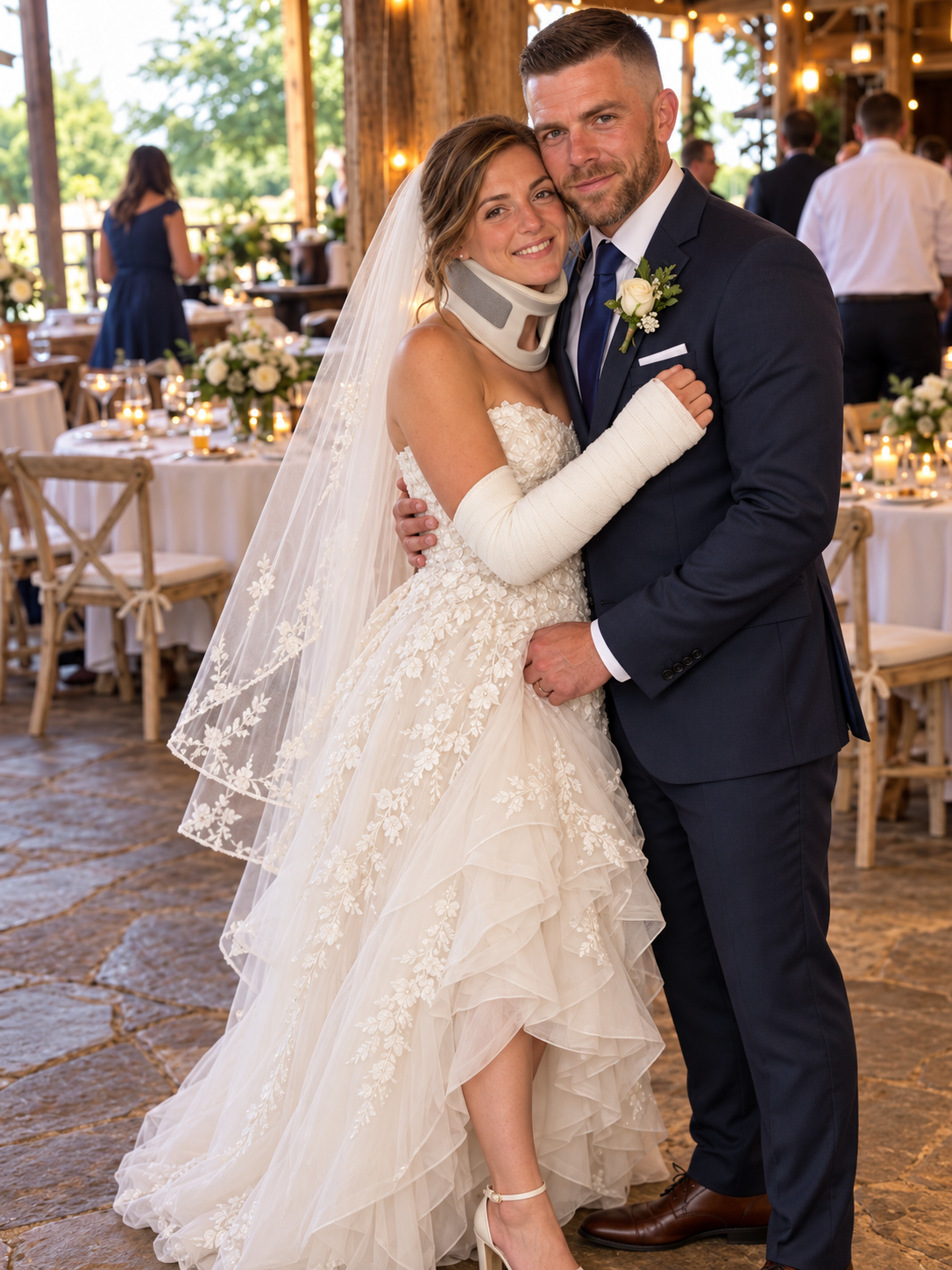
On the wedding day, I saw Andrew waiting for Amanda with an expression that reminded me of the first time he had watched her accomplish something difficult. There was tenderness in his face, but there was also a kind of astonishment, as though he could hardly believe this particular happiness belonged to him. Amanda approached him with a smile that seemed to gather together every hopeful moment from the preceding years. I had prepared myself for tears, yet I managed to remain composed through much of the ceremony. It was only when they stood together, their hands joined, that I felt the full weight of what we were witnessing.
During the reception, Amanda stepped onto the dance floor with her new husband. I remembered the conversation she had described from her first appointment with Andrew. She had wanted to dance without searching for somewhere to sit. At the time, the wish had seemed so modest that its difficulty was heartbreaking. Now she moved beside him with an ease that would once have seemed impossible. I watched her laugh when he guided her through a turn. The first song ended, and I expected them to leave the floor. Instead, they remained where they were as the next piece of music began.
Robin stood beside me, holding my hand. After the second song, he glanced toward Amanda and then toward me. Neither of us said anything. When the third song began, I felt his grip tighten. She was still dancing. She was not pretending to be stronger than she felt, nor struggling visibly to remain upright. She was enjoying herself. Robin leaned close and murmured that this was the third song. I told him I knew how to count, though my voice sounded unfamiliar. He looked at our daughter again and quietly observed that she hadn’t needed to sit down once. I couldn’t answer.
Across the dance floor, Andrew caught my eye. For a second, his expression changed. I could see that he remembered the wish Amanda had made in the hospital, just as I did. He gave the smallest nod before turning back toward his wife. I remember thinking that he had witnessed something in her recovery that would always matter to him. It reassured me to believe they shared an understanding born from everything she had endured. Looking back, I can see how easily that reassurance allowed me to overlook another possibility: Andrew might remember far more about Amanda’s medical history than I knew.
The months following the wedding were peaceful in ways that initially felt unfamiliar. Amanda and Andrew settled into married life, learning the habits and compromises that accompany sharing a home. They visited us regularly, sometimes for dinner and sometimes simply because they wanted to spend an afternoon together. Amanda appeared content. Andrew seemed affectionate and attentive. Robin enjoyed having them around and occasionally teased them about becoming an old married couple. I watched my daughter’s happiness with gratitude, though I had finally learned not to demand constant evidence that everything would remain perfect. Their marriage belonged to them, and I wanted to respect that.
Nearly a year after the wedding, Amanda called to ask whether she and Andrew could come over for Sunday dinner. There was nothing unusual about the invitation. They joined us often enough that I didn’t think to ask whether they had anything particular to discuss. I planned a familiar meal and spent the afternoon preparing it while Robin found small ways to be helpful. When the doorbell rang, Amanda entered carrying a little gift bag. She held it out to me with a smile that immediately made me suspicious. I asked whether there was a special occasion I had forgotten.
She told me the present was for me, although not entirely. I glanced toward Andrew, who was standing beside her. He looked pleased, but there was something almost solemn about the way he watched Amanda. I assumed he was simply enjoying the surprise she had planned. Robin encouraged me to open the bag instead of questioning everyone. Inside was a pair of tiny knitted baby booties. One was slightly larger than the other, as though whoever had made them had not quite matched the measurements. I turned them over in my hands, too startled to speak. Amanda stood watching me, barely containing her excitement.
“You’re going to be a grandmother,” she said. I looked from the booties to her face, searching for confirmation even though the meaning was obvious. She laughed and told me she was eleven weeks pregnant. I stood so quickly that my chair shifted against the floor. I embraced her, afraid for a moment that I might hold her too tightly. Robin came around the table and wrapped his arms around both of us. Andrew joined the congratulations, and our kitchen filled with overlapping voices. I remember touching Amanda’s cheek and asking whether she was happy. Her answer came immediately. She was very happy.
The news brought an excitement I hadn’t allowed myself to imagine during Amanda’s worst years. I asked questions about how she was feeling, whether she had seen her doctors, and when the baby was expected. Amanda answered patiently before reminding me that the pregnancy was something she and her medical team were already discussing carefully. I apologized for overwhelming her. She smiled and said she had anticipated exactly this reaction. Robin wanted to know whether the baby would need little shoes before learning to walk. Amanda held up the knitted booties and informed him that practical necessity had very little to do with the pleasure of buying tiny things.
We moved to the table, although I was so excited that I barely remembered what I had cooked. Amanda placed the booties beside her plate, where I could see them every time I looked up. Robin kept finding reasons to congratulate the couple again. Andrew thanked us and listened while Amanda described their excitement. He seemed quieter than usual, but I attributed that to the importance of the news. After everything Amanda had experienced, the prospect of becoming parents must have felt enormous to both of them. I had no reason to suspect that a much older fear was beginning to surface beneath his happiness.
Partway through dinner, Amanda mentioned that they had already begun considering baby names. Robin laughed and said they had plenty of time to decide. Amanda agreed, then admitted that there was one name she particularly liked if the baby turned out to be a boy. Andrew, who had been reaching for his glass, stopped moving. The change was so brief that I nearly missed it. He looked directly at Amanda, waiting for her to continue. She lifted one of the little booties and smiled as though she were about to share another harmless secret.
“Thomas,” she said. “I’ve been thinking about Thomas.”
The name hung in the room for a moment. Robin nodded thoughtfully. He seemed to find nothing unusual about it. Amanda turned toward Andrew and explained that she liked the idea of honoring his father. It was a loving gesture, made without hesitation. I glanced at Andrew, expecting him to appear touched. Instead, his expression had gone strangely blank. His fork touched the plate with a faint metallic sound. He looked at Amanda as though he needed to ask her something but couldn’t decide how to begin.
Andrew said the name might be a possibility, but there was no warmth in his reply. Amanda didn’t notice. She was busy explaining that they didn’t need to decide immediately and that they might feel differently after learning more about the baby. Robin began offering his opinion about names in general. The conversation continued around Andrew, but he barely participated. I watched him fold and unfold his napkin. He had stopped eating. When I asked whether he was all right, he looked up too quickly and assured me he was simply overwhelmed by everything that was happening.
I wanted to accept that explanation. Becoming a father was an enormous responsibility, and Andrew had always appeared deeply aware of Amanda’s difficult medical history. Perhaps he was worried about her health during pregnancy. Perhaps the happiness had simply caught up with him. But I had spent thirteen years learning to recognize fear in hospital corridors, consultation rooms, and the faces of people attempting to deliver difficult news gently. Andrew wasn’t merely emotional. Something had frightened him, and the change had happened the instant Amanda mentioned his father’s name.
As dinner ended, I began clearing the table, leaving the little booties near my plate because I wanted to look at them again. Amanda and Robin moved into the living room, where their debate about whether babies needed shoes continued. I heard Amanda laughing and Robin defending his position with exaggerated seriousness. Andrew remained behind for a moment, staring toward the booties. Then he picked up two drinking glasses and followed me into the kitchen. I was standing beside the sink when he put them down. He looked toward the living room, checked that Amanda couldn’t hear, and reached for my wrist.
“Christie,” he said quietly, “there’s something I need to tell you.”
I turned toward him. His face had lost its color, and the hand that had touched my wrist was trembling. I asked whether something was wrong with Amanda. He shook his head. I asked about the baby. Again, he said no. His answers should have relieved me, but his expression grew more strained with every question. He glanced toward the hallway and asked whether we could speak somewhere private. From the living room came another burst of Amanda’s laughter, the sound of a young woman who believed she was spending an ordinary, happy evening with her family.
I set down the plate I was holding and followed my son-in-law out of the kitchen. Something in his manner told me that whatever he had to say would change the way I understood our daughter’s marriage. I hoped I was imagining it. But when Andrew turned to face me, his eyes were wet, and he could barely hold my gaze. He said he had kept something from Amanda for years. Then he added that hearing her suggest his father’s name for their child had made the silence impossible to bear any longer.
END PART 3
PART 4 TITLE: In the Quiet Hallway, Andrew Finally Named the Man from Amanda’s Childhood, and Christie Realized the Past Had Entered Their Family Unnoticed
Andrew stood in our hallway with his shoulders drawn tight, listening to the conversation in the next room as though he feared Amanda might suddenly appear. I had never seen him behave like this. During the most difficult periods of her treatment, he had spoken with care and composure, even when the information was discouraging. Now he seemed unable to find a comfortable position for his hands. He clasped them, released them, and finally pressed one against the wall. I waited for him to explain himself, but he remained silent long enough that I began to imagine possibilities I couldn’t bear to consider.
“Andrew, you have to tell me what’s happening,” I said. My voice was quieter than I intended. He looked toward the living room again. I asked whether Amanda’s illness had returned and whether he had discovered something about her latest medical results. He answered that her condition remained stable. I asked whether the pregnancy had created a problem nobody had told me about. He shook his head immediately. There was no new medical emergency, he insisted. The relief I should have felt lasted only a moment. If neither Amanda nor the baby was in immediate danger, I couldn’t understand why he looked so frightened.
He took a breath and said that he had been carrying information Amanda deserved to know. I asked what kind of information. He glanced down at his wedding ring, moving it slightly with his thumb. “I should have told her a long time ago,” he said. I wanted to ask why he hadn’t, but he continued before I could speak. He had kept a terrible truth from my daughter, he admitted, and Amanda’s suggestion about the baby’s name had brought the secret back into the open. He said he couldn’t allow her to make such an important decision without understanding what the name meant.
I stared at him. “What decision?” I asked. “Choosing a name?” Andrew nodded, but he looked deeply unhappy with the way the conversation was unfolding. He explained that he was speaking about Thomas. For a moment, I thought I had misunderstood. Amanda had suggested naming her child after Andrew’s father, a gesture of affection toward a man who was no longer alive. I could understand Andrew feeling emotional about that. I couldn’t understand why it required a private conversation with his mother-in-law. I asked him whether there was something about his father Amanda didn’t know.
Instead of answering directly, he asked me to remember a much earlier period of Amanda’s life. He said the matter had begun long before he met her, when she was still a little girl. I felt irritation rising beneath my confusion. He was speaking in fragments while I stood there trying to determine whether my daughter’s future was threatened. “Please stop making me guess,” I told him. “If you’ve done something that affects Amanda, I need you to explain it clearly.” He accepted the rebuke without argument. Then he said that the part of her history he was referring to had happened when she was seven years old.
Seven. I knew that age as intimately as I knew my own name. It was when Amanda’s mysterious symptoms began taking over our lives. I remembered nights interrupted by fever, mornings when she complained of aching legs, and afternoons when her energy seemed to disappear without warning. I remembered how young she looked sitting on the edge of an examination table, trying to be brave because Robin and I were so visibly concerned. The image came to me so sharply that I almost forgot Andrew was standing in front of me. I asked what he could possibly know about those early years.
He didn’t answer immediately. Instead, he asked whether I remembered the first physician we consulted when Amanda’s symptoms became worrying. I told him of course I remembered. His question unsettled me because I had never discussed that particular appointment with Andrew. Amanda’s medical history was extensive, and I knew he had reviewed her records during treatment, but there were countless appointments stretching across more than a decade. Why would he single out one consultation from the beginning? I searched his expression, waiting for some indication of what he wanted me to understand. He seemed almost afraid to speak the next sentence.
“The doctor you saw when she was seven,” he said. “Do you remember anything about him?” I thought of the office with the aquarium. I remembered watching the fish while the physician explained that children’s symptoms could be difficult to interpret. He had seemed calm, experienced, and certain that we didn’t need to become alarmed by what he had observed. His reassurance had made such an impression that I could still remember the feeling of relief when we left. I told Andrew that I remembered the appointment clearly, although I didn’t know why he was asking about it now.
He wanted to know whether I remembered the physician’s name. I frowned, trying to understand where this was leading. Thirteen years had passed since the appointment, and countless medical professionals had subsequently cared for Amanda. I remembered the first doctor’s face only vaguely, but I could recall his first name once Andrew prompted me to think about it. Thomas. The sound stirred an old memory. I had heard that name in our dining room less than an hour earlier, spoken by Amanda with such simple affection. I looked at my son-in-law, then toward the kitchen, where the little knitted booties still rested beside my plate.
“Your father’s name was Thomas,” I said slowly. Andrew nodded. I tried to make sense of the coincidence before allowing myself to imagine anything more significant. Thomas was hardly an unusual name. There were thousands of men who shared it, and more than one physician could have practiced in our area over the years. Yet Andrew’s expression was not that of someone confirming a harmless coincidence. He was waiting for me to understand something. I asked him directly whether he was suggesting that his father had known Amanda when she was a child. His eyes lowered toward the floor.
“Christie,” he said, “the doctor who examined Amanda when she was seven was my father.”
For a moment, I couldn’t move. I could hear Amanda talking in the living room, her voice rising as she challenged something Robin had said about babies. The ordinary sound made the hallway seem strangely disconnected from the rest of the house. I looked at Andrew, searching for a reason this could not be true. He had been part of the medical team that helped my daughter regain her strength. He had dated her after their professional relationship ended. He had stood beside her at the altar. He had spent nearly a year as her husband. And now he was telling me that his father had been the physician who reassured us during the earliest stage of Amanda’s illness.
I asked him to repeat himself. He did. His father, Thomas, had been the doctor we consulted when Amanda first began experiencing persistent symptoms. I remembered the fish in the aquarium, the physician’s calm manner, and Robin holding my hand on the drive home. Those memories had occupied a particular place in my mind, belonging to a period of uncertainty before we understood how serious Amanda’s condition might become. Andrew had never been part of that picture. Yet he was now standing in front of me, connecting himself directly to a man whose advice had influenced our first response to our daughter’s illness.
I demanded to know why nobody had recognized the family connection earlier. Andrew explained that he used his mother’s surname rather than his father’s. I had known him only by the name he used professionally and personally. Nothing about it had led me to associate him with the physician from Amanda’s childhood. I tried to remember whether he had ever mentioned his father’s work in medicine. There had been conversations about his family, certainly, but I had never understood that his father was someone Robin and I had once consulted. The absence of a shared surname suddenly explained how the connection had remained invisible to us.
“Did Amanda know?” I asked. Andrew shook his head. He reminded me that she had been seven during the appointment and did not remember the physician’s name. I considered that explanation. Amanda remembered pieces of her childhood illness in extraordinary detail, but much of what she recalled involved physical discomfort, frightening procedures, or people who had spent considerable time caring for her. An early consultation with a doctor she saw briefly might not have stayed in her mind. Still, the idea that she was planning to honor a man who had once examined her, without knowing the connection, made me deeply uncomfortable.
I asked whether Andrew had ever told her that his father practiced medicine. He said she knew things about his family, but she had never understood the significance of this particular appointment because he had not explained it. The answer disturbed me. An ordinary omission could happen during a conversation. People didn’t necessarily share every detail of their parents’ lives, especially when the parent was dead and the events belonged to the past. But Andrew wasn’t describing an ordinary forgotten detail. He had brought me into the hallway specifically because something about his father’s involvement with Amanda troubled him enough to threaten the peace of an otherwise joyful evening.
I asked what kind of doctor his father had been. Andrew answered without embellishment. His father had been the physician who assessed Amanda’s early symptoms, the same man whose reassurance Robin and I remembered. I pressed him to tell me why that mattered now. Was he concerned merely because Amanda wanted to use the name Thomas? Had his relationship with his father been difficult? Andrew looked pained by the questions. He said the problem wasn’t simply whether his father deserved to have a grandchild named after him. It was what Amanda might think if she knew more about the consultation and the way her illness had been handled.
I felt my stomach tighten. “What are you saying about that appointment?” I asked. Andrew ran a hand over his face. He explained that his father had encountered symptoms that could have several possible explanations, which was part of why the situation had seemed less alarming at the time. But there had been information in Amanda’s medical history that should not have been dismissed so easily. Andrew stopped before going further, as though he were choosing his words with exceptional care. I asked whether he was telling me that his father had made a mistake. He didn’t answer immediately, and that hesitation frightened me more than an admission might have.
I thought back to leaving the physician’s office with Robin. We had arrived worried about fevers, exhaustion, and pain that seemed unusual for a child who had previously been so active. We left believing that our fears might be excessive. We had wanted reassurance, and the doctor had given it to us. I remembered how grateful I felt afterward. Even now, years later, the memory of that relief was painfully vivid. I asked Andrew whether his father had recognized the possibility of a serious problem. He said the medical history contained a finding that deserved closer attention. I wanted to know what that finding meant and why we hadn’t been told to investigate it further.
Andrew explained that he couldn’t responsibly reduce Amanda’s complicated history to one appointment or claim with certainty how her later illness would have developed under different circumstances. I understood the distinction, but I was growing impatient with the careful language. For thirteen years, Robin and I had carried questions about what we could have done differently. We had trusted the physicians who advised us. We had followed recommendations, returned when symptoms worsened, and searched for help whenever the existing treatments proved insufficient. Now my daughter’s husband seemed to be suggesting that something important had been overlooked before we even understood the scale of her illness.
“Did your father tell us not to worry when there was something we should have worried about?” I asked. Andrew looked toward the living room, then back at me. He acknowledged that his father’s reassurance had been stronger than the circumstances justified. He was careful not to claim that his father had caused Amanda’s illness. He knew the condition existed independently of anything a doctor had said or done. The concern was that her early symptoms had not received the follow-up they deserved. I tried to absorb the explanation, but the distinction between causing an illness and failing to respond adequately to it offered little comfort.
My mind returned to Amanda at fourteen, lying in a hospital bed and worrying about the pain in my back. I remembered birthdays celebrated beside medical equipment and conversations in which she had asked questions nobody could answer confidently. I knew it would be irresponsible to conclude that one physician’s mistake explained every difficult year. Amanda’s condition had been complex, and the medical professionals who eventually cared for her had faced genuine uncertainty. Yet the possibility that an earlier decision might have influenced the course of events made those memories feel newly unsettled. I wanted facts, not an explanation shaped by Andrew’s guilt or my anger.
I asked why he knew so much about a consultation that had taken place when he was not treating Amanda. At first, he spoke about how medical records preserve details that patients and families may no longer remember. He said that a physician caring for someone with a long, complicated illness often needs to examine previous evaluations in order to understand what has already been investigated. I knew that much. I had watched doctors review Amanda’s history for years. But I wasn’t asking how physicians obtained information. I was asking why Andrew had connected one particular record to his father and why he considered it important enough to confess now.
He hesitated, and I realized the conversation was approaching something he had been trying to avoid. I asked whether his father had spoken to him about Amanda before Andrew became part of her medical team. Andrew’s expression changed. He didn’t offer a simple yes or no. Instead, he explained that his father had sometimes discussed a childhood patient whose early symptoms had not been followed up as they should have been. It had troubled him. Andrew’s familiarity with that history was one reason he had recognized the significance of the old medical record when he encountered it years later.
The revelation raised more questions than it answered. I wanted to know what his father had said, when those conversations had taken place, and whether he had understood that his patient was Amanda. Andrew seemed overwhelmed by the number of things I was asking. I could see he was struggling to separate what he knew from what he believed. For the first time, I considered the possibility that he had carried his own difficult relationship with that medical history for many years. But whatever burden he felt, Amanda was the person whose childhood had been affected. I would not allow his discomfort to become the center of the conversation.
From the living room came Robin’s laughter. I looked toward the sound and thought of my husband spending years wondering whether he had been sufficiently persistent when our daughter’s symptoms first appeared. Robin had trusted the first physician because trusting a trained professional seemed reasonable. He had later blamed himself when Amanda became seriously ill. I knew how much that guilt had cost him. If Andrew possessed information that might change our understanding of the early consultation, Robin deserved to hear it. More importantly, Amanda deserved to hear it. She was an adult, a wife, and soon to be a mother. Nobody had the right to decide that the truth was too difficult for her.
I asked Andrew whether he had discovered the connection only recently. Perhaps he had been reviewing something related to Amanda’s pregnancy, I suggested, and had noticed his father’s name for the first time. If that were what happened, I could understand why he was only now bringing it to us. He shook his head. The gesture was small but unmistakable. I felt my anger sharpen. “Then when did you realize?” I asked. He looked down at his wedding ring again. I waited while he gathered himself, determined not to fill the silence with another question.
“Andrew,” I said, “I need you to be precise. Did you recognize Amanda’s history while you were still treating her?” He told me that he had recognized it during his initial review of her records. I remembered the first day at the new hospital, when I had found him standing beside Amanda’s bed with the file open. He had paused over a page before speaking to her. Until now, I had interpreted that pause as professional concentration. Suddenly it appeared in a different light. I could see him studying the document while Amanda waited beside him, unaware that her medical history held information connected to his own family.
I asked whether that page contained his father’s name. Andrew said it did. The earlier consultation was part of the history he had examined while preparing to work with Amanda. The date and the physician’s name had immediately caught his attention. He had recognized their connection to the childhood patient his father sometimes discussed. I remembered the way Andrew closed the folder before turning to Amanda. He had smiled when she made a joke. He had asked about her symptoms and listened attentively. Then he had asked what she wanted to do if the treatment helped her recover. At the time, I thought I was witnessing the beginning of a particularly compassionate professional relationship.
Now I had to consider that Andrew had entered that relationship already carrying knowledge we did not share. I asked whether the connection had influenced his decision to care for Amanda. He answered that his assignment to the specialist team had been made before he recognized her history. He hadn’t sought her out because of his father. I believed that might be true, but it didn’t settle what troubled me. I wanted to know what happened after he recognized the name. Had he discussed it with anyone? Had he considered telling us? Had he understood that Amanda herself knew nothing about the connection?
Andrew said that his immediate responsibility had been to provide appropriate care as part of the team. He had concentrated on Amanda’s treatment and on the possibility that the newer approach might help. I could accept that a physician needed to remain focused on his patient’s condition. But the treatment was no longer the only issue. Andrew had stopped being Amanda’s doctor. He had met her again outside the hospital. Their relationship had developed into love, then marriage. He was now expecting a child with her. At every stage, the information he possessed had become more personally significant, not less.
I remembered Amanda telling me about her first dinner with Andrew, the way she laughed while explaining the missing fries, and the seriousness with which she insisted she loved him for reasons entirely separate from her recovery. I remembered their wedding, the three songs, and the look Andrew had given me across the dance floor. Those memories were precious, and I didn’t want to surrender them. Yet I couldn’t ignore what I was beginning to understand. Andrew had known something about Amanda’s past that might change how she interpreted the earliest years of her illness. He had also known that the man responsible was his own father.
“Before you met her?” I asked, scarcely recognizing my voice. “You knew all of this before you even spoke to my daughter?” Andrew closed his eyes for a moment. When he opened them, he looked directly at me for the first time since the conversation began. He told me that he had seen the name and the date while preparing for his first encounter with Amanda. He had recognized the case from what his father had said over the years. By the time he entered her room and asked how she was feeling, he already understood that her history was connected to a mistake his father had never entirely forgotten.
I stepped away from him and steadied myself against the narrow table in the hallway. A framed photograph shifted beneath my hand. From the living room, Amanda called something to Robin, and he answered with a laugh. They were discussing the baby, completely unaware of what was happening only a few steps away. I looked at Andrew and realized that my next question would not be about his father at all. It would be about him, the man who had promised to share a life with my daughter. He had been given many opportunities to speak after their professional relationship ended, and apparently he had allowed every one of them to pass.
I asked him one final time whether he understood exactly when he had recognized Amanda’s connection to his father. There could be no confusion about dates, no suggestion that he had remembered something gradually, and no convenient uncertainty that would soften what he was admitting. Andrew nodded. His voice was barely audible, but his answer was unmistakable.
“I knew before I walked into Amanda’s hospital room that first day.”
I stared at him, unable to reconcile the man who had helped my daughter regain her strength with the husband who had carried this knowledge into their marriage. Until that moment, I had believed the secret concerned something his father had done thirteen years earlier. Now I understood that the more immediate betrayal belonged to Andrew himself. Whatever explanation he offered next, he would have to account not only for an old medical mistake but also for every day he had chosen to remain silent while Amanda trusted him with her future.
END PART 4
PART 5 TITLE: Christie Had Learned When Andrew Discovered the Truth, but His Next Confession Would Reveal How Often He Had Chosen to Remain Silent
For several seconds after Andrew answered me, I could hear nothing except the faint conversation drifting out of our living room. Amanda was explaining something to Robin about the baby, and my husband was offering one of his deliberately ridiculous opinions. Under ordinary circumstances, I would have joined them. Instead, I stood in the hallway beside the man my daughter had married, trying to reconcile two versions of him that suddenly seemed impossible to separate. Andrew had cared for Amanda when she was desperately ill. He had also entered her hospital room knowing that his father had once failed to give her symptoms the attention they deserved.
I looked at the photograph I had knocked crooked earlier. It showed Amanda and Andrew at their wedding, standing close together, their faces turned toward each other. I remembered taking the picture and thinking how fortunate we were that our daughter had lived to experience such happiness. Now I wondered what Andrew had been thinking on that same day. Had his father’s mistake occurred to him while he made his vows? Had he considered telling Amanda before the ceremony? Or had he managed to push the past so far away that he could almost pretend it had no connection to the woman beside him?
“Why didn’t you tell us?” I asked. Andrew opened his mouth, but I raised my hand before he could answer. “I don’t mean why you waited until tonight. I mean why you said nothing when you first recognized the record.” He lowered his eyes. For a moment, he appeared to be searching for a single explanation that would make his conduct understandable. Then he admitted that, during Amanda’s treatment, he had decided the information would only burden her. His father was dead. Her condition was already serious. He had believed that concentrating on the treatment offered a better chance of helping her than reopening an old medical failure.
I understood the argument, and that disturbed me. At the time, Amanda had been exhausted and frightened. Her treatment was uncertain, and we were struggling to endure each day without anticipating another disappointment. I could imagine a physician deciding that an emotionally difficult revelation might distract from urgent medical decisions. But understanding why Andrew might have hesitated during those first weeks did not explain everything that followed. “That accounts for the beginning,” I told him. “What happened after she improved?” He glanced at me, and his silence gave me the answer before he spoke.
“At first, I kept telling myself it wasn’t relevant to what we were doing,” he said. His voice was quiet enough that I had to lean closer. He explained that the team had needed to understand Amanda’s complete medical history, but the old consultation was not something they could reverse. They could evaluate her condition as it existed, determine whether the new treatment was appropriate, and monitor her progress. He had focused on those responsibilities. When she began getting stronger, the immediate pressure surrounding her care gradually eased. By then, he said, he had become accustomed to not mentioning what he knew.
I felt anger rise at that last admission. Silence had become comfortable for him because he was the person controlling the information. Amanda had never been given a chance to decide whether the past mattered. Robin and I had spent years wondering whether we had recognized the seriousness of her childhood symptoms soon enough. We had blamed ourselves for accepting reassurance from the first doctor. Andrew had possessed knowledge that might have altered those questions, yet he had quietly allowed us to continue carrying them. I asked whether he understood what that meant. He nodded, but I wasn’t convinced he fully understood.
“When Amanda was little,” I said, “I used to sit awake trying to remember exactly what I told your father.” The memory was so clear that I could almost smell the disinfectant in his office. I told Andrew how I had replayed the appointment, wondering whether I had forgotten to mention one of Amanda’s fevers or failed to describe the pain in her legs accurately. I had questioned whether the doctor might have taken her symptoms more seriously if I had insisted on further testing. “Your father told us not to be alarmed,” I said. “We believed him because we thought he knew what he was doing.”
Andrew listened without attempting to interrupt. I could see that the details troubled him, but I no longer wanted to protect him from discomfort. I described how Robin had reached for my hand during the drive home and said that perhaps we had worried unnecessarily. For years, that moment had seemed to me like a failure of parental judgment. We had been relieved when we should have been asking more questions. I had sometimes wondered whether our relief had made us less attentive afterward. Now I was beginning to understand that the confidence we borrowed from the doctor might not have been justified.
“Your father wasn’t responsible for causing Amanda’s illness,” Andrew said carefully. I looked at him so sharply that he stopped. “I know that,” I replied. “But he was responsible for what he told us.” Andrew agreed. He explained that his father had encountered symptoms that did not point neatly toward one explanation. There had been uncertainty, and uncertainty itself was not a failure. The problem was a particular finding that deserved further investigation. His father had not arranged the follow-up it warranted, and the reassurance he offered had been too definite. It was a distinction Andrew had clearly considered many times.
I asked whether that meant Amanda could have received appropriate treatment sooner. He took a long breath before answering. Earlier investigation might have led to an earlier diagnosis, he said, but he couldn’t know exactly how events would have unfolded. Her condition was complicated, and different decisions would not necessarily have prevented every difficult year. I appreciated that he refused to invent certainty, even though I desperately wanted a clear answer. We had lost so much time watching Amanda suffer that the thought of any avoidable delay was almost unbearable. I asked whether his father had understood the possibility of that lost time.
“He did,” Andrew said. He told me that the missed follow-up had remained with his father long after the appointment. Thomas had spoken about the child whose symptoms he had not pursued carefully enough. Sometimes the conversations had been brief. Other times he had returned to the same questions, attempting to understand why he had trusted his initial impression. Andrew’s voice changed when he spoke about those memories. I realized that his father had not been simply a name in an old medical record. He was also a parent whose regret had shaped the way his son understood professional responsibility.
For a moment, I imagined Thomas sitting with Andrew, discussing a patient who had troubled him for years. I wondered whether he had known how ill Amanda eventually became. I wondered whether he had pictured the same little girl I remembered, sitting near the aquarium with her legs dangling from the examination table. But those questions belonged to a man who could no longer answer them. Whatever regret he had felt, he had never contacted Robin or me to explain what he believed had gone wrong. I told Andrew that private remorse did not erase the consequences of an error.
“I know,” he answered. This time, he didn’t attempt to explain further. His willingness to accept the point softened my anger for only a moment. I was not standing in that hallway to judge the entire life of a deceased physician. I wanted to understand why my son-in-law had allowed a secret to follow him into a relationship with Amanda. I asked whether he had ever considered telling her after another doctor assumed responsibility for her care. Andrew rubbed his palms together and said that he had. In fact, he admitted, once he knew Amanda was recovering, the thought had returned repeatedly.
I remembered the day Andrew stopped being directly responsible for her treatment. Amanda had complained about the change for several days, half teasing and half genuinely disappointed. I had believed the transfer marked a sensible professional boundary and nothing more. Now I wondered what else Andrew had been thinking while another physician took over. He told me that the decision to transfer her care had been about maintaining appropriate professional boundaries and ensuring continuity of treatment. He had not done it simply to conceal the family connection. Nevertheless, he acknowledged that afterward there had been no immediate medical responsibility preventing him from explaining what he knew.
The admission gave me a strange feeling of relief, followed quickly by renewed anger. If he understood that there had been opportunities, then he could no longer pretend the matter had escaped his attention. I asked whether he had thought about it when he encountered Amanda outside the hospital. He nodded. He remembered their unexpected meeting clearly. By then, Amanda’s condition had remained stable under another physician, and she was beginning to enjoy a more independent life. Andrew said he had been happy to see her doing well. Their conversation had felt natural in a way neither had anticipated. He had wanted to see her again.
“You asked her to have coffee,” I said. He confirmed it. I remembered Amanda coming home afterward, trying to conceal how pleased she was. She had told me about their conversation with an excitement I hadn’t seen in years. I could picture her sitting at our kitchen table, insisting that she didn’t know whether their next meeting would be a date. I had teased her gently, careful not to embarrass her. That memory had always made me smile. Now it carried another meaning. Amanda had been deciding whether to open her life to Andrew without knowing that he was withholding something deeply connected to her childhood.
“I was going to tell her before our first date,” Andrew said. I waited to see whether he would offer an excuse. He continued that he had considered how to begin the conversation. He worried that Amanda might interpret his interest as guilt rather than affection. He imagined her asking whether he had approached her because he wanted to repair his father’s mistake. The more he considered those possibilities, the more afraid he became of losing the connection they had begun to build. In the end, he said, he had decided to wait until they knew each other better.
“But you didn’t wait until you knew her better,” I replied. “You kept waiting after you knew her.” Andrew lowered his head. He admitted that each new stage of their relationship made the truth feel harder to reveal. At first, he had told himself they had only shared coffee. Then they had enjoyed several dinners. As their affection developed, he feared that admitting the connection would make Amanda question every conversation they had shared. By the time he was certain he loved her, he had convinced himself that speaking might destroy something that had become essential to him.
I thought about Amanda’s explanation of why she loved him. She had spoken about ordinary kindness, about being heard and respected, about no longer feeling as though her illness defined every relationship. She had mentioned the ridiculous incident with the missing fries, laughing because I couldn’t understand why it mattered so much. What she had been trying to explain was simple. Andrew paid attention to the woman she was, not merely to the patient she had been. Yet all the while, he had been withholding information precisely because of his fear that she might see him through the history they shared.
“You say you were afraid she would look at you and see your father,” I said. Andrew nodded. “Then you let that fear become her problem without telling her.” He looked confused for a moment, so I explained. If Amanda learned the truth now, she would have to reconsider memories she had believed were honest and complete. She might question whether Andrew had approached her out of love, guilt, or some combination he himself had never examined carefully enough. She would have to carry the uncertainty created by his decisions. “You protected yourself from a difficult conversation,” I told him, “and left her to face a much worse one.”
Andrew leaned against the opposite wall. He looked exhausted, but he did not argue. After a moment, he admitted that there had been times when he wanted to speak and deliberately chose not to. I asked him to give me one example. He said that before asking Amanda to marry him, he had considered telling her about his father. He had imagined how unfair it would be for her to accept a proposal without knowing the connection. For several days, he had struggled with whether to bring it up. Then he had become afraid that she might believe their entire relationship began as an attempt to make amends.
“So you proposed without telling her,” I said. He answered yes. My thoughts returned to Amanda arriving home with the engagement news, her face so bright that Robin had embraced her before she finished speaking. I remembered how she had held out her hand, showing us the ring. We had asked questions about their plans, and Andrew had answered with warmth and confidence. I wondered whether he had looked at me then and remembered the woman who once brought a sick seven-year-old into his father’s office. The possibility made that happy afternoon feel painfully complicated.
“Before the wedding?” I asked. Andrew’s eyes closed. For a moment, I thought he might be unable to answer. Then he admitted that he had again considered telling Amanda. He had understood that marriage would make the secret even more consequential. The ceremony was approaching, arrangements had been made, and their families were preparing to celebrate. He told himself that he couldn’t choose such a moment to reopen the most painful years of Amanda’s life. Yet he knew postponing the conversation would not make the information less important. He had simply hoped that the past might remain separate from the future they were building.
I looked at the wedding photograph again. Amanda was smiling up at Andrew with complete trust. She had spent much of her life dependent on other people to explain what was happening to her body. As an adult, she had worked hard to reclaim the right to decide what happened next. At the altar, she had made a choice freely, believing she understood the man standing beside her. Now I wondered how she would feel when she learned that he had hidden this history from her. It wasn’t that the information necessarily would have changed her decision. It was that she had never been allowed to consider it.
Andrew seemed to recognize what I was thinking. “I loved her when I married her,” he said. There was an urgency in his voice, as though he feared I might doubt the one thing he considered certain. I told him I believed he loved Amanda. I had seen too much tenderness between them to dismiss it as a performance. He looked relieved, but I wasn’t finished. “Loving her doesn’t give you the right to choose which parts of the truth she can bear,” I added. His expression tightened again. The relief disappeared almost as quickly as it had come.
He said he knew that now. I asked whether he truly understood it or had merely reached a point where his secret was impossible to keep. The question seemed to hurt him. He said that watching Amanda announce the pregnancy had made him happier than he could describe. He wanted to become a father with her. He wanted the ordinary future they had spent so long imagining. Yet when she spoke his father’s name, he realized that his silence was about to influence their child’s life as well. Amanda was proposing to honor a man without knowing the connection between that man and her own illness.
“That made you decide to tell the truth?” I asked. Andrew nodded. I studied him, uncertain whether I should feel grateful that he had finally spoken or furious that it had taken so much. Amanda had carried a child for eleven weeks, and Andrew had known about the pregnancy long enough to begin imagining their future as parents. During that time, he had still not confessed. It was only when she suggested his father’s name that he seemed to understand the full absurdity of allowing the secret to continue. I asked whether he had planned to tell her before the baby arrived if she had never mentioned Thomas.
Andrew didn’t answer immediately. I could see that he was considering the question seriously, and I disliked the uncertainty on his face. Eventually he admitted he wanted to believe he would have found the courage. But he could not honestly promise what he might have done. The admission chilled me more than another excuse would have. It meant he recognized how often fear had determined his choices. It also meant that Amanda’s innocent suggestion had forced a conversation he might otherwise have continued postponing. A baby’s name had accomplished what years of love and marriage had not.
I asked whether he had spoken to anyone else about the connection. He told me he had not discussed it with Amanda or our family. His account of the old record and his father’s regret had remained something he carried privately. I found myself wondering how much of that secrecy had shaped his behavior without any of us noticing. Perhaps I had mistaken his occasional quietness for sensitivity. Perhaps Amanda had interpreted his reluctance to discuss parts of her medical history as respect for her desire to move forward. I couldn’t know. The uncertainty was another consequence of having trusted a version of events that was incomplete.
For a moment, I considered how often I had tried to protect Amanda by deciding what she should hear. When she was ill, I sometimes softened difficult information before repeating it, hoping to give her an easier evening. As she grew older, she demanded that we stop doing that. She wanted to know what the doctors knew, even when the answer was frightening. I had learned slowly that shielding her could become another way of denying her control. Andrew had lived beside her long enough to know this about her. That made his decision to remain silent especially difficult to forgive.
The conversation had lasted long enough that the laughter from the living room had quieted. I heard Robin moving a chair and Amanda asking him something about the pregnancy. Her voice was relaxed. She believed we were clearing dishes and talking about ordinary family matters. I glanced toward the kitchen, where the small knitted booties rested near the remains of dinner. They had seemed like the perfect symbol of everything Amanda had gained. Now Andrew was treating them as a reminder of the truth he had refused to face. I realized that the same object could hold two entirely different meanings depending on what a person knew.
“There is something else you need to understand,” I told him. Andrew straightened, perhaps expecting another question about his father. Instead, I asked what would happen if Amanda decided not to name her child Thomas. He said he would accept that. I asked whether he expected me to convince her to abandon the name without explaining why. He looked startled and denied it. Yet I could hear hesitation beneath the answer. He had brought the truth to me first, not to his wife. Whether he intended it or not, he had placed me in a position where I could influence her before she understood the facts herself.
I told him that I would not do that. I would not secretly direct Amanda toward one decision while pretending nothing important had happened. If she changed her mind about the name, it had to be because she understood the history and decided for herself. Andrew agreed, but I could see that he remained frightened. His eyes kept moving toward the living room. I suspected he was imagining the moment he would have to face her. I was frightened too. I knew that what he said might alter the marriage our daughter had worked so hard to build.
For years, Robin and I had searched for someone who could help Amanda when her condition seemed beyond our ability to manage. Andrew had become part of the team that finally gave her a better life. That mattered. Nothing he had confessed erased the care she received or the strength she regained. But the good he had done did not cancel the decision he had made to conceal information from her. I needed to hold both facts in my mind without allowing one to swallow the other. It was difficult, especially because I knew the revelation could hurt Amanda more deeply than Andrew seemed prepared to imagine.
I looked at my son-in-law and asked whether he had any intention of telling his wife the truth himself. He said he did, though his voice was unsteady. I told him that an apology would not be enough if he turned the conversation into a plea for reassurance. Amanda would need to ask questions, and he would have to answer them without deciding which truths were too painful. He listened carefully. Then he admitted that there was still one thing he feared more than her anger. I asked what it was. He looked toward the living room and said he was afraid she would no longer know whether their love had begun honestly.
That was the first moment I understood the full weight of what he had hidden. The old medical mistake was one wound. His silence had created another, one that reached into the marriage itself. Amanda might have been able to accept that Andrew’s father had made a serious error. She knew medicine involved uncertainty, and she had learned that physicians could be imperfect. But Andrew had been given many opportunities to treat her as an equal. Each time, he had chosen fear over honesty. I realized that when she learned the truth, she would have to decide not only what she thought of Thomas, but what she still believed about the man she had married.
END PART 5
PART 6 TITLE: When Andrew Called His Unborn Child’s Name a Mistake, Christie Forced Him to Confront the Choice He Had Taken from Amanda
Andrew stood opposite me with the expression of a man who had finally understood that confessing a secret did not undo the harm of keeping it. He had spent years anticipating the possibility that Amanda might discover his father’s connection to her illness. Yet he had never truly considered what she might need from him afterward. I could see it in the way he watched me, waiting for instructions. I was her mother, and he seemed to hope I could somehow guide him through a conversation he should have begun long before their marriage.
“There’s something I need you to understand,” he said again. His voice sounded strained, but he forced himself to continue. He explained that hearing Amanda suggest Thomas as a name had frightened him because she was doing it out of love for his father. She believed she was honoring someone important to her husband’s family. She didn’t know that Thomas had been involved in the earliest stage of her illness or that he had regretted the way he handled her symptoms. Andrew couldn’t bear the thought of allowing their child to carry his father’s name without Amanda knowing any of that.
I could understand why the suggestion disturbed him. A name can carry memories that mean different things to different people. To Amanda, Thomas was the name of Andrew’s deceased father. To Andrew, it belonged to a man he had loved but whose professional mistake remained difficult to reconcile with that love. To Robin and me, it belonged to the physician who had reassured us when our little girl needed more careful attention. None of those meanings was simple. What troubled me was Andrew’s belief that the solution should somehow remain in his hands.
“I can’t let her name our baby after him,” he said. The words came quickly, with more urgency than anything he had said since drawing me into the hallway. I looked at him carefully. “You can’t let her?” I repeated. He seemed confused by my emphasis. I asked whether he had heard himself. Amanda had not announced a final decision. She had suggested a name she liked, partly because she thought it would please the man she loved. Andrew was speaking as though his responsibility was to prevent her from making a mistake rather than to give her the information necessary to decide for herself.
He tried to explain that he meant only to protect her from learning the history afterward. I told him that protecting Amanda from a painful discovery was no longer possible. The history existed, and he had carried it into their marriage. If she chose the name without knowing the truth, his silence would remain part of that decision. If she learned the truth and rejected the name, that choice would belong to her. If she understood everything and still wanted it, Andrew would have to discuss his own feelings honestly rather than hiding behind what he thought was best for her.
He leaned back against the wall and covered his mouth for a moment. I watched him struggle with the idea that the outcome might not be one he could control. Perhaps he had spent so long imagining Amanda’s reaction that he had begun treating his imagined version as fact. In his mind, she would hear about his father, feel betrayed, and reject everything connected to him. But Amanda had never responded predictably to difficult information. She asked questions. She demanded distinctions. She disliked being told what she should feel. Andrew knew those things about her as well as anyone.
“She may never want to hear his name again,” Andrew said. I told him that was possible. He looked at me as though I had confirmed his worst fear. “And she may be angry with you,” I continued. “She may need time away from the conversation. She may ask questions you don’t know how to answer.” He lowered his head. I stepped closer and made sure he was listening. “You cannot avoid telling her because you’re afraid of what she’ll decide. That’s how we ended up standing here, nearly a year after your wedding, discussing something she should have known before she married you.”
He admitted that he feared Amanda would begin questioning whether he had ever loved her for herself. The thought visibly distressed him. He had watched her recover, then known her outside the hospital, fallen in love, and imagined a life with her. Those experiences were real to him. Now he feared that the revelation about his father would make all of them appear suspect. I told him I couldn’t promise Amanda would immediately understand his intentions. But continuing to hide the truth would not protect those memories. It would only give her another reason to wonder whether he trusted her judgment.
For years, Amanda had been surrounded by adults who made decisions about her because she was a sick child. Most had acted with the best intentions. Some decisions had been necessary because she was too young or too ill to understand every consequence. But growing older had changed her relationship with us. She wanted explanations, not reassurance offered in place of facts. During the most difficult consultations, she had insisted on speaking for herself even when Robin and I were desperate to take the burden from her. I had learned that respecting her meant accepting her right to hear things that might hurt.
I reminded Andrew of the day she complained about his transfer away from her direct care. He gave a faint, surprised smile. Amanda had spent three days insisting that he was abandoning her, though she understood the professional reasons. I asked whether he remembered how little patience she had for explanations that treated her like someone incapable of making sense of her own circumstances. He said he remembered. “Then think about what you’ve done,” I told him. “You’ve made decisions about her past, her marriage, and now her child’s name without letting her participate in any of them.”
Andrew looked toward the living room. The sound of Robin and Amanda talking seemed to make everything more urgent. He asked what would happen if telling her changed the marriage completely. I didn’t pretend to know. I loved my daughter, and I wanted her marriage to survive if it could do so honestly. But I could not promise Andrew that she would forgive him or that the revelation would leave their happiness untouched. “It might change everything,” I answered. “That’s the risk you accepted each time you decided not to speak.”
His eyes filled again. He asked what he was supposed to tell Amanda the history meant. I almost answered with my own judgment of Thomas and Andrew before realizing that I would be making the same mistake I had just condemned. I told him not to supply a meaning in advance. He could explain what his father had done, what he knew, and why he had remained silent. He could acknowledge that he had been afraid. The meaning belonged to Amanda as much as it belonged to anyone else. She would have to decide how those facts affected her understanding of the past.
Andrew lowered his hands to his sides. The tension in his face did not disappear, but something in his posture changed. He seemed to understand that he was being asked to do more than confess. He needed to surrender the ability to manage Amanda’s response. I knew how difficult that could be because I had struggled with it myself. When she was seriously ill, I wanted to control every detail around her. I learned to ask physicians for certainty they couldn’t provide and to make plans that might never happen. Fear had often persuaded me that control and care were the same thing.
Amanda had resisted that habit with remarkable persistence. Even as a teenager, she would tell me when I was worrying unnecessarily. She had asked me to go home rather than sit through another sleepless night in an uncomfortable hospital chair. She had insisted that I stop pretending I wasn’t frightened when she could see the fear on my face. In those moments, she wasn’t rejecting my love. She was asking me to recognize that she was a person with her own understanding of what was happening. Andrew had admired that strength when she was his patient. He now had to respect it as her husband.
From the living room, Amanda called, “Mom, Dad says newborns don’t need socks. Please explain civilization to him.” Her voice was bright with amusement. I heard Robin object that he had merely questioned the necessity of dressing a baby for an occasion the baby couldn’t remember. Amanda laughed, and the sound tightened something in my chest. I wanted to step into the room and preserve the evening exactly as it had been before Andrew followed me into the kitchen. I wanted her to remain happy for one more hour. That desire was powerful enough that I understood, for the first time, how Andrew might have kept postponing his confession.
Neither of us answered Amanda immediately. Andrew watched me with an expression I recognized from my own years of parenting. He wanted permission to delay. I could have given it. I could have told him to wait until another day, perhaps until Amanda had more time to enjoy the pregnancy announcement. I could have asked him to leave the difficult history alone for one more evening. But doing so would have made me part of the same secrecy that already troubled me. Amanda was sitting only a few steps away, unaware that we were debating whether she deserved the truth.
I told Andrew that we needed to go back. He looked toward the kitchen sink, where the dishes remained unfinished, and asked for another moment. I allowed him enough time to steady himself. He washed his hands, though they were not dirty, and dried them slowly on the towel beside the sink. I watched him carefully, wondering whether he was preparing himself to speak or trying to postpone the moment through a sequence of ordinary actions. When he finally turned toward me, his expression had become serious. He said he would tell Amanda everything.
“Everything you know,” I corrected. He nodded. I reminded him that he must distinguish between established facts and possibilities. His father had failed to pursue a finding that deserved attention. That failure may have delayed a diagnosis, but nobody could honestly tell Amanda exactly how different her childhood would have been. Andrew needed to explain the mistake without making claims he couldn’t support. He also needed to admit how he had handled the information after recognizing the old record. If he blurred those two matters together, Amanda might be left trying to untangle them while coping with the emotional shock.
Andrew asked whether I thought he should begin with his father’s history. I told him that was only part of what he needed to say. Amanda had a right to know why her husband recognized the physician’s name, when he discovered the connection, and why he withheld it throughout their relationship. He seemed to flinch at the last point. I continued anyway. He had been preparing to tell her a version of the truth for years. The version that mattered was the complete one, including the decisions that reflected poorly on him.
“There is more about my father,” he said. I stopped him before he could continue. He looked startled, perhaps thinking I no longer wanted to hear it. I explained that I wasn’t refusing additional information. But I wouldn’t let him begin with anything that might make his father appear more sympathetic. Thomas’s later regret, whatever it involved, belonged in the conversation. It should not arrive first as a way of softening the facts. Amanda needed to understand what happened to her before anyone asked her to consider how deeply the physician responsible had suffered afterward.
Andrew accepted the distinction. He told me he had never intended to portray his father as blameless. I believed him, but intentions were no longer enough. The way he presented the information would matter. I imagined Amanda hearing that an old doctor had regretted an error and then discovering that the doctor was Andrew’s father. If Andrew led with remorse, he might unintentionally pressure her to feel compassion before she had been allowed to express anger. I wanted her to have room for whatever response came naturally, without being guided toward forgiveness by the order of his explanation.
I asked Andrew whether he wanted me beside him when he spoke. He hesitated, then said he would appreciate it. I told him I would remain present because Amanda was my daughter, not because I intended to defend him. He understood. He asked whether Robin should be there as well. I said Robin had lived through the same years and deserved to hear the truth directly. I wouldn’t arrange another private discussion while Amanda remained outside the conversation. Whatever happened in the next few minutes needed to happen openly, with everyone who had been affected able to ask questions.
Andrew nodded, then asked whether Amanda might blame herself for not remembering the physician from her childhood. I told him she had nothing to blame herself for. She was seven years old. She had trusted the adults responsible for caring for her, and later she had spent years trying to recover from a condition she didn’t choose. The failure to investigate her symptoms belonged to the physician who made the decision. The decision to hide the connection belonged to Andrew. Neither could reasonably be shifted onto Amanda because she had been too young to remember a name.
I looked again at the little wedding photograph on the hallway table. It was tempting to believe that our daughter’s happiness depended on keeping every painful memory outside her marriage. But that had never been possible. Amanda carried her history wherever she went. The strength she had gained, the limitations she still managed, and the way she approached uncertainty were all connected to those years. Andrew loved a woman shaped partly by her illness. He couldn’t insist that the part involving his father remain invisible simply because acknowledging it might make their relationship more difficult.
As we prepared to return, Andrew whispered that he didn’t know how to begin. I considered telling him to say he loved her. But Amanda already knew that, and beginning with a declaration of love might sound like an attempt to secure forgiveness before making a confession. Instead, I told him to explain why the conversation mattered and then speak plainly. “Don’t ask her to reassure you,” I added. “Don’t tell her what she should think. Answer the questions she asks, even if the answers make you uncomfortable.”
He breathed slowly, trying to regain control of his voice. I thought about all the times I had stood beside Amanda while a physician prepared to explain something difficult. I had learned to recognize the pause before bad news, the moment when the speaker arranged words that could not change the facts. This time, the person preparing to speak was her husband. The information concerned her childhood, but it also threatened the trust on which she had built her adult life. I wondered whether I would ever look at Andrew in quite the same way again.
I stepped toward the living room, but Andrew touched my arm lightly. He asked one last question. “What if she decides she can’t forgive me?” I looked at him for a long moment. There was no answer that could relieve his fear without taking something away from Amanda. “Then you’ll have to respect that,” I said. “Just as you’ll have to respect her if she wants time to understand what happened.” Andrew swallowed and withdrew his hand. He seemed to recognize that the conversation ahead had no outcome he could guarantee.
We returned to find Robin seated beside Amanda. She was still holding one of the tiny booties, smiling at something her father had said. But the moment she saw Andrew, her expression changed. She looked first at him, then at me, and set the bootie on the table. “What happened?” she asked. Andrew took a chair opposite her. He appeared to search for a harmless opening, then abandoned the attempt. “Before we talk about the baby again,” he began, “there’s something I should have told you before our first date.”
Amanda’s eyebrows drew together. She glanced toward me, but I remained silent. “That’s a terrible way to start a conversation with your wife,” she said. Andrew agreed. Then he told her that his father had been a physician and that, many years earlier, he had examined a little girl whose symptoms were not followed up as carefully as they should have been. Amanda stopped moving. Her eyes stayed on Andrew’s face while he explained the age of the child, the first consultation, and the finding that deserved further attention.
When he said the child had been seven years old, Amanda’s expression changed. She looked toward Robin and me as though hoping one of us might clarify what she was hearing. Neither of us interrupted. Andrew told her that the child was her. Then he explained that the physician was his father, Thomas. Amanda stared at him. The room seemed unnaturally quiet. Robin’s hand remained on the arm of his chair, and I noticed that his fingers had tightened around the fabric.
Andrew continued because there was no way to soften what came next. He explained that he had recognized Thomas’s name while reviewing Amanda’s records before their first meeting at the hospital. He had known the connection before he walked into her room. He described how he had initially decided not to burden her during treatment, then admitted that he had continued hiding the information after they began dating. By the time he reached their engagement and wedding, his voice was unsteady. Amanda listened without interrupting. Her face revealed less than I had ever seen it reveal before.
When Andrew finished, Amanda rose from her chair. For a moment, I expected her to speak. Instead, she looked toward the doorway, as though the room had become too crowded for her to breathe comfortably. She placed the little bootie on the table and walked outside. Andrew started to stand, but she raised one hand without turning around. The gesture stopped him. Robin remained motionless, staring at the place where she had been sitting. I heard the outside door close, and I understood that the first consequence of Andrew’s confession had arrived. Amanda had heard the truth. Now none of us could decide what she would do with it.
END PART 6
PART 7 TITLE: Amanda Left the Room Without a Word, and Her Mother Faced the Question Andrew’s Confession Could Not Answer for Her
The sound of the closing door lingered after Amanda disappeared outside. Andrew remained half-risen from his chair, his attention fixed on the hallway. Robin looked at him with an expression I had not seen in years. It was the look my husband wore when a doctor had finished explaining something devastating and Robin was attempting to understand whether anything could still be done. Only this time, there was no treatment to consider and no specialist to consult. The damage had come from words spoken too late. For several moments, nobody moved.
Andrew asked whether he should follow Amanda. I told him no. She had raised her hand before leaving, a small but unmistakable request to be left alone. He sat down again, though he looked toward the doorway several times. Robin seemed unable to settle on a question. He glanced at me, then at Andrew, then toward the little bootie Amanda had abandoned on the table. The tiny piece of clothing made the room feel especially painful. Less than an hour earlier, we had been celebrating the child she was expecting. Now we were waiting to learn whether she could bear to look at her husband.
I wanted to go outside myself. The urge was almost physical. I remembered Amanda at seven, feverish and exhausted, and the way she reached for me when she woke frightened during the night. I remembered standing beside her hospital bed years later, watching her struggle through treatment. My instinct had always been to move toward her when something hurt. But she was no longer a child, and she had deliberately left the room alone. I stayed where I was, gripping the back of a chair, trying to understand that giving her space could be another form of care.
Andrew began to speak, then stopped. I suspected he wanted to explain himself to Robin, but my husband raised a hand before he could begin. “Not yet,” Robin said. His voice was low and controlled. Andrew accepted the instruction. I had expected Robin to be angry, perhaps to demand immediate answers about the early consultation. Instead, he looked stunned. He had spent thirteen years believing that our first visit to the doctor was merely one uncertain step in a complicated medical journey. Now he had to reconsider a memory that had helped shape the way he understood himself as a father.
I sat beside him and touched his arm. He did not look at me. He asked whether I had known about the connection before that evening. I told him Andrew had confessed only minutes earlier, in the hallway. Robin nodded, then looked toward the outside door. “She heard all of it?” he asked. I said she had. I could hear what he was really asking: whether Amanda now knew that the physician who reassured us had failed to arrange an important follow-up and that her husband had concealed the connection for years. I wished the answer could be different.
Time passed strangely. No one had the appetite to continue dinner, and the dishes remained scattered across the table. The knitted booties sat between the plates, one lying on its side. Andrew kept his hands clasped together, occasionally lifting his eyes toward the door. Robin stared at a point beyond the window. I wondered what Amanda was doing outside. Perhaps she was crying. Perhaps she was angry. Perhaps she was simply trying to arrange the facts in her mind. I resisted imagining her response too precisely because I had just spent an hour telling Andrew he had no right to decide how she would feel.
Then the door opened. Amanda stood in the entrance, looking directly at me. Her face was pale, but she seemed composed. “Mom?” she said. I rose immediately. Andrew shifted in his chair, but Amanda didn’t look toward him. She asked whether I could come outside for a moment. I followed her without speaking. The evening air was cooler than the house, and I noticed that she had wrapped her arms around herself. We stood on the porch, looking across the yard. She seemed determined to keep her eyes on something distant rather than face me.
For a while, Amanda said nothing. I could hear a faint movement of leaves near the porch and the muffled sound of Robin speaking inside. I wanted to ask whether she was all right, but the question seemed useless. Nothing about what she had heard was all right. Eventually she looked at me and asked, “Was I a project?” The words were spoken so quietly that I almost missed them. I felt my chest tighten. Of all the questions I had imagined, that one revealed most clearly how Andrew’s secrecy had changed the meaning of their relationship for her.
I asked what she meant, though I understood. Amanda looked down at her hands. She wondered whether Andrew had become interested in her because of his father’s mistake. Perhaps he had felt guilty when he recognized the old record. Perhaps he wanted to do something good for the girl his father had failed. Perhaps helping her recover had become a way of correcting a family wrong. She spoke carefully, without accusation, as though she were examining possibilities she had never needed to consider before. I could see how much effort it took to ask.
“I can’t answer that for him,” I said. Amanda nodded, but she didn’t look satisfied. I wanted to tell her immediately that Andrew’s love had always been genuine. I remembered the tenderness I had witnessed at their wedding and the quiet attention he gave her during ordinary family visits. Yet I knew affection could coexist with guilt. Andrew himself might have needed time to understand exactly how those feelings were connected. I couldn’t promise Amanda that the history had played no role in their early connection. I could only tell her what I had observed.
She asked what I thought. I considered my answer carefully. “I think he loves you,” I said. Amanda watched my face, searching for hesitation. I told her I had seen how Andrew treated her outside the hospital, how he listened when she disagreed, and how his happiness seemed bound to hers. I believed that love was real. But I also believed he had made a serious decision to keep information from her. I refused to turn one fact into an excuse for the other. Amanda looked away and breathed slowly, as though she had expected an easier answer but appreciated the truth.
“How could he marry me without telling me?” she asked. I admitted that I couldn’t understand it fully. Andrew had described his fear that she would associate him with his father’s error and question his motives. Amanda gave a short, humorless laugh. “So he was afraid I might not trust him,” she said, “and he solved that by hiding something from me.” I didn’t argue. The contradiction was painfully clear. She touched the porch railing with her fingertips, then added that she wasn’t sure whether she was angrier about the childhood consultation or the years Andrew spent concealing it.
I asked whether she wanted to know more about the medical history. She said she did, but not at that exact moment. She was still trying to absorb the fact that Andrew had recognized his father’s name before meeting her. I could see her mentally returning to their first conversations, the period when he was her doctor, the day they encountered each other outside the hospital, and the dates that followed. Those memories had once formed a simple sequence of affection developing over time. Now she was searching them for signs she might have misunderstood.
“Do you think he felt sorry for me?” Amanda asked. I told her that most people who saw her seriously ill probably felt some degree of sympathy. She shook her head, impatient with the distinction. She meant whether Andrew had chosen to pursue her because he saw her as someone his family had wronged. I said that was a question he needed to answer himself. Amanda looked toward the house. “I don’t want to discover that my entire marriage began because someone needed to feel better about what his father did,” she said.
The pain in her voice made me want to pull her into my arms, but I waited. Amanda had always disliked being comforted before she finished speaking. She continued that Andrew had treated her like a person rather than a collection of symptoms. That was one reason she trusted him. He had asked about dancing when other conversations seemed to revolve entirely around what she couldn’t do. Later, outside the hospital, he had listened to her opinions and noticed the small things she liked. She had believed those moments belonged to them alone. Now she wondered whether his knowledge of the past had been present all along.
I told her those moments were still real, even if she needed to understand them differently. Amanda looked at me sharply. I clarified that I wasn’t asking her to preserve the happy memories for Andrew’s sake. I simply didn’t want her to feel forced to decide immediately that every tender gesture had been dishonest. She could question him without denying what she had experienced. She could also acknowledge his love while remaining angry about his silence. I knew that distinction might not comfort her yet, but it was the only one I could offer without pretending to know more than I did.
Amanda was quiet for a long time. Then she said, “He decided I couldn’t handle it.” I nodded. She looked back toward the yard. “I’ve spent my whole life listening to people tell me what I can handle.” The words were not spoken dramatically. They carried the exhaustion of someone who had fought for the right to make decisions about her own body. She reminded me of all the medical conversations in which she had insisted on hearing the full explanation. Andrew had witnessed that determination. He knew exactly how strongly she valued honesty.
“I think loving you didn’t give him the right to decide what you should know,” I said. Amanda turned toward me, and for a moment her eyes filled. She wiped them quickly, almost angrily. I wanted to reassure her that she could cry, but she didn’t need permission. Instead, I stood beside her and allowed the silence to settle. The evening had changed, and I could not make it ordinary again. Eventually she nodded once, as though she had reached a decision about what she needed next. Then she asked whether her father was still inside.
I told her Robin hadn’t left the living room. Amanda asked me to send him out. I hesitated, uncertain whether she wanted to speak with him alone, but she explained that she needed to understand what we remembered about the first doctor. She had been too young to recall much of the appointment. Robin and I had carried those memories for her, and now she wanted to hear them without Andrew’s interpretation. I agreed. Before going inside, I asked whether she wanted me to remain nearby. She said yes, but that she wanted to hear her father speak first.
Robin came onto the porch looking older than he had at dinner. Amanda reached for his hand, and he held it between both of his. She asked whether he remembered the physician who saw her when she was seven. Robin nodded. He described the office, the aquarium, and the calm assurance that her symptoms might have less serious explanations. His voice grew strained when he recalled the drive home. He admitted that he had told me perhaps we were worrying too much. Amanda listened closely, not interrupting, even when his words began to falter.
“That doctor told us we didn’t need to be so frightened,” Robin said. “And I wanted to believe him.” He looked down at their joined hands. For years, he had wondered whether he should have insisted on another opinion immediately. He had remembered the way Amanda fell asleep in the back seat, looking small and exhausted, while he tried to persuade himself that the appointment had been reassuring. Now he knew the physician had recognized enough uncertainty to regret his response. Robin seemed to be measuring all the years between that car ride and the present moment.
Amanda told him he had done what parents were supposed to do: seek medical help when their child became ill. Robin shook his head. “I was your father,” he said. I recognized the guilt in those words. He believed fatherhood should have given him the ability to recognize danger no matter what a physician said. I reminded him that neither of us possessed the knowledge the doctor was expected to provide. We had acted on professional advice, then continued seeking help as Amanda’s symptoms persisted. That didn’t erase the consequences of the missed follow-up, but it mattered when deciding who was responsible.
Robin looked toward the house. He asked whether Andrew knew if his father had ever blamed us for failing to return sooner. The question surprised Amanda. I understood immediately why it mattered. Robin feared that Thomas might have regarded us as negligent parents and spoken about the case in a way that shifted responsibility away from himself. If that were true, Andrew might have grown up hearing a version of events in which our family shared the blame. Robin needed to know whether the history Andrew recognized was one in which his father had been honest about his own mistake.
We returned inside together. Andrew stood when he saw Amanda, but she walked past him and sat near the table. Robin remained standing. He asked Andrew directly whether Thomas had ever blamed us for not seeking further help sooner. Andrew answered without hesitation. No, his father had never placed responsibility on Amanda’s parents. He had understood that his reassurance influenced the decisions we made afterward. Andrew paused, then said his father had blamed himself for giving us confidence that the situation did not require the follow-up it deserved.
Robin turned away. He placed one hand against the back of a chair and stared at the floor. I knew what he was hearing beneath Andrew’s explanation. For thirteen years, my husband had questioned whether he failed our daughter by trusting a doctor. Now he was learning that the doctor himself had recognized how his reassurance affected us. The information couldn’t restore any lost time, and it couldn’t tell us what Amanda’s childhood might have been under different circumstances. But it changed the weight of the memory Robin had carried since she was seven.
Amanda watched her father for a long moment. Then she looked toward Andrew. Her expression had become steadier, though I could see how tired she was. She asked whether his father had ever tried to explain the mistake to our family. Andrew told her he knew Thomas had struggled with what happened, but he could not offer her a conversation his father had never had with us. He would not claim to know everything his father might have wanted to say. Amanda accepted the answer without comment. I could tell she was deciding which questions belonged to the past and which could still be answered.
Andrew asked whether she wanted him to leave the room. Amanda considered the offer, then shook her head. She said she didn’t want him to disappear simply because the conversation was uncomfortable. She needed answers, and he was the only person who could give them. Robin sat beside me, still visibly shaken. I reached for his hand beneath the table. Amanda moved her chair so that she faced her husband directly. She took a moment to study him, as though looking for the man she knew beneath the fear and shame that had changed his expression.
Then she asked the question I had been expecting since we stood together on the porch. “When you looked at me in that hospital for the first time, who did you see?” Andrew did not answer immediately. Amanda continued, asking whether he saw a patient who needed treatment, a woman he might someday love, or the little girl whose suffering had become part of his father’s regret. Her voice trembled slightly on the last words. The room went still. Andrew had explained what he knew and why he remained silent. Now Amanda wanted to understand what had been in his heart.
END PART 7
PART 8 TITLE: Andrew Finally Answered the Question Amanda Feared Most, but His Confession Could Not Tell Her Whether Their Marriage Would Ever Feel the Same
Andrew looked at Amanda for so long that I began to wonder whether he could answer her question honestly. She sat across from him with her hands folded in her lap, waiting. There was no anger in her expression now, only a kind of concentrated attention that reminded me of the way she listened to physicians discussing her condition. She wanted an answer precise enough to trust. Andrew seemed to understand that another explanation designed to protect her feelings would make everything worse. He leaned forward slightly, then began to speak.
“At first,” he said, “I saw the girl my father never forgot.” Amanda flinched. The movement was small, but everyone noticed. Andrew stopped immediately, looking distressed by the effect of his words. She raised one hand to prevent him from apologizing. She wanted him to continue. He explained that when he first recognized Thomas’s name in her medical history, he remembered the childhood patient his father had spoken about over the years. For a moment, before meeting Amanda, he had seen her through that history. He hadn’t yet known the person behind the record.
Amanda absorbed the answer without looking away. I could see how painful it was for her to hear that Andrew’s first impression had been shaped by his father’s regret. Yet she had asked the question because she needed to know. She waited until he finished before speaking again. “And after that?” she asked. Andrew seemed uncertain what she meant. She clarified that she wanted to know when his understanding of her changed. If he had initially recognized her as the child his father had wronged, when had he begun seeing Amanda herself?
Andrew looked down for a moment. Then he mentioned a story Amanda had told him during her treatment, about the hospital stay when she was fourteen. She had been so weak that sitting upright required effort, yet she had spent part of the morning arguing with me about an uncomfortable chair. Andrew remembered how amused she had been while describing my refusal to admit that my back was hurting. He said it had struck him that even during a frightening period of illness, she had noticed someone else’s discomfort and had been stubborn enough to insist on addressing it.
Despite everything, Amanda’s mouth moved toward a smile. “Mom was impossible about that chair,” she said. I protested quietly that I had been perfectly comfortable. She gave me a look that made it clear I was proving her point. For one brief moment, we sounded like ourselves again. Then the seriousness returned. Andrew explained that the story had stayed with him because it revealed something no medical record could fully convey. Amanda was not simply someone who had suffered. She was observant, sharp-tongued, affectionate, and unwilling to accept an answer she knew was untrue.
He told her that other conversations had changed his understanding of her as well. She had challenged his questions, complained when she was tired, and refused to pretend that difficult treatment was pleasant simply to reassure the people around her. She had surprised him with her humor and impressed him with her determination to understand what was happening. He had begun remembering details about her preferences and opinions rather than only information relevant to her condition. By the time her care was transferred, he said, the old connection to his father no longer defined how he thought about her.
“After that,” Andrew said, “you were Amanda.” He spoke the words without the dramatic emphasis I might once have expected from him. Amanda looked at him carefully, perhaps deciding whether the answer was truthful or merely the one he believed she needed. She asked whether he was certain. He said he was. I could see that she wanted to believe him. Yet wanting to believe someone and being able to trust him had become two different things during the past hour.
Amanda reminded Andrew that he had known about his father’s mistake before their first conversation. She asked whether he had ever looked at her during treatment and felt responsible for what happened when she was seven. He considered the question before answering. He admitted that knowing the history troubled him. He had felt sorrow about the missed follow-up, and he knew his father had regretted it. But he insisted that those feelings had not changed the medical responsibility he and the team held toward her. They were treating the condition she had, not attempting to correct the past through some personal gesture.
She asked whether he had ever regarded her recovery as a way of making amends for his father. Andrew shook his head. He explained that the treatment had been selected because the specialist team believed it might help her. Many professionals had contributed, and no one could guarantee the outcome. He had never possessed the power to reverse her childhood illness. He could only work within the medical responsibilities assigned to him. Amanda listened closely. She understood that her improvement had depended on the team’s work and her response to treatment, but she was asking about Andrew’s personal motives.
“Then why did you keep thinking about your father’s mistake?” she asked. Andrew admitted that he couldn’t entirely separate the professional concern from the personal history. Recognizing Amanda’s case had reminded him of a mistake that troubled someone he loved. He had wondered what her childhood might have been like if the early warning signs had received more attention. But those thoughts, he said, had never made him view her as an obligation. He had respected her as a patient, and later, after their professional relationship ended, his affection developed for reasons that had nothing to do with his father.
Amanda looked toward me. I knew she was considering whether the distinction made sense. I remained silent because Andrew needed to answer for himself. She turned back to him and asked about the day they encountered each other outside the hospital. He described being surprised to see her and pleased that she seemed to be doing well. Their conversation had been easy, and he had enjoyed the chance to speak without the responsibilities of a medical appointment shaping every exchange. He wanted to know more about her life. When he suggested coffee, he said, he was thinking about spending time with someone whose company he enjoyed.
“Not about your father?” Amanda asked. Andrew answered that his father was not the reason he invited her. But he acknowledged that the hidden connection remained in his thoughts. He had already recognized that if their relationship developed, he would need to explain it. Amanda’s expression tightened. That was the part of his answer she had been waiting for. He had understood the need for honesty before their first date. He had even planned to speak. Yet he had allowed the relationship to continue while she remained unaware.
She asked him to explain why he had changed his mind. Andrew told her he was frightened she would misinterpret his interest. He thought she might believe he had approached her out of guilt or a desire to repair his father’s mistake. He wanted their relationship to develop without that history overshadowing it. Amanda listened, then asked whether he understood how strange the explanation sounded. By hiding the truth, he had created the very uncertainty he wanted to avoid. Now she was questioning his motives precisely because he had not trusted her to hear the information when it first became relevant.
Andrew accepted the criticism. He didn’t try to argue that the outcome justified his decision. He admitted that each time he postponed the conversation, the next opportunity became more difficult. He had grown increasingly afraid that Amanda would interpret the delay as evidence of dishonesty. Then he waited longer, making the problem worse. I watched her expression while he spoke. She seemed to recognize the pattern, but recognition offered little comfort. She had trusted her husband to tell her difficult things. Instead, he had treated the truth as something he could manage privately until circumstances forced it into the open.
“Did you ever think I might have understood?” Amanda asked. Andrew looked startled. She continued that she had spent years learning how complicated medical decisions could be. She knew physicians made mistakes and that not every uncertainty could be resolved. She might have been angry to learn about Thomas, but she would have wanted to understand the facts. She could not promise how she would have reacted before their first date. The point was that Andrew had never given her the opportunity to react at all. He had imagined her response and treated that imagined response as a reason to remain silent.
“I was afraid of losing you,” Andrew said. Amanda’s eyes filled, but her voice remained steady. “You might have lost me,” she replied. “Or we might have worked through it. You don’t know, because you never asked me.” He looked at the floor. She continued that their relationship had always depended on being able to speak honestly about difficult things. Her medical history was part of their life, and she had never expected him to pretend otherwise. She wanted to be loved as a whole person, including the parts of her life that were painful.
I thought about the evenings when Amanda and Andrew had sat at our table discussing ordinary plans. They had seemed comfortable with each other, able to disagree without hostility and laugh without worrying how the other would respond. I had believed that ease reflected a marriage built on trust. Perhaps much of it still did. Yet Andrew’s silence had created a hidden boundary Amanda never knew existed. She had been sharing her life openly while he carried information about her past that he refused to reveal. I understood why that imbalance hurt her more deeply than he had anticipated.
Amanda asked whether he would have told her if she had never suggested the name Thomas. Andrew hesitated. I recognized the question from our conversation in the hallway. He answered as he had answered me, admitting that he wanted to believe he would eventually have found the courage but could not honestly say when. Amanda stared at him. She seemed almost more wounded by the uncertainty than she would have been by a confident lie. At least he was no longer trying to invent a reassuring version of his intentions. But that honesty arrived after years in which he had chosen differently.
“I believe you love me,” she said eventually. Andrew looked up. The relief that crossed his face was immediate, but Amanda continued before he could speak. She believed their affection had grown from real conversations, shared experiences, and a genuine desire to build a life together. She didn’t think their marriage had been an elaborate attempt to repay a debt his father owed. Yet believing in his love did not mean she trusted every decision he had made. She could acknowledge that he loved her while still recognizing that he had taken away her right to know something important.
Andrew nodded. His eyes were wet. He apologized without asking her to forgive him. That restraint mattered. For much of the evening, he had seemed desperate to hear that their marriage would survive. Now he appeared to understand that he couldn’t demand reassurance from the person he had hurt. Amanda listened to his apology but did not immediately respond. She looked tired, as though the effort of examining every part of the conversation had exhausted her. I remembered how carefully she used to conserve her strength during treatment. Emotional strain could be draining in its own way.
After a long silence, Amanda asked about Thomas himself. She wanted to know whether Andrew believed his father had been a good physician. The question was difficult because it demanded more than a simple judgment about one mistake. Andrew considered it for a while. Then he said that his father had sometimes been a good doctor. Amanda frowned. “Sometimes?” she repeated. He nodded. She told him that wasn’t a very satisfying answer. He acknowledged that it was not, but said it was the only answer he trusted himself to give.
Andrew explained that his father had cared seriously about his work and had helped many patients. He had also made decisions that deserved criticism, including the failure to arrange appropriate follow-up for Amanda. Andrew didn’t want to turn Thomas into a villain simply because the mistake had caused pain, but he also refused to pretend that professional dedication erased the error. Amanda listened without interrupting. I could see that she appreciated the lack of easy reassurance. She had asked whether Thomas was a good doctor, and Andrew had refused to offer a comforting judgment that the evidence couldn’t support.
She wanted to know what his father had done after recognizing the mistake. Andrew told her that Thomas had become more insistent about additional reviews for pediatric cases that remained unresolved. He had encouraged closer examination when symptoms continued without a satisfactory explanation. It was an effort to prevent other families from experiencing the uncertainty that followed an inadequate early assessment. Andrew spoke carefully, making no claim that those later efforts erased what happened to Amanda. His father had acted differently afterward, but the past remained unchanged.
Amanda considered that information. She asked whether Thomas had ever tried to contact our family. Andrew couldn’t tell her that he had. He knew his father regretted the decision and discussed the case, but he would not invent actions Thomas had never taken. Amanda seemed disappointed by the answer, though she didn’t express surprise. I watched her look toward Robin. My husband had remained quiet through much of the conversation, his hand resting against mine. Hearing about Thomas’s later professional efforts might have offered him some understanding of the doctor’s remorse, but it could not answer the years of questions he had carried.
“Do you think he was trying to make up for what happened to me?” Amanda asked. Andrew answered that he couldn’t know every motive his father had. Thomas had recognized a failure and wanted to avoid repeating it. Perhaps regret had contributed to the changes he advocated. Perhaps the experience had also made him a more careful physician. Andrew did not believe those possibilities canceled his responsibility for the original decision. Amanda nodded slowly. I realized she was beginning to separate the different people involved: the doctor who made the mistake, the son who knew about it, and the husband who had hidden the connection.
She asked whether Andrew had ever been angry with his father. He considered the question for a long moment. He admitted that learning about the mistake had been painful because he loved and respected Thomas. It was difficult to accept that someone he admired could make a consequential error. He had wanted to believe his father had good reasons for every decision, but the history forced him to confront a more complicated reality. Amanda listened carefully. She knew something about loving people whose choices disappointed her. Yet Andrew’s struggle with his father’s legacy was his own responsibility, not something she was obligated to resolve.
The conversation turned quieter after that. No one seemed eager to fill the silence. I could hear the clock in the hallway and the faint sound of a car passing outside. Robin looked toward the dining table, where the knitted booties remained beside Amanda’s empty plate. They had begun the evening as a surprise. Now they seemed to represent the future everyone wanted to protect without knowing how. Amanda followed his gaze and reached for one of them. She turned it over in her hands, examining the uneven stitching. I could see her remembering the joy she had felt when she brought them into our home.
“And the name?” she asked. Andrew looked at the bootie, then at his wife. He seemed about to answer quickly, but stopped himself. I remembered telling him in the hallway that he could not decide what the name meant for Amanda. He had to allow her to understand the history and form her own judgment. He told her that he didn’t know what she would want after hearing everything. He admitted that Thomas was difficult for him now because of the connection to her childhood. But he would not tell her what she was supposed to feel.
Amanda nodded. “Good,” she said quietly. “Because I don’t know what I want either.” She explained that she had suggested Thomas because she thought it would be meaningful to honor Andrew’s father. She hadn’t imagined the name carried a history connected to her own illness. Now she needed time to decide what that history meant. She might choose a different name. She might feel differently after she had considered the facts. She was not prepared to make that decision while still trying to understand why her husband had kept something so important from her.
Andrew accepted her answer. He asked whether there was anything he could do to help her understand the old medical record more clearly. Amanda said she might want to review the information, but not that evening. She needed to separate what was known from what everyone feared might have happened. She didn’t want to spend the night imagining that every difficult year of her childhood could have been avoided because one physician arranged a different follow-up. She knew the condition had been serious and complicated. The possibility of an earlier diagnosis mattered, but she wanted to approach it carefully rather than create certainty where none existed.
I felt proud of her clarity, even as I wished she had never been forced to confront the question. Amanda had spent years learning to live with medical uncertainty. She understood that a different decision in the past did not guarantee a different future. Yet she also understood that uncertainty was not a reason to dismiss responsibility. Thomas should have pursued the finding more carefully. Andrew should have told her what he knew. Those facts could stand without either of them claiming to know exactly how her life would have unfolded under other circumstances.
Andrew asked whether she wanted him to stay with her that evening. Amanda looked at him for a moment. She didn’t answer immediately, and I could see how difficult the question was for both of them. She loved him, but she was hurt. She wanted answers, but she was exhausted. She didn’t want to punish him through silence, yet she couldn’t simply return to the happiness they had shared before dinner. Finally, she told him that she wasn’t ready to decide what the conversation meant for their marriage. She needed space to think without being pressed toward forgiveness.
“What do you need from me?” Andrew asked. His voice was gentle, and this time he seemed genuinely willing to hear an answer he might not like. Amanda looked down at the tiny bootie in her hands. For a moment, I thought she might cry. Instead, she placed it carefully on the table and met his eyes. “Time,” she said. Andrew nodded. He didn’t ask how much or what would happen afterward. He didn’t reach for her hand or insist that she remember how much he loved her. He simply accepted that the next decision belonged to her.
I watched him struggle with the silence that followed. It would have been easy for Andrew to fill it with promises about the future, explanations about his fear, or another apology. But he had already said those things. Amanda had heard them. What she needed now was evidence that he could respect her wishes even when doing so frightened him. He remained seated, his hands resting on his knees. Amanda looked toward the window, breathing slowly. Nothing between them had been resolved, but neither was pretending that it had.
Robin shifted closer to me, and I felt his hand close around mine. We had spent years believing that every problem in Amanda’s life required immediate action. When she was ill, we searched for treatment, arranged appointments, and asked questions until we found someone who could help. This was different. There was no procedure that would restore trust in a single evening. No physician could prescribe a remedy for the knowledge that a husband had withheld something important. Amanda would have to decide what she could forgive, and Andrew would have to show whether his commitment to honesty could survive the discomfort of waiting.
The baby remained part of the future they shared, but that future no longer felt simple. Amanda was still eleven weeks pregnant. She was still excited about becoming a mother, and Andrew still wanted to become a father with her. Those facts had not changed. Yet the revelation had altered the meaning of their excitement. They would need to make decisions together while acknowledging that Andrew had once failed to trust her with a difficult choice. I hoped the child they were expecting might eventually grow up in a home where honest conversations happened before secrets became impossible to bear.
Amanda rose from the table after a while. Andrew looked up, but he did not move to stop her. She told him she wanted a little quiet before they spoke again. He agreed. She glanced toward Robin and me, and I saw exhaustion in her face, but also the steady determination I had known since she was a child. She was not asking anyone to solve the problem for her. She was asking for enough room to understand it herself. Andrew remained seated as she stepped away, allowing her to choose the distance she needed.
I looked at the little knitted booties one more time. They were still where Amanda had left them, beside the plates from a dinner none of us had finished. I remembered opening the gift bag and hearing her announce that I would become a grandmother. I wanted that joy back. But I also understood that preserving it could not require Amanda to ignore what she had learned. The evening had begun with a question about a baby’s name and become a much harder question about the foundation of a marriage. For the moment, my daughter had made the only decision she could honestly make: she would not pretend to forgive before she was ready.
END PART 8
PART 9 TITLE: After the Confession, Amanda Asked for the One Thing Her Husband Had Never Given Her, and Neither of Them Knew What It Would Cost
Andrew remained in his chair after Amanda stepped away from the table. For the first time that evening, he made no attempt to follow her, explain himself, or turn toward me for reassurance. His hands rested motionless on his knees. I could see the effort it took him to remain there, knowing his wife was only a few steps away and that he could do nothing to repair what he had broken. The silence was uncomfortable for everyone, but I began to suspect that discomfort was necessary. Andrew had spent years escaping difficult moments by postponing them. This was one he would have to endure.
I watched Amanda stand near the window, looking out into the darkened yard. She wasn’t crying. That almost frightened me more than tears would have. I knew the expression on her face from years of appointments, when a physician presented information she hadn’t expected and she needed time to understand its implications. She would become very still, listen carefully, and retreat into her own thoughts before asking questions. Sometimes the questions surprised everyone. They often concerned details the adults in the room had overlooked. Tonight she was examining something no medical professional could explain for her: whether the man she loved had allowed fear to become more important than honesty.
Robin moved quietly into the kitchen and returned with a glass of water. He placed it near Amanda without commenting on whether she needed it. She looked at the glass, then at her father, and gave him a small smile. He touched her shoulder before returning to his chair. The gesture seemed ordinary, yet it reminded me of how our family had always responded when Amanda was in distress. We brought water, adjusted blankets, found chairs, and offered practical things because the larger problems were often beyond our reach. I wondered whether Robin was remembering those hospital years as vividly as I was.
Amanda eventually turned from the window and looked toward Andrew. “I need to ask you something,” she said. He straightened immediately. She told him not to answer until she had finished. He nodded. For a moment, she struggled to find the words. Then she asked him to imagine that their positions were reversed. Suppose she had discovered something important about his childhood, something involving her own family, and had decided that he would be better off not knowing. Suppose she had carried the secret through their courtship, their engagement, and their wedding. Would he believe she had respected him?
Andrew lowered his eyes. “No,” he answered. Amanda continued that he might still believe she loved him. He might understand that she had been afraid of losing him. But he would have to wonder why she believed she alone should decide what he could bear. Andrew agreed. She watched him carefully, apparently expecting him to explain why his circumstances were different. He didn’t. After a while, she said that was what hurt most. He had treated her like a person whose reactions needed to be managed rather than someone whose judgment deserved consideration.
I thought of how often Amanda had demanded direct answers from her doctors. As a teenager, she had wanted to know why certain treatments caused unpleasant effects and why others stopped helping. She was rarely satisfied by assurances that everyone was doing their best. She wanted explanations. Andrew had admired that quality. He had even described it as one of the things that distinguished her from other people he knew. Yet when he discovered information that might threaten their relationship, he had ignored the very independence he claimed to love. I could see Amanda arriving at the same conclusion while she watched him.
“There’s something I don’t understand,” she said. “You knew the truth when you asked me to coffee. You knew it when you asked me to marry you. But every time you had to choose between being honest and keeping me happy, you chose what made things easier for you.” Andrew looked as though he wanted to object, but he stopped himself. Amanda waited. When he said nothing, she asked whether that was an unfair description. He considered the question for a long moment before admitting that, although he had told himself he was protecting her, his fear of losing her had influenced every delay.
The admission changed the atmosphere in the room. Until then, Andrew had spoken repeatedly about the difficulty of revealing his father’s mistake. Now he acknowledged that his own interests had helped determine his silence. I watched Amanda absorb the distinction. It was not that she wanted him to condemn himself. She wanted an explanation that didn’t disguise selfishness as concern. Andrew had loved her and had been afraid of the consequences of telling the truth. Both things could be real. The problem was that he had allowed his fear to determine what information she received about her own life.
Amanda pulled out the chair opposite him and sat down again. She seemed tired, but she was not finished. “I don’t want to spend the rest of our marriage wondering what you haven’t told me because you thought I would be upset,” she said. Andrew assured her that there was no other comparable secret. She looked at him without answering. I could see that his promise, however sincerely intended, no longer carried the weight it once would have. A few hours earlier, she might have accepted his word immediately. Now she needed something more substantial than an assurance.
She asked him to tell her exactly what he knew about the first consultation. Not his conclusions, and not his father’s feelings about it, but the information he had encountered when reviewing her medical records. Andrew explained that the old history contained documentation of the symptoms she had been experiencing and a finding that should have prompted additional evaluation. Thomas had offered reassurance without arranging the follow-up those details warranted. Andrew emphasized that he could not reconstruct every decision from a historical record or confidently describe how an earlier investigation would have changed Amanda’s eventual outcome.
Amanda listened, then asked whether he was certain that the records contained enough information to identify a missed opportunity. Andrew said that the existing documentation supported concern about the failure to investigate further. She pressed him on what he could distinguish from what his father had told him years afterward. That question seemed to unsettle him. He had recognized the case partly because Thomas had discussed it, but the surviving medical history and his father’s recollections were not identical kinds of evidence. Amanda wanted them separated. She refused to accept a family story as a substitute for the original facts.
I saw Andrew begin to answer with the precise language he used when discussing medical matters. He explained how a physician might interpret symptoms differently as additional information became available. He spoke about the limitations of hindsight and the risk of assuming an earlier diagnosis would necessarily have prevented every later complication. Amanda allowed him to finish. Then she told him she understood those limitations and was not asking him to make promises about an alternative childhood. She wanted access to the information itself, because she was tired of hearing other people interpret her history before allowing her to examine it.
“Then I’ll help you get what you need,” Andrew said. Amanda shook her head slightly. She wanted him to understand that helping did not mean controlling the process. She could request her records herself and discuss them with an appropriate physician who had no personal connection to Thomas. Andrew acknowledged that this might be the clearest way to examine the medical issues without allowing his feelings about his father to shape the interpretation. It was a practical answer, but I noticed how difficult it was for him to accept that he would not be the person guiding Amanda through every question.
Amanda said she also wanted a written account of what Andrew remembered. She asked him to set down when he first heard his father discuss the case, what he understood before meeting her, and when he considered revealing the connection. She didn’t want a polished letter designed to persuade her to forgive him. She wanted the sequence of events, including the moments when he had chosen not to speak. Andrew seemed surprised by the request. For years, the secret had existed inside his own thoughts, where he could revise his explanations as his feelings changed. Putting the decisions in order would make it harder to avoid what he had done.
I watched him struggle with the idea. “You want me to write everything down?” he asked. Amanda nodded. She explained that she couldn’t carry the entire conversation in her head while also trying to understand the medical history and her feelings about their marriage. She wanted something she could read slowly, return to, and question without relying on either of their memories of an exhausting evening. Andrew agreed. He asked whether she wanted him to begin immediately. She said he could start when he was able to write honestly, but she didn’t want him to rush through it simply to make himself feel he had completed an apology.
Robin finally spoke. He asked whether Andrew understood why the written account mattered to us as well. My husband had spent years replaying the first appointment, wondering what he and I might have done differently. He wanted to know which parts of that memory were reliable and which had been shaped by guilt. Andrew acknowledged that the medical history belonged to Amanda and that she should decide what she wanted to share. Robin nodded. I noticed that he didn’t ask for a copy himself. For once, he was allowing our daughter to determine how information about her childhood would move through the family.
The conversation paused when Amanda pressed her fingers against her forehead. I immediately asked whether she was feeling ill. The question escaped before I could stop it. She looked at me with tired affection and said she had a headache from an evening nobody had expected. I apologized. She reminded me that she could tell the difference between emotional exhaustion and something that required medical attention. Andrew seemed about to ask a follow-up question, then remained silent. I noticed the restraint. He was learning, perhaps for the first time in his marriage, that concern did not always require him to take control.
I brought Amanda a fresh glass of water while Robin opened the window slightly. The kitchen had grown warm, and the smell of dinner lingered beneath the sharper scent of dish soap. Amanda drank slowly, watching Andrew over the rim of the glass. I wondered whether she was trying to remember how easily they had once occupied the same room. Their ordinary habits were still visible. He knew which glass she preferred. She knew how he folded his hands when nervous. Those familiar details had not disappeared, but they no longer guaranteed the comfort they once provided.
Andrew asked whether she wanted to go home. She looked toward the doorway, considering the question. Their home had been a place where they could retreat together from the demands of the outside world. Tonight, the thought of returning there with him seemed complicated. She told him she wasn’t ready to continue the conversation in the car and didn’t want him trying to explain himself during the drive. He promised he wouldn’t. Then she asked whether he could accept that she might not want to speak when they arrived. He said yes, though his expression made it clear that silence would be difficult for him.
I wanted to suggest that Amanda stay with us for the night. The offer rose to my lips almost automatically. I imagined preparing her old room, bringing her a blanket, and allowing her to sleep somewhere untouched by the immediate strain between her and Andrew. But before speaking, I recognized that I was once again preparing to solve a problem without asking what she wanted. I stopped myself. Amanda noticed the pause and gave me a small, knowing look. She had spent so many years teaching me to respect her decisions that she could still recognize the moment I was about to interfere.
She said she intended to return home. She wasn’t making a declaration about the marriage or promising Andrew that everything would be fine. She simply wanted to sleep in her own bed. Andrew nodded. I asked whether she needed anything before leaving. She shook her head, then glanced toward the little booties. For a moment, her expression softened. She picked them up, turning the uneven stitching between her fingers. Earlier, they had been a joyful surprise. Now they seemed to carry the weight of a difficult conversation about the future she and Andrew were trying to build.
“These aren’t about your father,” Amanda said quietly. Andrew looked at her. She held the booties in her hands and explained that she had bought them because she was happy about the baby. The name Thomas had come later, as an expression of affection toward Andrew’s family. She didn’t want the revelation to make every object connected to the pregnancy feel contaminated. Andrew listened. She told him that whatever happened between them, the baby remained something she wanted and loved. The distinction mattered to her, and I could see it mattered to Andrew too.
He said he understood. Amanda watched him for a moment, then asked whether he had ever imagined that she might want to keep the name even after learning about his father. Andrew admitted that he had assumed she would reject it. She nodded slowly. That assumption was another example of how confidently he had imagined her response without asking. She told him she didn’t know what she would choose. Thomas had been responsible for a serious mistake, but he had also been Andrew’s father. Her child would have a relationship to that history whether or not the name appeared on a birth certificate.
I was surprised by her willingness to consider something so complicated after the evening she had endured. Yet I recognized the way her mind worked. Amanda disliked easy categories. She could be angry about a physician’s mistake without believing every part of that physician’s life was worthless. She could resent Andrew’s silence while acknowledging his love. She could reconsider the name without allowing the revelation to dictate the answer automatically. Those distinctions would not make the decisions painless, but they belonged to her. I hoped Andrew was beginning to understand how much he had underestimated that ability.
As they prepared to leave, Robin embraced Amanda and told her to call if she needed anything. He didn’t tell her what to do about Andrew. I could see how much effort the restraint required. My husband had never liked watching our daughter suffer. Yet he seemed to understand that this was not a problem he could solve by intervening. Amanda held him for a moment longer than usual. When she stepped back, Robin’s eyes were wet. She touched his cheek and told him that trusting a doctor when she was seven had not made him a bad father.
Robin tried to answer, but his voice failed. Amanda hugged him again. I turned away briefly, giving them a moment without watching. For years, Robin had carried a quiet conviction that he should have protected Amanda more effectively during the early stages of her illness. He had measured himself against a standard no parent could reasonably meet. Hearing his daughter reject that blame did not erase the memories, but it gave him something he had rarely allowed himself: permission to recognize that seeking help had been an act of care, not negligence.
At the doorway, Andrew stopped beside me. He looked as though he wanted to say something, but Amanda was already waiting outside. I told him that the next few days would matter more than any promise he made in our hallway. He needed to write the account she had requested, answer her questions, and accept whatever time she required. He nodded. Then he looked toward the table, where the evening’s dishes remained. I knew he was thinking about the moment he had reached for the booties and stopped himself. It had been a small act, almost invisible, but it marked the beginning of something he had resisted for years.
Amanda called his name from outside. Andrew turned immediately. Before following her, he asked whether I thought she would ever trust him again. I felt the familiar temptation to reassure him. He had been kind to our family, and I wanted the marriage to survive. But I would not predict my daughter’s choices. “I don’t know,” I answered. “What you do next won’t guarantee forgiveness. It will show her whether you’re willing to be honest even when honesty costs you something.” Andrew accepted the answer and went to the car.
I watched through the window as Amanda settled into the passenger seat. Andrew walked around to the driver’s side, then paused before opening the door. He stood for a moment with his hand on the handle, looking toward the windshield. I wondered whether he was gathering the courage to sit beside a woman who loved him but no longer knew how fully she could trust him. Then he got into the car. The headlights came on, and they drove away without either of them looking back.
Robin joined me at the window. For a while, we watched the empty driveway. Then he asked whether I thought Andrew’s father had ever imagined the consequences of that early appointment. I told him I doubted anyone could have imagined this particular evening. A physician’s missed follow-up had become part of a long illness, a son’s burden of guilt, and a marriage strained by years of silence. The connections were painful and strange, but not every consequence could be traced neatly to a single decision. Andrew’s father had made one mistake. Andrew had made another. Amanda was now living with the effects of both.
After Robin went upstairs, I returned to the dining room. One of the chairs remained pushed back from the table where Amanda had stood after hearing the confession. I straightened it, then stopped myself from rearranging anything else. Our daughter had left with her husband, carrying the baby booties and a question neither of them could answer that night. I thought about the written account she had requested. Andrew could no longer rely on good intentions or explanations remembered differently from one conversation to the next. He would have to place his choices in order and let Amanda see them without protecting himself through silence.
For the first time since the confession, I felt a cautious sense that something had changed. Not because Amanda had forgiven Andrew. She hadn’t. Not because the past had become less painful. It hadn’t. But she had refused to accept another version of the truth prepared on someone else’s terms. She wanted facts, her own judgment, and the freedom to decide what came next. Andrew had agreed to provide them. Whether he could follow through would determine more than any apology he had made that evening. It would show whether he was finally prepared to treat his wife as the equal he had always claimed to see.
END PART 9
PART 10 TITLE: Andrew Put Years of Silence Into Writing, and Amanda Found the Most Painful Truth in the Moments He Had Once Called Love
The following morning, I woke before Robin and lay in bed listening to the familiar sounds of our house. Nothing had changed overnight. The curtains moved slightly in the breeze, the clock beside the bed kept time, and a pale rectangle of sunlight appeared beneath the bedroom door. Yet I felt as though our family had crossed into unfamiliar territory. For years, whenever Amanda suffered a setback, there had been something practical to do. We arranged appointments, gathered information, and learned whatever we could about the problem. Now the immediate task was less certain. Our daughter had asked for honesty, but none of us knew what that honesty would do to her marriage.
Robin was awake when I finally turned toward him. He had been lying quietly, staring at the ceiling. I asked whether he had slept. He said a little. Then he told me he had spent much of the night remembering the first consultation with Thomas. He could picture the doctor explaining that Amanda’s symptoms might have ordinary causes, and he could remember how relieved he felt afterward. The memory had haunted him for years because he thought his own willingness to accept reassurance reflected a failure of judgment. Now he was beginning to see it differently. He had trusted a physician whose assessment had not been sufficiently careful.
I asked whether knowing that helped him. Robin considered the question. He said it relieved one kind of guilt but created another kind of sadness. He no longer felt quite so certain that we had failed to recognize something obvious. Yet the possibility of an earlier diagnosis troubled him more sharply than before. He knew we couldn’t determine exactly how much of Amanda’s suffering might have been avoided. Still, the uncertainty left room for painful imaginings. He wondered whether there might have been birthdays celebrated at home instead of in hospitals, school days she could have enjoyed, and years less dominated by exhaustion.
I understood. The mind is remarkably skilled at constructing lives that never happened. I could imagine Amanda at fourteen without the machines beside her bed, complaining about an ordinary teenage problem rather than worrying about my back. I could picture the family vacations we never took and the afternoons she spent recovering from treatment. But those imagined scenes could not become evidence. We did not know whether earlier investigation would have changed the course of her illness dramatically, modestly, or hardly at all. I told Robin that we needed to let qualified medical professionals examine the old records rather than allow regret to invent answers.
Later that morning, Amanda called. Her voice sounded tired, but she was calm. She told me she had slept and that Andrew was at home writing the account she requested. I asked how they were managing. She said they had barely spoken after returning from dinner. He had asked whether she needed anything, and she had told him she wanted quiet. He had respected the request. In the morning, he prepared breakfast and left it on the kitchen counter without insisting they eat together. She sounded almost surprised that he had managed to care for her without turning the gesture into another invitation to discuss the confession.
I asked whether she wanted to come over. She said not yet. She needed to spend time in her own house and understand how she felt there. The answer made sense. Andrew’s secrecy had followed them through their marriage, but their home also contained a year of shared experiences that had nothing to do with his father. Amanda wanted to know whether those memories still felt like hers. She described sitting at the table where they usually ate breakfast and noticing how familiar everything remained. Their cups were in the same cupboard. Their shoes were near the door. Nothing had altered except what she knew.
Before ending the call, she asked whether I regretted telling Andrew to confess during dinner. I was surprised by the question. I admitted that I regretted the pain the conversation had caused, especially on an evening that should have been joyful. But I did not regret insisting that she deserved the truth. Amanda was quiet for a moment. Then she said she didn’t regret hearing it either. What troubled her was learning how long everyone else’s decisions had shaped her life without her knowledge. She needed time to understand that history, but she did not want another person deciding that ignorance was preferable.
Andrew began his account with the information he remembered hearing from his father. He described Thomas as a physician who had sometimes returned to difficult cases long after the consultations ended. One childhood patient remained especially troubling to him. The girl had presented with symptoms that could have several explanations, but there had also been a finding that warranted closer attention. Thomas had offered reassurance without arranging an appropriate follow-up. Andrew remembered his father speaking about the decision with regret, acknowledging that he had allowed his initial interpretation to become more definite than the evidence justified.
The account did not pretend that Andrew knew every detail of the original consultation. He distinguished between things Thomas had told him, information he later encountered in Amanda’s medical history, and conclusions he had formed after reviewing both. He did not claim that his father had predicted Amanda’s later illness or understood its eventual severity at the time of the appointment. Nor did he claim that one missed follow-up explained everything that happened afterward. Those distinctions mattered because Amanda had asked for facts rather than a dramatic version of events. Andrew seemed to understand that uncertainty could be acknowledged without minimizing responsibility.
He then described the day he reviewed Amanda’s records at the newer hospital. He wrote that he had already been assigned to the specialist team when the file came to him. He had not sought Amanda out because of his father. While examining her history, he noticed the physician’s name and the date of the early consultation. The connection was immediate. He recognized the childhood patient his father had discussed and understood that the woman he was about to meet had lived through the consequences of a complicated illness that had begun years earlier.
That was the point where his account became more difficult to write. He described closing the file before approaching Amanda’s bed. He remembered her making a joke about how she felt and the way her humor changed the atmosphere in the room. He had asked about her symptoms, her pain, and what she hoped to do if the treatment helped. At the time, he had been concerned with her immediate medical needs. Yet he admitted that the connection to his father remained in his thoughts. He had not forgotten it after closing the folder. He had simply chosen not to mention it.
Andrew wrote that his decision to remain silent initially seemed defensible to him because Amanda was seriously ill and the treatment required concentration. Her medical team needed to evaluate her condition as it existed, and he didn’t want to introduce a painful family history that could not reverse the past. But he acknowledged that the reasoning became weaker as she improved. Once another physician assumed direct responsibility for her care, he had no longer been managing her treatment. The connection to Thomas remained undisclosed because he was frightened of how Amanda might interpret it.
By the time he described their first coffee together, the account had become almost unbearable for Amanda to read. She later told me she could picture that meeting clearly. She remembered choosing her words carefully because she was nervous about seeing Andrew outside the hospital. She remembered discovering that he had a quieter sense of humor than she expected and that he listened closely when she spoke about ordinary interests. At the time, she had been delighted that a conversation with him could exist beyond medical questions. Now she was learning that he had arrived carrying information that might have changed whether she agreed to see him at all.
Andrew admitted that he had considered telling her before their first date and chosen not to. He wrote that he wanted her to know him without immediately connecting him to his father’s mistake. He feared she might question whether his interest was driven by guilt. But as he continued writing, he recognized that he had deprived her of the opportunity to make that distinction herself. He had been protecting his own hope for the relationship. He could not honestly claim that remaining silent served only Amanda’s interests.
The account continued through their growing affection. Andrew remembered the small things that had made him love her: her impatience with vague answers, the way she noticed when someone was uncomfortable, her stubborn insistence on enjoying life beyond the hospital, and the pleasure she took in ordinary experiences she had once been too ill to manage. He described realizing that he wanted to spend time with her even when nothing important was happening. Those memories were genuine. But he placed them beside his repeated decisions to postpone the truth, rather than using them to excuse the silence.
Amanda told me later that this was the hardest section to read. She had expected Andrew to explain his fear. What she hadn’t expected was to see the familiar stages of their relationship arranged beside the opportunities he had ignored. Their first date. The moment he knew he loved her. His decision to propose. The weeks before their wedding. Each milestone had been a chance to speak. Instead, he had reassured himself that the next moment would be more suitable. Reading the sequence made the pattern impossible to dismiss as one frightened decision made during a medical crisis.
When Andrew reached the wedding, he stopped writing for a long time. He remembered standing beside Amanda and watching her approach him, knowing how much the day meant to her. He had felt grateful that her health had improved enough for them to plan a future together. He had also known that the history connecting his father to her childhood remained hidden. In his account, he admitted that he had interpreted the happiness of the occasion as a reason not to speak. He had convinced himself that introducing the past would damage something precious. Only now did he recognize that silence had already made that happiness more fragile.
Amanda read the account alone before allowing Andrew to discuss it with her. She told me she had reached the wedding section and stopped because she couldn’t bear to continue immediately. She sat with the pages in her lap, remembering the moment they exchanged vows and the way Andrew had looked at her. He had promised to share his life with her. She had believed that meant sharing difficult truths as well as happy experiences. Learning that he was consciously withholding something important during that ceremony left her feeling as though a private part of the day had been taken from her.
When she eventually continued reading, she came to his description of the reception. Andrew wrote about Amanda dancing through three songs without needing to sit. He remembered how she laughed as they moved together and how proud he felt that she had reached the goal she once described in the hospital. He had caught my eye across the dance floor and recognized that I understood the significance of the moment. The memory remained one of the happiest of his life. But writing it down forced him to confront something he had never allowed himself to consider fully.
Andrew admitted that the wedding reception had made him feel the past was finally behind them. Amanda was strong enough to dance. They were married. The difficult years seemed, for a few hours, like something they had survived together. He had allowed himself to believe that their happiness proved there was no need to reopen the history involving his father. Yet the very reason the dancing mattered was that Amanda had spent years struggling to do something so ordinary. Her recovery did not erase the importance of understanding what had happened when she first became ill.
I was in the kitchen when Amanda called that afternoon. She sounded unsettled, though she insisted she was not in immediate distress. She had finished reading Andrew’s account and wanted to ask me about the wedding. I told her I remembered watching her dance and seeing Andrew look toward me. She asked whether I had noticed anything unusual about his expression. I considered the question carefully. At the time, I had seen tenderness and pride. I had believed he was remembering her wish to dance without sitting. I had no reason to suspect he was also carrying an undisclosed connection to her childhood.
Amanda was quiet. Then she asked whether the moment seemed different to me now. I admitted that it did. I couldn’t forget what Andrew knew while he stood beside her. Yet I also remembered the genuine joy on his face and the way he watched her dance. I didn’t believe the happiness had been false. I told her that a memory could remain precious while acquiring a painful detail we hadn’t understood before. That didn’t mean she had to feel grateful for the experience or forgive the concealment. It simply meant the past was more complicated than any of us had realized.
She told me she was struggling with precisely that complication. Part of her wanted to preserve the wedding as it had felt to her: a day when she was strong, happy, and beginning a life with someone she loved. Another part wanted to confront Andrew with the knowledge that he had stood beside her carrying a secret that might have changed her decision. She didn’t know whether those feelings could exist together without one destroying the other. I told her she didn’t need to resolve them immediately. They were not contradictory merely because they were painful.
Later, Amanda asked Andrew to sit with her while she reviewed the written account. She had marked several passages where she wanted more detail. He answered her questions without correcting how she felt about the answers. When she asked whether he had ever planned a specific moment to tell her before the wedding, he admitted that he had considered several opportunities but never committed to one. He had preferred the comfort of imagining future honesty to the discomfort of practicing it in the present. Amanda listened, then told him that was the clearest explanation he had given her.
She asked whether he understood the difference between keeping a private memory and concealing information that affected another person. Andrew said he was beginning to. He had treated the connection to his father as a burden belonging to him, something he could manage through silence. But the medical history concerned Amanda, and the decisions about their relationship belonged to both of them. He had not simply withheld his feelings. He had withheld facts she had a right to consider. Amanda nodded. She seemed less interested in hearing another apology than in knowing whether he genuinely understood that distinction.
That evening, Robin and I spoke with Amanda again. She told us she wanted to seek an independent review of the early medical history, not because she expected someone to give her a perfect answer, but because she wanted to distinguish the facts from the stories surrounding them. Andrew had agreed that she could discuss the records with a physician outside the family connection. She also wanted to decide how much of the information to share with us. I told her that I would respect whatever she chose. Robin agreed. We had spent years seeking answers for her; now we needed to allow her to seek them for herself.
Before ending the call, Amanda mentioned one final question she intended to ask Andrew. She had read his account of the wedding reception several times, and one sentence continued to trouble her. He had written that watching her dance made him believe the old history no longer needed to be discussed. Amanda wanted to know whether, in that moment, he had been celebrating her recovery or using her happiness as permission to remain silent. I could hear how much the distinction mattered. It was not a question about whether he loved her. It was a question about whether he had allowed love to become an excuse for avoiding responsibility.
I told her that only Andrew could answer. She agreed, then said she was going to ask him without softening the question. I recognized the determination in her voice. It was the same quality that had carried her through years of treatment, when she refused to accept reassurance in place of understanding. Whatever happened to their marriage, Amanda was no longer willing to let someone else decide which truths belonged to her. She had the written account in her hands, and for the first time since the confession, the questions were moving on her terms.
END PART 10
PART 11 TITLE: Amanda Returned to the Memory of Her Wedding Dance, Determined to Learn Whether Andrew Had Mistaken Her Happiness for Permission to Hide the Past
Amanda waited until Andrew finished reading the passage she had marked before asking her question. He sat beside her at their kitchen table, the written account spread between them. She had underlined the sentence describing how her happiness at the wedding made him feel that the past no longer needed to be discussed. For two days, she had returned to those words, trying to understand what they revealed. Now she wanted him to explain them without looking away. She asked whether he had been celebrating her recovery or using the occasion to persuade himself that his silence no longer mattered.
Andrew read the sentence again. He had written it in his own hand, yet he seemed surprised by how different it sounded when Amanda repeated it aloud. Finally, he said the answer was both. He had been genuinely happy to see her dancing, knowing how difficult such an ordinary pleasure had once been. He had also allowed that happiness to quiet the part of him that knew he should tell her about his father. In the excitement of the reception, he had convinced himself that reopening the past would serve no purpose. He admitted that he had wanted the wedding to become proof that they could move forward without confronting what he had hidden.
Amanda listened without interrupting. Then she asked whether he understood why that answer hurt. Andrew said he thought he did, but she asked him to let her explain anyway. For years, her recovery had been uncertain. She had endured treatments that were painful, exhausting, and sometimes disappointing. Dancing at her wedding had represented something she once feared might never happen. It belonged to her. It was a moment of joy made possible by treatment, perseverance, and the care of many people. She had never intended it to absolve anyone of responsibility for earlier decisions.
“I wasn’t dancing to make your father innocent,” she told him. Andrew looked stricken. He said he had never consciously thought of it that way. Amanda nodded. She believed him. But she wanted him to recognize how easily he had allowed her happiness to serve his own need for relief. When she danced, he had been able to tell himself that everything had turned out well. Yet the fact that she could enjoy three songs did not mean the years she spent seriously ill had become unimportant. Nor did it mean she no longer deserved to understand what happened during the first stage of her illness.
Andrew accepted the criticism. He admitted that he had sometimes thought of the treatment’s success as evidence that the painful history involving his father was less urgent. The medical team had helped Amanda regain strength, and he had been part of that effort. He had not intended to use her recovery as a form of repayment, but he could now see how the success had made it easier to avoid discussing the old failure. Amanda watched him closely. She seemed relieved that he was no longer trying to separate his actions from the consequences simply by explaining how much he loved her.
I learned about that conversation when Amanda visited us later. She came alone, carrying a folder containing the written account Andrew had prepared and copies of the medical information she had gathered. She did not immediately open the folder. Instead, she sat at our kitchen table, where the pregnancy announcement had taken place, and looked around the room. The memory of that evening seemed to follow her. I offered tea, and she accepted. While the water heated, she told me she had finally asked Andrew about the wedding. His answer had been painful, but it had also been clearer than many of his earlier explanations.
She said she was beginning to understand that Andrew’s love and his secrecy were not competing versions of the same story. He had loved her, and he had concealed the truth. The problem was not determining which fact was genuine. The problem was deciding what those facts meant for their future. She could no longer assume that affection automatically produced honesty. She needed to know whether Andrew could recognize the moments when fear tempted him to make decisions without consulting her. I listened, struck by how carefully she was examining the marriage without reducing it to a single mistake.
Robin joined us after a while. Amanda opened the folder and explained that she wanted us to see the historical information she had reviewed. She had not received any miraculous answer about how her childhood might have unfolded under different circumstances. The documentation supported concern about the initial consultation and the follow-up that should have occurred. It did not provide a reliable way to calculate how much suffering an earlier diagnosis might have prevented. Amanda had accepted that limitation. She wanted us to understand it as well, particularly because Robin and I had spent so many years imagining that one different decision might have changed everything.
We examined the information together. I recognized fragments of our old life in the descriptions of fever, fatigue, and pain. The clinical language was spare, almost indifferent, yet each detail summoned a vivid memory. I saw Amanda sitting at the breakfast table, unable to finish her food. I remembered watching her walk slowly across the living room when she should have been racing from one activity to another. I remembered the physician’s office and the relief that followed our consultation. Reading those symptoms again, now accompanied by the knowledge of a missed follow-up, made me feel as though I were revisiting a familiar room with the lights turned on.
Robin read quietly. He stopped more than once and returned to an earlier passage. Finally, he asked Amanda whether she thought we should have insisted on further investigation immediately. She looked at him with a mixture of affection and impatience. “Dad, we have talked about this,” she said. He admitted that they had, but the question continued troubling him. Amanda reminded him that he and I were parents seeking medical advice for a sick child. We had not been expected to interpret findings that required professional evaluation. We had trusted the physician because that was the purpose of taking her to see him.
I watched Robin struggle to accept her words. He had built much of his identity around being useful when the people he loved needed help. During Amanda’s illness, he had driven to appointments, learned complicated routines, and found practical ways to make difficult days easier. Yet he still measured himself against the one moment when he believed he should have known more than the professional advising us. Amanda reached across the table and touched his hand. She told him that she remembered the care he gave her far more clearly than the early consultation he continued to regret.
Then she mentioned the cupcakes he bought when she walked the hospital corridor without sitting down. Robin gave a faint smile. She reminded him that she had been embarrassed because he made such a celebration of something other people did without thinking. He told her he had bought too many cupcakes because he couldn’t decide how many people deserved one. Amanda laughed. For a moment, the years of illness were present without making the room feel heavy. They had contained frightening experiences, but also ridiculous gestures, stubborn arguments, and acts of love that remained meaningful.
I realized that our family had begun remembering Amanda’s childhood almost entirely through the question of what might have been avoided. The missed follow-up deserved serious consideration. But it did not erase the people we had been during those years. Robin had been a devoted father. Amanda had been a sharp, determined girl who could find humor in uncomfortable circumstances. I had been frightened and imperfect, but I had remained beside her. Those facts mattered even if an earlier medical decision might have changed the course of her illness. We did not need to choose between acknowledging a mistake and recognizing the love that surrounded her afterward.
Amanda closed the folder and told us she didn’t want the rest of her pregnancy to become a constant investigation into the past. She intended to pursue the questions that mattered, including understanding the documented medical history. But she also wanted to experience the pregnancy as something joyful. She wanted to discuss names, imagine meeting her child, and make ordinary preparations without feeling that every happy moment required a conversation about Thomas. I told her that was reasonable. Robin agreed. Neither of us wanted the revelation to take away another chapter of her life.
She looked toward the window and admitted that separating those things was harder than she expected. Andrew was the father of her child, and she still loved him. She wanted to share her excitement with him. Sometimes she found herself reaching for him automatically when something amused her, only to remember the unanswered questions between them. Other times, he would make a familiar joke and she would laugh before wondering whether laughter meant she was forgiving him too quickly. She disliked the pressure she felt to assign every ordinary moment a larger meaning.
I told her that laughing with her husband did not erase her anger. Nor did anger require her to reject every good memory they shared. She listened, then admitted that Andrew had been careful not to pressure her. He had answered questions when she asked them and remained quiet when she wanted space. She appreciated that change, but she was wary of treating a few days of restraint as proof that the trust between them had been fully repaired. I agreed. Trust had developed over years and been damaged by information withheld across those same years. It would not be restored through one conversation.
Amanda said the written account had helped because it prevented Andrew from moving unconsciously between different explanations. He could no longer say he remained silent only to protect her without also acknowledging the fear he felt about losing their relationship. She had been able to ask questions about specific decisions rather than arguing over an entire history at once. But she also recognized that writing an honest account was not the same as building an honest marriage. The more important test would come later, when Andrew faced a difficult truth he had not already been forced to confess.
That observation stayed with me after she left. It reminded me of the way Amanda had learned to evaluate treatment progress. One good afternoon had never been enough to declare a recovery. Improvement required time, repeated observation, and the willingness to recognize setbacks without treating them as the end of everything. I wondered whether rebuilding trust would follow a similarly uneven course. There would be days when Amanda felt close to Andrew and days when the memory of his silence seemed overwhelming. Neither would necessarily determine the final outcome.
That evening, Andrew asked Amanda whether she wanted to talk about the baby’s name. She told him she wasn’t ready to decide, but she was willing to discuss why the suggestion had frightened him so much. He admitted that he had always associated Thomas with two different histories. One was the father who raised him and influenced his decision to practice medicine. The other was the physician who made a consequential mistake involving the woman Andrew eventually married. For years, he had tried to keep those histories separate. Amanda’s suggestion brought them together in a way he could no longer avoid.
She asked whether he wanted their child to carry his father’s name. Andrew considered the question before answering that, before the confession, he might have welcomed it. He loved his father, and the name carried memories of his childhood. But after Amanda suggested it, he was forced to acknowledge that the name also belonged to someone whose actions had affected her life. He did not want her to feel obligated to honor that man simply because they were family. He also did not want to dictate her decision out of his own shame. He was uncertain what he wanted, and he finally admitted it without asking Amanda to resolve the uncertainty for him.
Amanda appreciated the answer because it was the first time he had discussed the name without treating her feelings as predictable. She told him that Thomas was no longer simply the name of his father to her. It also represented a consultation she barely remembered but whose consequences she had spent years trying to understand. She could acknowledge that Thomas had cared about his work and later regretted his mistake. Yet she was not ready to decide whether those facts made the name meaningful in a way she wanted for their child. She needed time to separate her feelings about the physician from her feelings about the family connection.
Andrew asked whether she wanted to consider other names. Amanda said eventually, but not as a way of escaping the conversation. She did not want to reject Thomas simply because the history was difficult, any more than she wanted to choose it because Andrew loved his father. The baby’s name should be something they selected with affection and understanding. Neither of them was ready for that decision. Andrew accepted the answer. For once, he did not seem to regard uncertainty as a problem that required immediate resolution.
A few days later, Amanda told me that she had begun feeling less compelled to ask Andrew about his father’s mistake every time they spoke. That did not mean the issue had disappeared. She had simply learned that she could live with unanswered questions for a while without allowing them to occupy every conversation. She was continuing to review the old information and considering how much more she wanted to investigate. She also wanted to discuss ordinary things with her husband again. She missed the easy companionship that had formed the foundation of their relationship before she learned the secret.
I asked whether she had told Andrew that. She said she had, and he seemed relieved. But she had also warned him not to interpret the return of ordinary conversation as proof that everything was forgiven. He told her he understood. She said he had begun asking rather than assuming when he wasn’t certain what she wanted. Sometimes the questions were almost comically small. Did she want company while reading? Would she prefer to discuss an appointment or handle it herself? Should he move something she had left on the table? She teased him that he was becoming unnecessarily cautious, but she also understood what he was trying to practice.
I listened with a mixture of relief and uncertainty. The change sounded promising, but I knew that a marriage could not survive indefinitely through careful questions alone. Amanda and Andrew had once been comfortable enough to act naturally around each other. Now both were learning how to behave after trust had been damaged. Perhaps the awkwardness was inevitable. What mattered was whether it gradually made room for genuine openness rather than becoming another form of fear. I hoped they would find that balance, though I knew I couldn’t find it for them.
One afternoon, Amanda told Andrew she wanted to revisit the question of his father one final time before setting it aside for a while. She didn’t mean that the history would never matter again. She simply wanted to understand what Andrew believed about Thomas now, without forcing him to defend or condemn the man entirely. Andrew agreed. Amanda asked him to think carefully before answering. She wanted to know whether he could love his father while acknowledging that Thomas had failed her family. She also wanted to know whether Andrew could accept that she might never feel the same affection for Thomas that he did.
Andrew listened. He told her he understood that Thomas occupied a different place in each of their lives. His father had given him memories of care, guidance, and family. To Amanda, the name was connected to the first medical consultation and the reassurance her parents had trusted. Andrew could not ask her to remember a relationship she never had or to share his affection for someone whose mistake had affected her childhood. He could explain his father’s regret, but he could not turn it into an obligation for Amanda to forgive. She seemed relieved that he recognized the difference.
Then she asked whether he could accept that their child might grow up without being named after Thomas. Andrew answered yes. He said he wanted the baby’s name to be something they chose together, with full knowledge of what it meant to both of them. Amanda studied him for a long moment. She had heard him make promises before, and the memory of those promises still troubled her. But this was not a promise about something he could guarantee in the future. It was a decision to relinquish control over something he had once tried to manage without her consent.
That night, Amanda called me after Andrew had gone to another room. She sounded calmer than she had since the confession. She told me they had talked about Thomas without either of them trying to force a conclusion. She still didn’t know whether she wanted to use the name, and she had not forgiven Andrew completely. But she felt that, for the first time, they had discussed a difficult subject without one person deciding in advance how the other should respond. I told her that sounded important. She agreed, then fell quiet for a moment.
“Mom,” she said, “I don’t know if we’ll ever feel exactly the way we did before.” I considered the question behind the statement. She wasn’t asking me to predict whether her marriage would survive. She was mourning the ease with which she had once trusted Andrew. I told her that some experiences change the way people understand each other permanently. That did not necessarily mean the relationship had to end, but it also didn’t guarantee that everything would return to its earlier form. Amanda listened. Then she said she was beginning to think that returning to the past might not be the right goal.
She wanted a marriage in which difficult truths were spoken before they became secrets. She wanted Andrew to be able to tell her things she might dislike without assuming she would leave. She wanted to offer him the same honesty. Those wishes did not erase what he had done, and she wasn’t prepared to promise forgiveness. But they gave her a clearer way to judge what happened next. Instead of asking whether she could recover the exact feelings she had before the confession, she would watch whether the relationship could become something she could trust with what she now knew.
I ended the call thinking about the girl who had once asked a doctor whether she might dance without sitting down. Amanda had wanted an ordinary pleasure that illness made difficult. Years later, she had experienced that pleasure at her wedding. Now she was asking for something less visible but equally important: the freedom to live without having her decisions quietly managed by people who believed they were protecting her. Andrew had finally begun to understand the request. What remained uncertain was whether understanding would become a lasting habit rather than a temporary response to fear.
END PART 11
PART 12 TITLE: Amanda Could Not Undo Her Husband’s Silence or Her Childhood, but One Small Decision Would Show Whether Their Future Could Be Different
By the end of the week, I had stopped expecting every telephone call from Amanda to contain another revelation. The first few days after Andrew’s confession had left me listening for trouble in every pause. If she sounded tired, I wondered whether the conversation had overwhelmed her. If she laughed, I wondered whether she was pretending to feel better. It took me longer than I care to admit to recognize that I was repeating an old habit. During Amanda’s illness, I had learned to search for warning signs even in ordinary moments. Now I was doing the same thing with her marriage, as though I could prevent another disappointment by anticipating it.
Robin noticed before I did. One morning, after Amanda called to ask an entirely ordinary question, he watched me examine my phone long after the conversation ended. He asked whether she had sounded upset. I said she hadn’t. He asked whether there was something else worrying me. I admitted that I didn’t know. Robin sat beside me and reminded me that our daughter was capable of asking for help when she needed it. He had been learning the same lesson, he said. It was tempting to treat Andrew’s confession as another problem that required us to protect Amanda. But she was an adult, and this time our responsibility was to support her decisions rather than make them.
I looked toward the dining room, remembering the evening she announced her pregnancy. I could still picture her holding the knitted booties and smiling when I understood what they meant. That joy seemed very distant, though hardly any time had passed. I wanted to reclaim it. Yet I knew that asking Amanda to behave as though the confession had not happened would be another way of prioritizing our comfort over her reality. She was carrying a child, examining the painful history of her illness, and reconsidering the trust she placed in her husband. Her feelings deserved room to exist without being hurried toward a happier conclusion.
The medical history continued to trouble me most when the house was quiet. I would remember Thomas’s office, the aquarium, and the confidence with which he reassured us. I had once regarded that appointment as the beginning of our failure to understand Amanda’s condition. Now I knew the physician himself had later regretted not pursuing the symptoms more carefully. That knowledge changed the meaning of the memory but did not erase the uncertainty surrounding it. No one could tell me whether a different decision would have spared Amanda years of treatment. I had to accept that the past contained a serious mistake without imagining I could reconstruct an entirely different childhood from it.
Robin was coming to terms with the same uncertainty. He spoke less often about what he should have done differently. When he did mention the early consultation, he was more careful about distinguishing our decisions from the physician’s responsibility. We had taken Amanda for medical care because we recognized that something was wrong. We had accepted reassurance because it came from someone trained to evaluate her symptoms. When her difficulties persisted, we continued seeking help. Those facts mattered. They did not make us perfect parents, but they challenged the guilt we had carried for years.
One afternoon, Robin found a photograph of Amanda taken not long before her illness became serious. She was sitting on the floor, surrounded by toys, smiling at something outside the frame. I had seen the picture hundreds of times, yet I was struck by the ordinary ease of her expression. Robin held it for a while without speaking. Then he said that he wanted to remember more of her childhood than hospitals. I understood exactly what he meant. The years of illness had demanded so much attention that they sometimes seemed to occupy every memory. But Amanda had laughed, argued, played, and loved us throughout those years. Her life had been difficult, not empty.
I thought of her at fourteen, insisting that my uncomfortable hospital chair was a more urgent problem than I admitted. Even while seriously ill, she had noticed other people’s discomfort and found ways to challenge the solemn atmosphere around her. That determination had survived into adulthood. It appeared in her insistence on understanding her medical history, in her refusal to let Andrew define her response to his confession, and in her unwillingness to turn every difficult fact into a simple judgment. She had always been more complicated than the role of a sick child allowed her to appear. I hoped Andrew understood that more deeply now.
Amanda visited us again a few days later. This time, she brought no folder and no written account. She arrived with the familiar expression of someone who had several things on her mind but did not necessarily intend to discuss all of them. Robin asked whether she wanted lunch. She said she had already eaten, then accepted a piece of bread because she liked the smell of it. I watched her move through the kitchen and realized how much I had missed seeing her behave naturally in our home. For once, she did not seem burdened by the expectation that every conversation would return to Thomas.
We sat together at the table, discussing ordinary matters before Amanda eventually mentioned Andrew. She said they had been talking more comfortably, though the subject of his silence had not disappeared. Sometimes she felt unexpectedly close to him. At other times, a memory from their courtship would surface, and she would wonder whether he had been thinking about his father’s mistake. Those moments remained difficult. But Andrew no longer tried to reassure her immediately. He listened when she wanted to speak and accepted when she needed quiet. Amanda said the restraint mattered because it allowed her to experience her feelings without being responsible for calming his fears.
I asked whether she believed he understood what had changed. She considered the question. He understood the facts, she said. He understood that Thomas had failed to arrange necessary follow-up and that Andrew himself had hidden the connection for years. More importantly, he seemed to understand why his silence had been an injury separate from his father’s mistake. But Amanda wasn’t prepared to treat understanding as the same thing as trust. She wanted to see how Andrew behaved when there was no immediate confession to make and no frightened mother-in-law watching him. She needed honesty to become ordinary rather than exceptional.
“Do you still love him?” I asked before I could stop myself. Amanda gave me a look that was almost amused. “Of course I do,” she answered. Then she added that love was not the part she was struggling to understand. She knew what she felt. What she questioned was whether she could rely on Andrew to tell her difficult things in the future. She had spent much of her life dealing with uncertainty about her health. She did not want uncertainty about whether her husband was telling her the truth to become another permanent condition of her days.
I apologized for making the question sound simpler than it was. Amanda told me not to worry. She knew why I wanted reassurance. I had seen her suffer for years and wanted her to be happy. But she reminded me that happiness was not something people could preserve by refusing to acknowledge painful information. Sometimes the truth changed what happiness looked like. She wasn’t certain what her marriage would become, and she didn’t want to pretend otherwise. She was willing to continue trying, but she wanted the effort to belong to both of them.
That afternoon, she spoke about the baby’s name. She still hadn’t decided whether Thomas belonged among the possibilities. Some days she felt certain she would never use it. Other days she wondered whether rejecting the name would give one medical mistake too much power over a complicated family history. Thomas had been Andrew’s father. He had raised a son who became a physician, made a serious professional error, and later attempted to encourage more careful reviews of unresolved pediatric cases. None of those facts erased the others. Amanda wanted to acknowledge the complexity without feeling obligated to honor the man.
I told her she did not owe Thomas a place in her child’s name. She agreed. Then she asked whether I thought choosing the name would mean she had forgiven him. I considered the question carefully. A name can carry many meanings, I said, and none of us could decide in advance what it would represent to her. She might choose it because of Andrew’s affection for his father. She might reject it because of her own painful history. She might eventually prefer something else for reasons having nothing to do with the past. The important thing was that she should not feel pressured by guilt, anger, or anyone else’s expectations.
Amanda nodded. She said Andrew had finally stopped treating the name as an urgent problem. They could discuss it without either person attempting to settle the matter immediately. I was relieved to hear that. The entire confession had begun because Andrew believed he needed to prevent his wife from making a terrible mistake. Now he seemed to understand that the mistake lay in withholding information, not in allowing Amanda to consider a choice he feared. Whether they eventually used Thomas or another name would matter less than the way they reached the decision together.
Before leaving, Amanda asked whether Robin and I would come to dinner at their house sometime soon. The invitation surprised me. She said she wanted us to see that their home had not become a place where every conversation revolved around the confession. I told her we would be pleased to visit. Then she added that she wasn’t arranging a celebration or asking us to pretend everything was settled. She simply wanted a meal with her parents and husband. I understood. After years of treatments and difficult news, our family had learned that ordinary evenings could be meaningful precisely because nobody tried to make them extraordinary.
The visit took place a few days later. Andrew greeted us at the door, looking nervous but composed. He embraced Robin and me without the exaggerated warmth that sometimes accompanies an attempt to smooth over tension. I appreciated the restraint. Amanda was in the kitchen, finishing dinner. She had arranged the table herself and was trying to decide whether the glasses were too close together. Robin immediately offered an opinion, which made her laugh. I recognized the familiar exchange and felt some of the tightness in my chest ease. Whatever remained unresolved, Amanda had not lost her ability to enjoy ordinary company.
During dinner, Andrew participated naturally. He asked Robin about something they had discussed during an earlier visit and listened when Amanda described a small frustration from her week. He didn’t turn every conversation toward his apology. Nor did he avoid looking at me, as he had on the evening of the confession. I noticed that he and Amanda sometimes exchanged glances before speaking, as though checking whether the other wanted to continue a subject. The habit was new. It revealed how carefully they were learning to communicate after discovering that familiar assumptions could be wrong.
At one point, Robin mentioned that he had found an old photograph of Amanda. She asked which one, and he described the toys scattered around her on the floor. She remembered the picture immediately and complained that he always chose photographs in which she looked ridiculous. Robin insisted that she had been a charming child. Amanda replied that he had clearly forgotten how stubborn she was. I watched Andrew smile at the exchange. For the first time since the confession, I felt able to appreciate his affection without immediately wondering whether something was hidden beneath it. The feeling was brief, but it was real.
Later, while Robin helped clear the table, Amanda and I stood near the kitchen window. She asked what I thought of the evening. I told her I was glad to see them sharing a meal without the tension that had filled our house when Andrew confessed. She nodded, then looked toward her husband. She said she had not forgiven everything. Some days, the thought of his silence still made her angry. But she had decided she wasn’t required to reach a final conclusion about their marriage before allowing herself to enjoy dinner with him. Their relationship could remain uncertain in one respect while still containing moments of affection.
I asked whether she had told Andrew that. She said she had. He knew she wasn’t offering immediate forgiveness, and he had accepted that. She wanted him to understand that rebuilding trust would require more than promising never to keep another secret. It would mean speaking honestly when doing so was inconvenient, frightening, or likely to disappoint her. It would mean allowing her to disagree without treating disagreement as a threat to their marriage. Andrew had agreed, but Amanda knew the value of that agreement would become clear only through experience.
She then told me something that stayed with me long after the evening ended. “I don’t want him to spend the rest of his life trying to make up for his father,” she said. I looked at her, surprised by the force of the statement. She explained that Thomas’s mistake belonged to Thomas. Andrew’s secrecy belonged to Andrew. She could hold her husband accountable for his decisions without asking him to carry responsibility for an error made when he was not involved in her care. If they were going to build a future together, they needed to stop allowing one generation’s regret to determine every choice in the next.
I thought about Andrew’s confession in our hallway. He had looked almost physically burdened by the connection between his father and Amanda’s illness. Perhaps part of his fear came from believing that admitting the truth would make him responsible for something he could never repair. But hiding the connection had created a new injury, one entirely within his control. Amanda seemed to understand the distinction more clearly than either of us had at the beginning. She did not want Andrew to erase his father’s mistake. She wanted him to stop repeating the same pattern of deciding what someone else should know.
When Robin and I prepared to leave, Andrew thanked us for coming. He seemed about to say something more, then stopped. I wondered whether he was tempted to ask how I thought the evening had gone or whether Amanda seemed happier. Instead, he wished us a safe journey and returned to help his wife with the remaining dishes. I watched them for a moment. Amanda was giving him an opinion about where something belonged, and he was listening rather than acting on his first assumption. The exchange was so ordinary that it might have escaped my attention before. Now I saw the quiet significance of it.
As Robin and I drove home, he asked whether I thought Amanda and Andrew would be all right. I looked through the windshield at the passing lights. I wanted to answer confidently, but I knew better. Their marriage had survived the first difficult conversations, and they were making an effort to understand each other. That was encouraging. Yet the injury caused by years of silence would not disappear simply because Andrew had finally confessed. Amanda would need time to decide how deeply she could trust him again. He would need to demonstrate that he respected her judgment even when fear tempted him to take control.
“I think they’re trying,” I said. Robin nodded. He seemed to find some comfort in the answer. For years, he had watched Amanda fight for improvement in her health, and he knew that meaningful progress rarely arrived all at once. Perhaps he recognized the same patience was required now. I reached for his hand, remembering how he had held mine after that first consultation thirteen years earlier. We had believed reassurance meant safety. We knew now that it didn’t. But uncertainty did not necessarily mean disaster either. Sometimes it simply meant accepting that the next decision had not yet been made.
That night, Amanda told me about one small moment after we left. She and Andrew had finished putting away the dishes. The knitted booties from the pregnancy announcement were still near the window, where she had placed them after bringing them home. Andrew picked them up while clearing the surface. He turned toward her and asked where she wanted them. It was a simple question, but Amanda noticed that he waited for her answer. She pointed toward the windowsill and told him to leave them there. He set them down gently, arranging them side by side.
One bootie tipped over. Andrew reached toward it automatically, intending to straighten it. Then he stopped. Amanda watched his hand hover for a moment before he withdrew it. He looked toward her, waiting. She had not asked him to fix anything. He had placed the booties where she wanted them, and the uneven little object could remain exactly as it was. Amanda told me she almost laughed at the seriousness with which he regarded something so small. But she also understood why the moment mattered. Andrew was learning that not every imperfection required him to intervene.
She said he sat down afterward, leaving the bootie resting on its side. They stayed together in the quiet room for a while. Neither mentioned Thomas, the medical records, or the question of forgiveness. There was no declaration that everything had been resolved. Amanda was still uncertain about the name, and Andrew still had much to prove. Yet she felt that he had listened to her, not because she needed another explanation but because he had finally stopped assuming he knew what was best. It was a small beginning, not a conclusion.
After we ended the call, I sat quietly with the memory of those booties. Thirteen years earlier, Robin and I had trusted a physician who gave us more reassurance than the evidence justified. Years later, Andrew had concealed the connection because he believed he could protect Amanda from a painful truth. Both decisions had affected her life in ways nobody could undo. Yet Amanda had refused to let those decisions determine what happened next. She had asked questions, accepted uncertainty, and insisted on making choices with full knowledge of the facts. I could not promise that her marriage would emerge unchanged. Perhaps it shouldn’t.
What I knew was that Amanda had not lost the strength that carried her through years of illness. She was still the girl who worried about my back while lying exhausted in a hospital bed, the young woman who wanted to dance without sitting, and the wife who refused to mistake love for permission to hide the truth. She was also becoming a mother, preparing to give her child something she had demanded for herself: the right to grow within a family where difficult things could be spoken openly. The future remained uncertain, and the baby’s name was still undecided. But Andrew had finally begun to understand that loving Amanda meant trusting her with the truth, then allowing her to decide what it meant.
END PART 12
